› Browse Recipes › Chocolate Cake with Chocolate Fudge
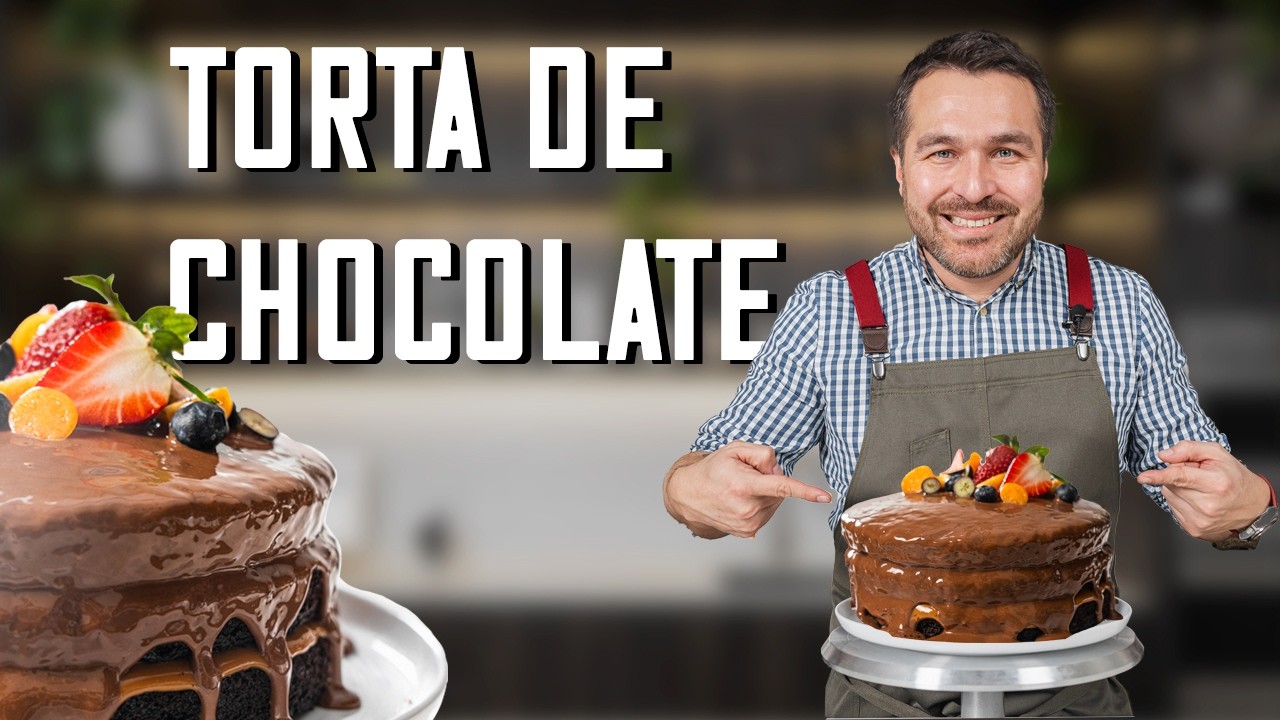
Chocolate Cake with Chocolate Fudge
A super moist and fluffy chocolate sponge cake made with buttermilk (soured milk), baked in three thin layers, and filled and frosted with a three-ingredient chocolate fudge made from evaporated milk, condensed milk, and cocoa. Assembled with simple syrup soak and optional dulce de leche layers.
download Extracted 2026-03-31
Ingredients
Assembly
- to taste Dulce de leche (manjar blanco) (prepared separately by pressure-cooking sealed cans of condensed milk for 40 minutes) opcional
- to taste Fresh fruit (for decoration on top) opcional
Chocolate fudge
- 1 can Evaporated milk
- 1 can Sweetened condensed milk
- 27 g Cocoa powder
Simple syrup (TPT)
- equal weight to sugar Water
- equal weight to water Sugar
Sponge cake
- 233 g Brown sugar
- 233 g Vegetable oil
- 4 units Eggs
- 7 g Vanilla extract
- 11 g Salt
- 1.5 tsp Instant coffee
- 280 g All-purpose flour (sifted)
- 98 g Cocoa powder (sifted)
- 388 g Milk (warmed)
- 31 g White vinegar (added to warm milk to sour it)
- 15 g Baking powder (sifted)
Steps
-
1Make the soured milk (leche cortada): add the white vinegar to the warm milk, stir briefly, and let it rest for 10 minutes until it curdles. Set aside.Tip: This soured milk reacts with the baking powder during baking to create a much moister, fluffier sponge — the same technique used for fluffy pancakes.~10 min
-
2In the bowl of a stand mixer fitted with the whisk attachment, beat together the eggs, brown sugar, salt, and vanilla until the mixture lightens in color and becomes fluffy.~5 min
-
3With the mixer running, drizzle in the vegetable oil in a slow, steady stream until fully incorporated.~2 min
-
4Switch the mixer attachment from the whisk to the paddle. Sift together the flour, cocoa powder, baking powder, and instant coffee onto a sheet of parchment paper.Tip: Switching to the paddle when adding flour prevents overstimulating gluten, which would make the sponge tough instead of tender.~3 min
-
5With the mixer on low, alternate adding the sifted dry ingredients and the soured milk in three additions each — start with the dry ingredients and end with the dry ingredients. Mix only until just combined after each addition.Tip: Starting and ending with the dry ingredients is a classic pastry technique for achieving even hydration and preventing overmixing.~5 min
-
6Grease three 20 cm round cake pans with vegetable oil only (no flour). Cut a cartouche (circular parchment paper disk) for the base of each pan: fold a square of parchment in half, then in half again to form a smaller square, then fold repeatedly into triangles. Position the tip at the center of the pan, mark where it reaches the edge, cut at that point, and unfold to reveal a circle. Press the cartouche into the oiled pan and brush with a second coat of oil.Tip: Using oil alone (no flour or cocoa) avoids the white crust that flour leaves around the sides of the cake.~10 min
-
7Divide the batter evenly among the three prepared pans by weight — approximately 400 g each. Bake at 160°C (320°F) for approximately 20 minutes. Do not open the oven until you can smell the sponge baking. Test doneness by inserting a cake tester or skewer into the center — it should come out completely clean and dry.Tip: Opening the oven too early can cause the sponge to collapse. Wait for the baking aroma before checking. Alternatively, bake in one large pan for 45–60 minutes.~20 min
-
8Remove the sponge layers from the oven and let them cool completely. Once cold, remove the parchment cartouche from the base of each layer and trim the top of each layer flat with a knife to create even discs.~30 min
-
9Make the chocolate fudge: in a large bowl, combine the condensed milk and cocoa powder. Beat vigorously with a whisk until the cocoa is fully dissolved with no lumps. Transfer to a saucepan, add the evaporated milk, and cook over medium heat, stirring constantly, until the mixture thickens to a spreadable fudge consistency. Transfer to a clean container and let it cool completely before using.Tip: Dissolving the cocoa in the thick condensed milk first prevents lumps from forming when the mixture is cooked. Do not make the fudge too thick — it should still spread easily for filling the cake.~15 min
-
10Make the simple syrup (TPT — tanto por tanto): combine equal weights of water and sugar in a small saucepan over medium heat. Stir until the sugar is fully dissolved. Remove from heat and let cool completely. Optional: add a splash of whisky, pisco, or other liquor for extra flavor.~5 min
-
11Assemble the cake: place a damp cloth under a cake turntable (bailarina). Set the serving plate on the turntable and secure it with a small dab of dulce de leche underneath. Place the first sponge layer cut-side down, base-side up (the flat baked base facing up gives a perfectly level surface for the top). Brush generously with cold simple syrup until the layer looks glossy and well-soaked. Spread a layer of chocolate fudge over the top. Optionally add a layer of dulce de leche (manjar blanco). Repeat with the remaining sponge layers.Tip: Place each sponge layer with its original baked base facing up — this flat surface makes the top of the cake perfectly level for decorating.~15 min
-
12Frost the outside of the assembled cake with the remaining chocolate fudge, smoothing it with a palette knife or offset spatula. Decorate the top with fresh fruit as desired. Serve and enjoy.~10 min
Nutrition (por porción)
420
Calorías
6g
Proteína
58g
Carbohidratos
20g
Grasa
2g
Fibra
Cultural Context
Chocolate cake became popular in Peru in the late 19th century and is a beloved celebration dessert across Latin America. Giacomo Bocchio's version draws from home cooking tradition — his mother's chocolate cake was one of his earliest memories of food as an act of love. The use of soured milk (leche cortada) as a buttermilk substitute is a common Peruvian pastry technique that creates exceptional moisture and tenderness. The fudge frosting using evaporated and condensed milk reflects pantry staples widely used in Peruvian home baking.
Giacomo Bocchio
TE ENSEÑO A PREPARAR UNA DELICIOSA TORTA DE CHOCOLATE | ELEVA TU JUEGO CULINARIO
Watch on YouTube →