› Browse Recipes › Peruvian Torta Helada (Frozen Strawberry Mousse Cake)
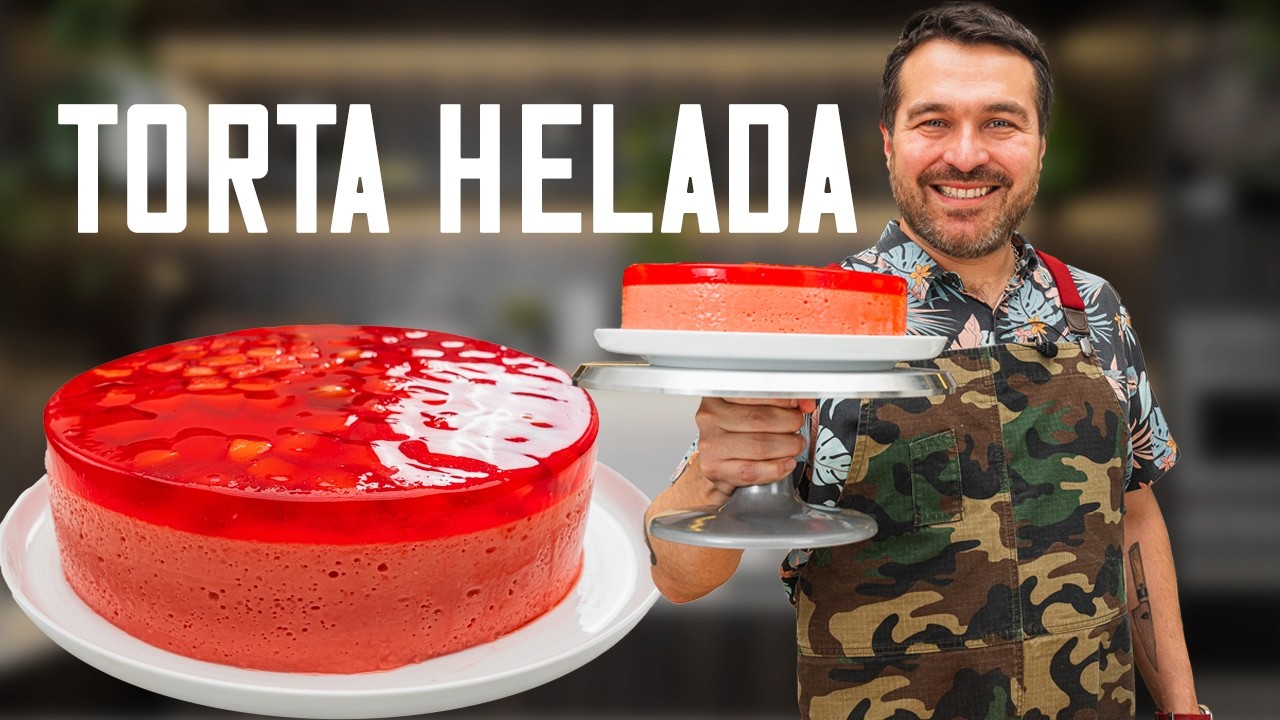
Peruvian Torta Helada (Frozen Strawberry Mousse Cake)
A classic Peruvian frozen dessert made of layers of strawberry gelatin with fruit cocktail, a creamy whipped evaporated milk mousse (Carlota), and pisco-soaked genoise sponge. A beloved summer treat and affordable take on the French Charlotte.
download Extracted 2026-03-31
Ingredients
Assembly
- to taste fruit cocktail (canned) (drained)
- as needed vegetable oil (for greasing the mold)
Carlota (Strawberry Mousse)
- 585 g frozen evaporated milk (frozen solid, to be whipped)
- 75 g white sugar
Colapez Hydration
- 22.5 g unflavored gelatin (colapez/collagen), powdered (hydrated in cold water)
- 113 g cold water (for hydrating colapez)
Genoise Sponge
- 6 units eggs
- 180 g all-purpose flour (unbleached) (sifted)
- 150 g white sugar
- 3 g baking powder
Pisco Simple Syrup (TPT)
- 125 g water
- 50 g white sugar
- 5 g pisco (aromatic variety, e.g. Italia)
Strawberry Gelatin Base
- 225 g strawberry-flavored gelatin powder
- 1370 g warm water (warm (approx. 6 cups))
Steps
-
1Lightly grease a 22 cm diameter x 12 cm tall round mold with vegetable oil using a paper towel. Wipe off any excess so only a thin protective film remains — this is essential for clean unmolding.Tip: Use a second clean paper to remove excess oil. The layer should be barely visible.~3 min
-
2Hydrate the colapez (unflavored gelatin powder): combine 22.5 g colapez with 113 g cold water and let it swell for at least 10 minutes. It will be used later to stabilize the Carlota mousse.Tip: Always hydrate colapez in cold water, never hot. Use the recipe quantities — not package instructions — as this recipe needs extra gelling power since it will be sliced as a cake.~10 min
-
3Prepare the strawberry gelatin base: dissolve 225 g of strawberry-flavored gelatin powder in 1370 g (approx. 6 cups) of warm water, stirring until fully dissolved. Set aside — this yields approximately 1595 g of gelatin base.Tip: To remove bubbles, pass a kitchen torch quickly over the surface — bubbles will disappear instantly.~5 min
-
4Prepare the genoise sponge: beat 6 eggs with 150 g sugar until pale and tripled in volume. Fold in 180 g sifted flour and 3 g baking powder. Pour into an 18 cm mold and bake at 180°C (350°F) until a toothpick comes out clean. Cool completely, then slice into flat discs.Tip: Bake the sponge flat and thin — it is meant to be soaked. Refer to a three-leches sponge technique for this style.~30 min
-
5Prepare the pisco simple syrup (TPT): combine 125 g water and 50 g sugar in a saucepan over low heat, stir until sugar dissolves. Remove from heat, cool slightly, then add 5 g aromatic pisco (Italia variety recommended). Transfer to a squeeze bottle.Tip: Pisco Italia is the most aromatic variety and helps mask the egg smell typical of genoise sponges.~5 min
-
6Place the greased mold on a kitchen scale. Pour 200 g of strawberry gelatin base into the mold (this will become the top layer once unmolded). Refrigerate for 15–20 minutes until fully set.Tip: Work with a scale on the mold throughout assembly to ensure exact layer weights.~20 min
-
7Once the first gelatin layer is fully set, distribute the drained fruit cocktail evenly over it like a mosaic. Pour another 200 g of strawberry gelatin base over the fruit. Refrigerate again for 15–20 minutes until approximately 80% set (not fully firm).Tip: Do not let this layer set 100% — the Carlota must bond with it. Never prepare a day ahead, as a fully set layer will not adhere.~20 min
-
8Mix the remaining 1195 g of strawberry gelatin base with the hydrated colapez mixture. Stir to combine — this is the gelatin-colapez mixture used to stabilize the Carlota.~3 min
-
9Prepare the Carlota mousse: beat 585 g frozen evaporated milk with an electric mixer until it reaches a creamy, pomade-like texture. Add 75 g sugar and continue beating until stiff peaks form and the mixture has nearly quintupled in volume.Tip: The milk must be frozen solid before whipping. The cold is what allows it to hold air like cream.~10 min
-
10With the mixer running, slowly drizzle the lukewarm gelatin-colapez mixture (at about 35–37°C / body temperature) into the whipped evaporated milk in a thin, steady stream. Act quickly — the mixture will begin to set due to the cold milk.Tip: The gelatin mixture must be lukewarm — not cold, not hot. Cold will cause it to seize and form lumps instantly. Have all mise en place ready before this step.~5 min
-
11Immediately pour 600 g of the Carlota mousse over the 80%-set gelatin layer in the mold. Place a disc of genoise sponge on top and soak it with pisco simple syrup using the squeeze bottle. Pour another 600 g of Carlota mousse over the sponge. Place a second soaked sponge disc on top.Tip: Soak the sponge directly in the mold — do not transport it wet, it will fall apart.~5 min
-
12Cover the mold and refrigerate for at least 2–3 hours (or until fully set). To unmold: run an offset spatula around the edges to release the Carlota from the sides. Place the mold briefly in a tray of hot water to slightly melt the bottom gelatin. Place a serving plate on top and flip confidently in one motion.Tip: Trust the process — with sufficient gelatin the cake is very sturdy. Be confident when flipping: hesitation is the main cause of failure.~5 min
Nutrition (por porción)
320
Calorías
6g
Proteína
48g
Carbohidratos
12g
Grasa
1g
Fibra
Cultural Context
Torta Helada is a quintessential Peruvian summer dessert, enjoyed across generations and socioeconomic backgrounds. It is understood as a more accessible, homemade version of the French Charlotte ('Carlota'), substituting whipped cream with beaten frozen evaporated milk — a uniquely Peruvian adaptation. The dessert is particularly popular during the hot coastal summer months and is often made for birthdays and family gatherings.