› Browse Recipes › Fish Dugléré with Turned Potatoes
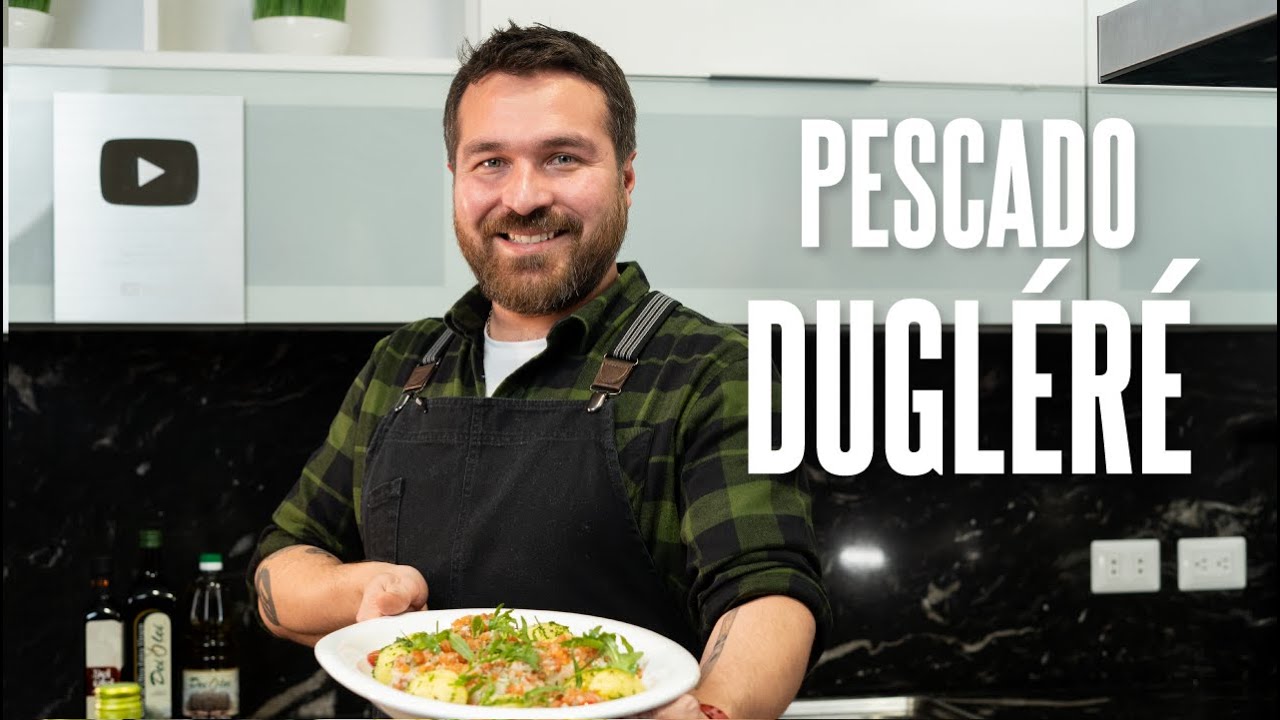
Fish Dugléré with Turned Potatoes
Pescado Dugléré is a classic French preparation created by Chef Adolphe Dugléré in Paris in 1866. Fish fillets are baked in a short-moisture method with white wine, tomatoes, onion, garlic, olive oil, and fish stock, then finished with butter, parsley, and lemon zest. Served with turned potatoes cooked English-style and finished with olive oil and fresh herbs.
download Extracted 2026-03-31
Ingredients
Garnish
- 4 units Waxy potatoes (large) (peeled, turned into football/olive shape (7-sided tournée))
- 1 tbsp Olive oil (for potatoes)
- to taste Fresh chives (finely chopped) optional
- to taste Fresh parsley (for potatoes) (finely chopped)
Main
- 720 g Fish fillet (charela or similar firm white fish) (blood line removed, pin bones removed, cut into 75-80g portions)
Sauce
- 0.5 unit White onion (brunoise (very fine dice, 1-2mm))
- 2 units Tomato (peeled, seeded, diced into small cubes)
- 2 cloves Garlic (crushed and finely minced into a paste)
- 80 ml Dry white wine
- 100 ml Fish stock (fumet)
- 40 g Butter (divided: 1.5 tbsp for the pan, 1 tbsp for finishing)
- 2 tbsp Olive oil
- to taste Lemon juice (freshly squeezed)
- to taste Lemon zest (finely grated) optional
- 2 sprigs Fresh thyme (whole, removed before plating)
- to taste Fresh flat-leaf parsley (finely chopped)
Seasoning
- to taste Salt
- to taste Black pepper (freshly ground)
Steps
-
1Prepare your workstation with four bowls: one for whole unpeeled potatoes, one for peelings/waste, one for peeled potatoes (submerged in water to prevent oxidation), and one for the final turned potatoes. Peel the potatoes and keep them submerged in water until ready to turn.Tip: Always keep peeled potatoes submerged in water — if left exposed to air they will oxidize and turn brown.~5 min
-
2Turn (tornear) the potatoes into a football/olive shape with 7 sides using a paring knife. Work in a circular motion with smooth single passes to avoid facets. Keep trimmings — they are perfect for mashed potatoes or gratin for staff meals.Tip: Rotate the potato as you work and avoid pressing too hard on one side. One smooth circular pass per face is the goal.~8 min
-
3Place the turned potatoes in a pot and cover with cold water. Add enough salt so the water tastes pleasantly salty. Bring to a boil and cook for 12-15 minutes until a skewer or toothpick passes through without resistance.Tip: Starting potatoes from cold salted water allows the salt to penetrate like a brine, seasoning the potato from within — something steam cooking cannot achieve.~15 min
-
4While the potatoes cook, prepare the mise en place for the fish. Make a brunoise of the white onion: make vertical cuts 1-2mm apart, then cross-cut into fine dice. Use the knuckle-guard technique — keep your phalanx touching the blade at all times.Tip: White onion is preferred here over the more common Peruvian purple onion — it is milder and will not overpower the delicate flavors of this dish.~3 min
-
5Peel and seed the tomatoes. Cut each tomato in half through the side, remove the core and seeds, then dice into small cubes (brunoise or small macedoine). Set aside.Tip: The tomato seeds and core can be saved for a gazpacho, Bloody Mary, or other sauce — nothing goes to waste.~3 min
-
6Crush and mince the garlic cloves into a fine paste (purée). First use the spine of the knife to crush the clove, then use the blade to chop and scrape until a smooth paste forms. This technique activates the essential oils of the garlic, maximizing its aroma.Tip: The more you manipulate garlic (crush, chop, mince), the stronger and more aromatic it becomes as essential oils are released.~2 min
-
7Clean and portion the fish fillet: remove the blood line along the spine area, and cut into portions of approximately 75-80g each (about 3 pieces per restaurant serving of 180g). Season the fish portions with salt on both sides.Tip: Keep the fish refrigerated until the last moment — it should be below 6°C (danger zone is 6-63°C). The trimmings with bones are excellent for reinforcing a leche de tigre.~5 min
-
8Make a cartouche: cut a circle of parchment paper the size of your pan, fold it in half twice to locate the center, then make small cuts to create a small hole in the center. This will control evaporation during cooking. Preheat the oven to 180°C.Tip: The cartouche is a classic French kitchen technique that creates controlled steam — there is evaporation, but it is contained. Aluminum foil with holes also works if you do not have parchment.~2 min
-
9Grease a large oven-safe skillet or baking dish (one with a metal handle so it can go into the oven) generously with butter — about 1.5 tablespoons spread over the entire bottom. This butter will prevent sticking and become part of the sauce.Tip: Do not use a pan with a plastic handle — it will melt in the oven. Use a metal-handled skillet, a pyrex, or any oven-safe dish.~1 min
-
10Create a bed of vegetables in the pan: add the brunoise onion as a base layer, then scatter the garlic paste. This onion bed will sweat and release juices during cooking, keep the fish off the pan surface, and become part of the sauce.~1 min
-
11Add the diced tomatoes over the onion bed. Pour the white wine over the vegetables — just enough to lightly moisten everything, not submerge it (a thin mirror over the vegetables). Add a few drops of olive oil, and season with a pinch of black pepper.Tip: This technique is called 'corto mojamiento' (short-moisture cooking) — the fish cooks in its own juices and those of the vegetables, making it nearly impossible to dry out.~2 min
-
12Place the seasoned fish portions skin-side down on top of the vegetable bed. Top with a little more onion brunoise and diced tomato. Add the thyme sprigs. Splash a little more white wine over the fish pieces. Add a pinch more salt and pepper over the fish.~2 min
-
13Add a small amount of fish stock (fumet) — just enough to keep everything moist, not to cover. Place the cartouche (parchment paper circle) directly on top of the fish, then cover with aluminum foil and poke a few holes. Bake at 180°C for 10-12 minutes.Tip: To test doneness: pierce the thickest part with a toothpick, skewer, or thin knife. If it passes through without resistance, the fish is ready. The fish should be moist and silky — like pulled strands.~12 min
-
14While the fish finishes, drain the cooked potatoes and transfer them to a bowl. Drizzle with olive oil, season with a pinch of black pepper, and toss with chopped parsley and chives. Keep warm.~3 min
-
15Remove the fish from the oven. Carefully remove the thyme sprigs. Using a spatula, gently transfer the fish portions to a plate and keep warm. Return the pan to low heat on the stove. Mix the remaining sauce, bring to a gentle boil, and reduce slightly.~2 min
-
16Finish the sauce: squeeze in lemon juice and add a few drops of lemon zest. Turn off the heat. Add a tablespoon of cold butter and swirl the pan to emulsify — the sauce will thicken and become creamy. Stir in the chopped parsley.Tip: The lemon zest (zeste/sintrom) carries the essential citrus oils without the acidity, adding a beautiful aromatic lift. The butter finish gives the sauce its silky texture without cream.~2 min
-
17Plate the dish: place 2-3 turned potato pieces to the side of the plate. Arrange the fish portions next to the potatoes. Spoon the sauce generously over and around the fish. Finish with a drizzle of good olive oil, a pinch of freshly ground black pepper, and fresh herbs for color. Serve immediately.Tip: The sauce is excellent for dipping the potatoes — press them gently into the sauce as you eat. The same sauce also works beautifully with clams, shrimp, or other shellfish.~2 min
Nutrition (per serving)
320
Calories
30g
Protein
22g
Carbs
12g
Fat
2g
Fiber
Cultural Context
Pescado Dugléré is a dish created in 1866 at the Café Anglais in Paris by Chef Adolphe Dugléré, a disciple of Marie-Antoine Carême — the father of classical French cuisine. Despite its French origin, this dish is taught in Peruvian culinary schools as one of the foundational fish preparations students learn. Giacomo Bocchio presents it here as an accessible home-cooking recipe, substituting the traditional échalote (shallot) with white onion, which is more readily available in Peru. The dish is also notable as a favorite of the famous tango singer Carlos Gardel.
Giacomo Bocchio
TE ENSEÑO A PREPARAR UN PLATO DE PESCADO SUPER FACIL Y DELICIOSO ¦ GIACOMO BOCCHIO
Watch on YouTube →