Dashboard › Browse Recipes › How to Prepare for Your Christmas Dinner — Elevate Your Culinary Game
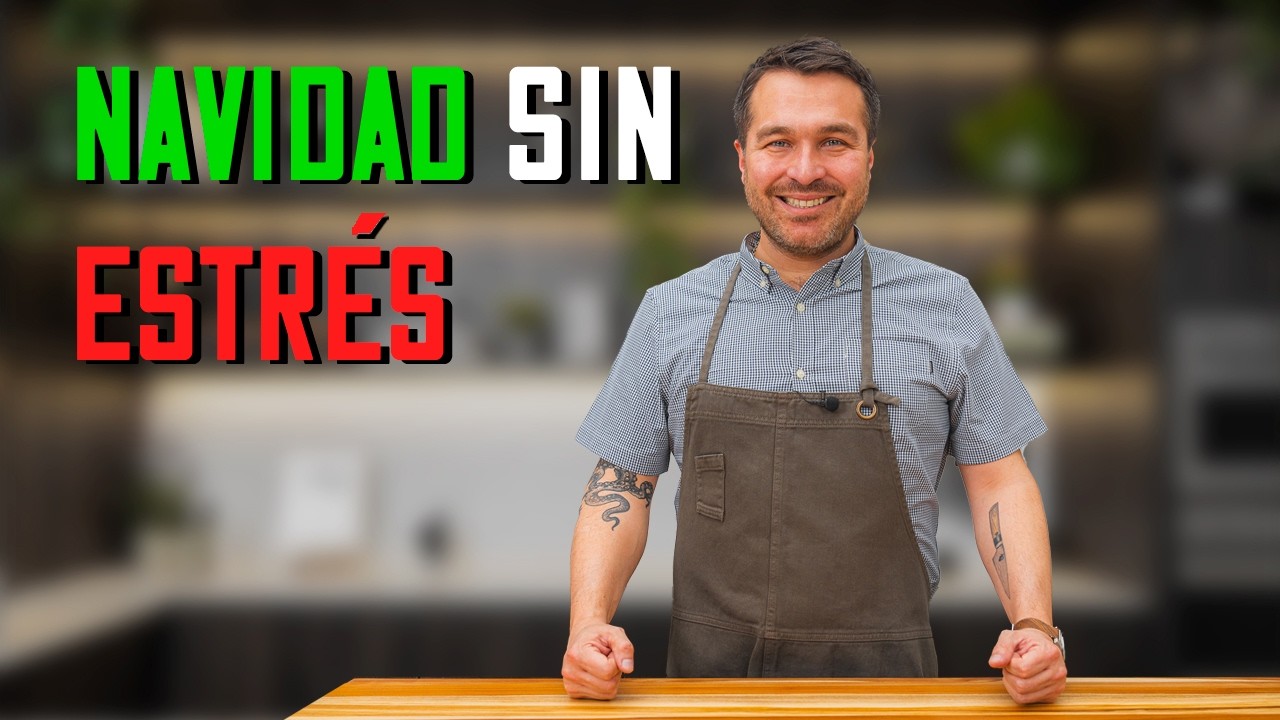
How to Prepare for Your Christmas Dinner — Elevate Your Culinary Game
A complete masterclass on organizing a stress-free Christmas (or New Year's) dinner, so you spend more time with family and less time in the kitchen. Chef Giacomo Bocchio walks through the full protein preparation timeline: thawing in the refrigerator, brining at 10%, marinating, oven cooking to safe internal temperatures, and regenerating pre-cooked proteins on the day of the feast. Covers turkey (pavo), pollipavo, chicken, pork leg (pernil), pork loin (bife de cerdo), and pork belly (panceta). Also includes shelf life of classic Christmas side dishes.
Ingredients
10% Brine (salmuera al 10%)
- 1 L per 100 g salt Water (for brine)
- 100 g per liter of water Coarse salt (for brine) (dissolved in water)
- Aromatics for brine (optional: herbs, spices) (to taste) optional
Cooking — bird cavity
- Aromatic stuffing for bird cavity (apple, onion, spring onion, celery, herbs, lemon, orange) (roughly chopped, fill cavity before roasting) optional
Marinade
- Marinade of choice (e.g., chasu, chicharrón-style, country ham, pisco + aji + garlic) (apply after brining) optional
Protein options
- 9 kg Whole turkey (8–9 kg) (frozen, thaw in refrigerator) optional
- 4 kg Pollipavo (approx. 4 kg) — large free-range chicken raised 3+ months (frozen, thaw in refrigerator) optional
- 2 kg Whole chicken (approx. 2 kg) (frozen, thaw in refrigerator) optional
- 1.5 kg Pork leg / knuckle (pernil, approx. 1.5 kg) (thaw in refrigerator if frozen) optional
- 2 kg Pork loin / bife (approx. 2 kg, boneless) (thaw in refrigerator if frozen) optional
- 1.7 kg Pork belly (panceta, approx. 1.7 kg) (thaw in refrigerator if frozen) optional
Steps
-
1THAWING (Step 1): Always thaw proteins in the refrigerator — never at room temperature, never under running water. The food danger zone is 6°C to 63°C; thawing at room temperature allows pathogenic microorganisms to multiply rapidly. Thawing times in refrigeration: Turkey 8–9 kg → 2 days; Turkey 10–12 kg → 3 days; Pollipavo ~4 kg → 18 hours; Whole chicken ~2 kg → 8–9 hours. General rule for poultry with bone: 4.5 hours per kg of whole bird. Pork cuts ~1.5–2 kg (if frozen solid) → 24 hours. Plan ahead and clear space in your refrigerator before the holidays.Tip: Professional tip: Industrial freezing at -40°C (blast chiller or tunnel freezer) produces smaller ice crystals that damage muscle fiber less during thawing. Home freezers run at -18°C; the thaw drip loss is higher, which is why slow refrigerator thawing is critical to preserve juiciness.
-
2BRINING / SALMUERA (Step 2): Prepare a 10% brine — 100 g of salt per 1 liter of water. The brine must fully submerge the protein; use a clean cloth or paper towel on the surface to keep floating pieces in contact with the solution. Brine times at refrigeration temperature: Turkey 9.5 kg → 9.5 hours; Pollipavo 4 kg → 4 hours; Chicken 2 kg → 2 hours (rule: 1 hour per kg of whole bird). Pork pernil ~1.5 kg (bone-in) → ~3 hours; Pork loin 2 kg (boneless) → 6 hours; Pork belly 1.7 kg boneless → 3.5 hours; Pork belly with bone → 4.5 hours. Brining injects moisture and ensures even seasoning throughout the meat.Tip: You can enrich the brine with aromatics (herbs, spices, sugar for better browning). Sugar in the brine also promotes Maillard reaction and a more golden crust.
-
3MARINATING (Step 3): Not every protein needs a marinade — a flavorful aromatic brine can be sufficient. If you do marinate, understand that a marinade penetrates meat at approximately 1 cm per 24 hours, so a short marinade only flavors the surface and skin. Options: chasu marinade, chicharrón-style marinade, country ham marinade, or a simple classic of pisco + ají + garlic for poultry. Apply marinade after brining. For deeper flavor without injection, trust the brine + surface marinade combination rather than injecting.Tip: Giacomo prefers not to inject marinades — he favors tasting the natural meat flavor elevated by proper brining and a well-seasoned crust or bark on the outside.
-
4COOKING / COCCIÓN (Step 4): Remove the protein from the refrigerator 1 hour before roasting to let it come to near room temperature. Fill the bird cavity with aromatics (apple, onion, spring onion, celery, citrus, herbs) — this slows the cavity from becoming an oven that overcooks the breast before the legs are done, equalizing cook time between breast and thighs. Roast at 175°C. Cooking time for poultry: 20–30 minutes per kg. An 8 kg turkey → approximately 2 hours 45 minutes. Minimize opening the oven door: every 5 seconds of open door loses 15–20°C. When basting, remove the bird from the oven, baste quickly, close the door, then return it. Use a probe thermometer: target internal temperature 63–75°C. Do not exceed 75°C — above 80–85°C the protein dries out completely.Tip: The thigh and leg bones act like ice inside the meat, slowing heat penetration. Filling the cavity counteracts this by introducing thermal mass that slows down the breast side, letting everything reach the target temperature together.
-
5REGENERATION (Step 5): All proteins (and many sides) can be cooked the day before and regenerated on the day of the dinner — this is how professional kitchens work and it dramatically reduces stress. To regenerate: reheat in the oven at 175°C until the internal temperature reaches 50°C. Alternatively, use a convection oven set to 50°C for very gentle reheating. If using a microwave, place a damp clean cloth under and over the meat — the cloth releases steam by radiation and prevents the meat from drying out. Turkey is traditionally presented whole at room temperature on the table for the photo and family moment, then carved and reheated. Side dish shelf life in the refrigerator: Arabic rice → 3 days; Apple purée → 5 days; Pasta/noodle salad → 3 days; Fresh salads and vinaigrettes → make same day (mis en place can be prepped ahead).Tip: Microwaves heat by exciting water molecules electromagnetically, which causes evaporation and drying. A damp cloth on top heats by radiation from the cloth's own moisture, gently warming the meat without pulling its juices out.
Cultural Context
In Peru and much of Latin America, Christmas Eve (Noche Buena) and New Year's Eve are the most important food celebrations of the year. The centerpiece is almost always a whole bird — turkey (pavo), pollipavo, or chicken — accompanied by pork cuts such as pernil, pork loin, and panceta. Chef Giacomo Bocchio emphasizes professional kitchen techniques (safe-zone temperature management, cold thawing, wet brining) adapted for home cooks, drawing on his training and Peruvian culinary tradition. The video is sponsored by Redondos, a major Peruvian poultry brand.
Giacomo Bocchio
TE ENSEÑO COMO PREPARARTE PARA TU CENA NAVIDEÑA ¦ ELEVA TU JUEGO CULINARIO
Watch on YouTube →