› Browse Recipes › Guargüeros (Peruvian Fried Pastry with Dulce de Leche)
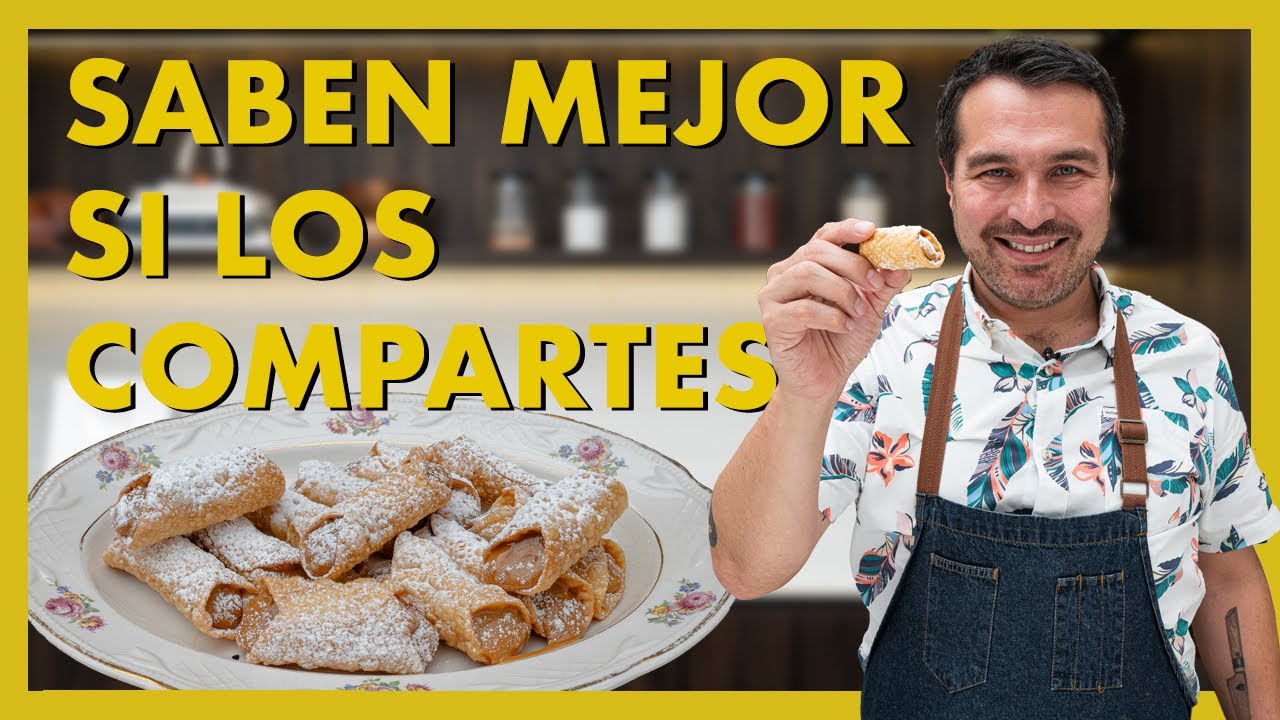
Guargüeros (Peruvian Fried Pastry with Dulce de Leche)
Guargüeros are a classic Peruvian fried pastry made from a rich egg-yolk dough flavored with pisco and white vinegar, rolled paper-thin, cut into circles, rolled into tubes, and deep-fried until golden. They are then filled with manjar blanco (dulce de leche) made by pressure-cooking sweetened condensed milk. A beloved dessert especially popular in Moquegua and Tacna, frequently made for Semana Santa and family gatherings.
download Extracted 2026-03-31
Ingredients
Dough
- 225 g All-purpose flour (plain, unpreparada)
- 50 g Butter (melted)
- 8 Egg yolks
- 37 g Pisco
- 11 g White vinegar
- pinch Salt
Frying
- Vegetable oil (for deep frying) (enough to submerge the pastries)
Manjar Blanco Filling
- 2 cans Sweetened condensed milk (canned) (label and adhesive fully removed)
Steps
-
1Remove the labels and all adhesive residue from the condensed milk cans completely. Place the cans inside the inner pot of an electric pressure cooker, fill with water until the cans are fully submerged (up to the maximum fill line). Cook at pressure for 35 minutes, starting the timer once steam is actively venting.Tip: It is critical to remove all label adhesive — residue can clog the pressure cooker safety valve. If using a stovetop pressure cooker instead, cook for about 1.5 hours.~35 min
-
2Once pressure cooking is complete, allow the pressure cooker to depressurize naturally. Remove the cans and immediately submerge them in an ice bath (cold water with ice — an inverted bain-marie) until fully cold before opening.Tip: Never open a hot can — the pressurized dulce de leche inside can erupt and cause serious burns.~20 min
-
3Make the dough: melt the butter in a pan over low heat; turn off the heat once melted and let it cool slightly using residual heat. On a clean work surface, make a mound of the flour and form a wide well (fontana/volcano) in the center, leaving a thin layer of flour at the bottom.Tip: Turning off the heat while butter still melts prevents overheating the yolks when they are added.~5 min
-
4Add the 8 egg yolks, pisco, white vinegar, and a pinch of salt into the well. Break the yolks and mix the liquid ingredients together. Gradually incorporate the surrounding flour using a fork or bench scraper (corne), then add the melted butter and continue mixing.Tip: A bench scraper (corne) helps integrate the dough cleanly from the bench surface. You can also use a bowl.~5 min
-
5Knead the dough using the heel of your hand, pressing and folding, until it is smooth, uniform, and elastic — no dry patches and nothing sticking to the hands or bench. This is similar to pasta dough but should not be kneaded as long. Flatten the dough into a disc, cover, and rest at room temperature for 5 to 10 minutes.Tip: The high number of yolks gives the dough a beautiful orange-yellow color. Quality eggs with vibrant yolks make a noticeable difference in both color and flavor.~15 min
-
6Divide the rested dough in half. Keep one half covered. Flatten the other half and pass it through a pasta machine, starting at the widest setting (level 1) and progressing one level at a time until reaching level 8 (the thinnest). The sheet should be so thin you can see your fingers through it — like a sheet of paper.Tip: Dust with a little flour before passing through the machine to prevent sticking. You can also roll by hand with a rolling pin if no pasta machine is available.~10 min
-
7Using a 7 cm round cutter, cut circles from the thin dough sheet. Roll each circle diagonally around a thin stick or skewer to form a tube shape. Press the seam lightly to seal.Tip: Squares cut with a knife or square cutter also work well. The round cutter creates a neat cone/tube shape.~15 min
-
8Heat vegetable oil in a deep pan to 160°C (320°F). Deep-fry the guargüero tubes in batches, using a thermometer probe or thin stick to gently poke through any air bubbles that form, keeping the pastry open for easy filling later. Fry until golden. Remove and drain on paper towels. Let cool completely.Tip: Keep oil between 160–180°C. Below 160°C the pastry absorbs too much oil; above 180°C it browns too quickly. Manteca (lard/shortening) can be substituted for vegetable oil for a more traditional flavor.~15 min
-
9Open the fully cooled condensed milk cans to reveal the manjar blanco (dulce de leche). Spoon it into a piping bag. Fold the top of the bag over your hand before filling to avoid mess, and do not overfill. Cut a small tip from the bag. Fill each guargüero tube completely from one end to the other — press firmly so there is no hollow center.Tip: For very dense fillings like manjar blanco, placing the piping bag upright in a tall jug or container makes it much easier to fill. Squeeze from the right hand and guide with the left.~10 min
Nutrition (por porción)
380
Calorías
6g
Proteína
48g
Carbohidratos
18g
Grasa
2g
Fibra
Cultural Context
Guargüeros are a traditional dessert from Moquegua, a city in southern Peru. They are especially popular during Semana Santa (Holy Week) and are considered a signature sweet of the region. Giacomo Bocchio, raised in Tacna — a sister city to Moquegua — recalls his father bringing boxes of guargüeros to the beach during summer vacations. The pastry is closely tied to family memory, regional identity, and festive occasions throughout southern Peru.
Giacomo Bocchio
TE ENSEÑO HACER UN POSTRE SENCILLO Y RÁPIDO: Guargüeros | ELEVA TU JUEGO CULINARIO
Watch on YouTube →