› Browse Recipes › Cured Tuna Tiradito with Avocado Tiger's Milk, Peperonata, Sea Urchin, and Cushuro
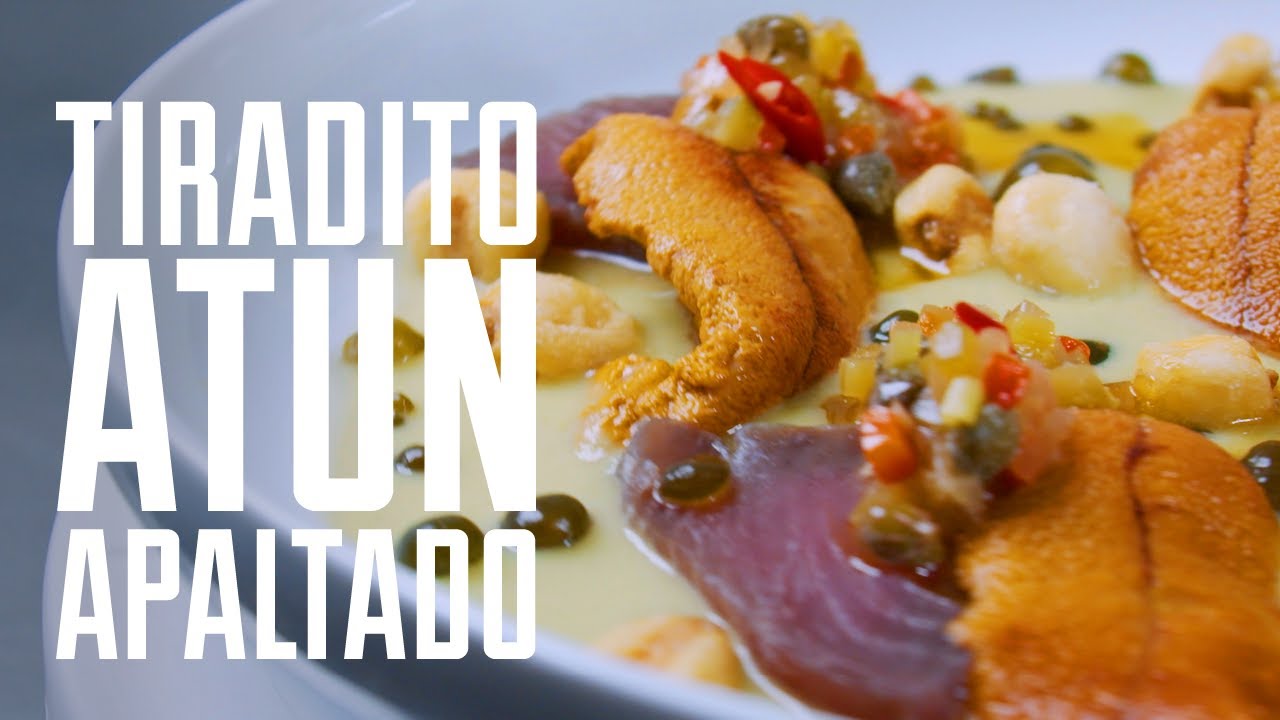
Cured Tuna Tiradito with Avocado Tiger's Milk, Peperonata, Sea Urchin, and Cushuro
A refined Peruvian tiradito where tuna fillets are cured in a 70/30 salt-sugar mix for 3 hours, then rinsed in ice water and sliced thin. Plated over a creamy avocado tiger's milk made by macerating celery, onion, rocoto, garlic, ají limo, and cilantro stems in salt and lemon juice before blending with ripe avocado. Finished with a peperonata of roasted peppers, capers, and cilantro in olive oil, sea urchin tongues, cushuro (Andean lichen), and toasted cancha for crunch.
download Extracted 2026-03-31
Ingredients
Avocado Tiger's Milk
- 1 stalk Celery (roughly chopped)
- 0.25 medium Red onion (roughly chopped)
- 0.5 small Rocoto pepper (seeded, roughly chopped)
- 1 clove Garlic (peeled)
- 1 small Ají limo chili (seeded, roughly chopped)
- 1 small handful Cilantro stems
- generous amount Salt (to macerate aromatics)
- generous amount Lime juice (lemons) (freshly squeezed, added to aromatics during maceration)
- 1 large Ripe avocado (peeled and pitted)
- Ice cubes or cold water (to adjust consistency) (add if tiger's milk is too thick after blending) opcional
Cured Tuna
- 1 side/loin (~300-400g) Tuna fillet (small tuna, quartered) (cut into 4 equal pieces lengthwise)
- 70 g (approx, 70% of cure mix) Coarse salt
- 30 g (approx, 30% of cure mix) Sugar
- Ice water (for rinsing) (very cold, with ice cubes)
Garnish
- to taste Sea urchin roe (uni tongues) opcional
- to taste Cushuro (Andean lichen / nostoc) (rinsed) opcional
- small handful Cancha (toasted Peruvian corn)
Peperonata
- 0.5 medium Onion (finely diced (brunoise))
- 2 cloves Garlic (finely minced)
- Olive oil (some for cooking, some added fresh at the end)
- 1 leaf Bay leaf (removed before serving)
- 1 medium Green bell pepper (fire-roasted) (charred over open flame, peeled, cut into medium dice (Macedonia))
- 1 medium Red bell pepper (fire-roasted) (charred over open flame, peeled, cut into medium dice (Macedonia))
- splash White wine
- small handful Capers (added off heat)
- Cilantro stems (finely chopped, added off heat)
Steps
-
1Mix the coarse salt and sugar together in a ratio of approximately 70% salt to 30% sugar. You may optionally add aromatic spices such as coriander seeds, Szechuan pepper, or any other aromatics you like — these will perfume the tuna as it cures.Tip: The salt is hygroscopic, meaning it draws out the natural water (liquid of constitution) from the fish, concentrating the flavor and firming the texture.~2 min
-
2Coat the tuna fillets completely with the salt-sugar cure mixture. Cover and refrigerate for 3 hours. The cure will become wet as it draws moisture from the fish — this is correct. The tuna will firm up noticeably, resembling a small ham.Tip: For a more intense cure (like a fish ham), you can leave it longer, even changing the salt once it becomes saturated.~180 min
-
3While the tuna cures, make the aromatic base for the tiger's milk. Combine the celery, onion, rocoto, garlic, ají limo, and cilantro stems in a bowl. Add a generous amount of salt and fresh lime juice. Let macerate for 30 minutes so the vegetables release their natural juices.Tip: The salt chemically 'squeezes' the vegetables — it extracts their natural juices (liquid of constitution), creating an intensely flavored ceviche base without a blender.~30 min
-
4After 30 minutes you will see a puddle of concentrated, flavorful liquid in the bowl. Add the ripe avocado pieces and an extra squeeze of lime juice. Transfer everything to a blender and blend until smooth and creamy. If the mixture is too thick, add a few ice cubes or a splash of cold water and blend again.Tip: The tiger's milk should be fluid and pourable — think creamy soup consistency. The ice keeps it cold and helps adjust texture simultaneously.~5 min
-
5Strain the avocado tiger's milk through a fine-mesh strainer, pressing firmly with a spoon to extract maximum flavor. Reserve, keeping cold.~3 min
-
6Make the peperonata. Heat olive oil in a pan over medium heat. Sauté the finely diced onion and garlic with the bay leaf until soft and lightly golden. Add the diced fire-roasted green and red peppers. Deglaze with white wine and cook briefly. Remove from heat, then stir in the capers, a generous drizzle of fresh olive oil, and the finely chopped cilantro stems. Remove and discard the bay leaf.Tip: Roasting the peppers over an open flame concentrates their sugars and adds smokiness. The fresh olive oil added off-heat acts like a chimichurri element — bright and grassy.~10 min
-
7Remove the cured tuna from the refrigerator. Brush off and rinse off as much of the salt-sugar mixture as possible under or in very cold ice water — this step is critical, the water must be ice cold to prevent the fish from flaking or softening. Pat dry gently.Tip: Cold contracts the fish fibers, helping the tuna hold together cleanly when sliced.~3 min
-
8Using a very sharp knife or a spatula (palette knife), slice the cured tuna thinly — as you would for a tiradito or sashimi.Tip: A palette knife / spatula can help lift and transfer the delicate slices without breaking them.~3 min
-
9To plate: spoon a generous mirror of the avocado tiger's milk onto the base of a wide, shallow plate. Arrange the thin slices of cured tuna on top. Spoon the peperonata over the fish. Place sea urchin tongues on top if using. Scatter cushuro over the plate. Finish with a small handful of cancha for crunch. Serve immediately.Tip: The cushuro has a gelatinous, caviar-like texture and is extraordinarily high in protein — Bocchio calls it 'the gold of the Andes.' It is optional but adds a spectacular visual and textural element.~3 min
Nutrition (por porción)
280
Calorías
28g
Proteína
12g
Carbohidratos
14g
Grasa
4g
Fibra
Cultural Context
Tiradito is a Peruvian raw fish dish born from the fusion of Japanese nikkei culinary influence and Peruvian ceviche tradition — it shares the raw fish and citrus base of ceviche but is sliced thin like sashimi and served without onion. 'Apaltado' comes from 'palta,' the Peruvian and South American word for avocado, and signals that the tiger's milk has been enriched with avocado for creaminess and color. Cushuro (also spelled cushuru or cushro) is a cyanobacterial lichen harvested from Andean lagoons above 4,000 m, prized for its high protein content and gelatinous texture; it is sometimes called 'the gold of the Andes.' This dish was created by Giacomo Bocchio for a restaurant menu and later appeared on his TV cooking show — and was subsequently copied by another restaurant, which he recounts as a flattering anecdote.