Dashboard › Browse Recipes › A Day at the Mercado de Magdalena
A Day at the Mercado de Magdalena
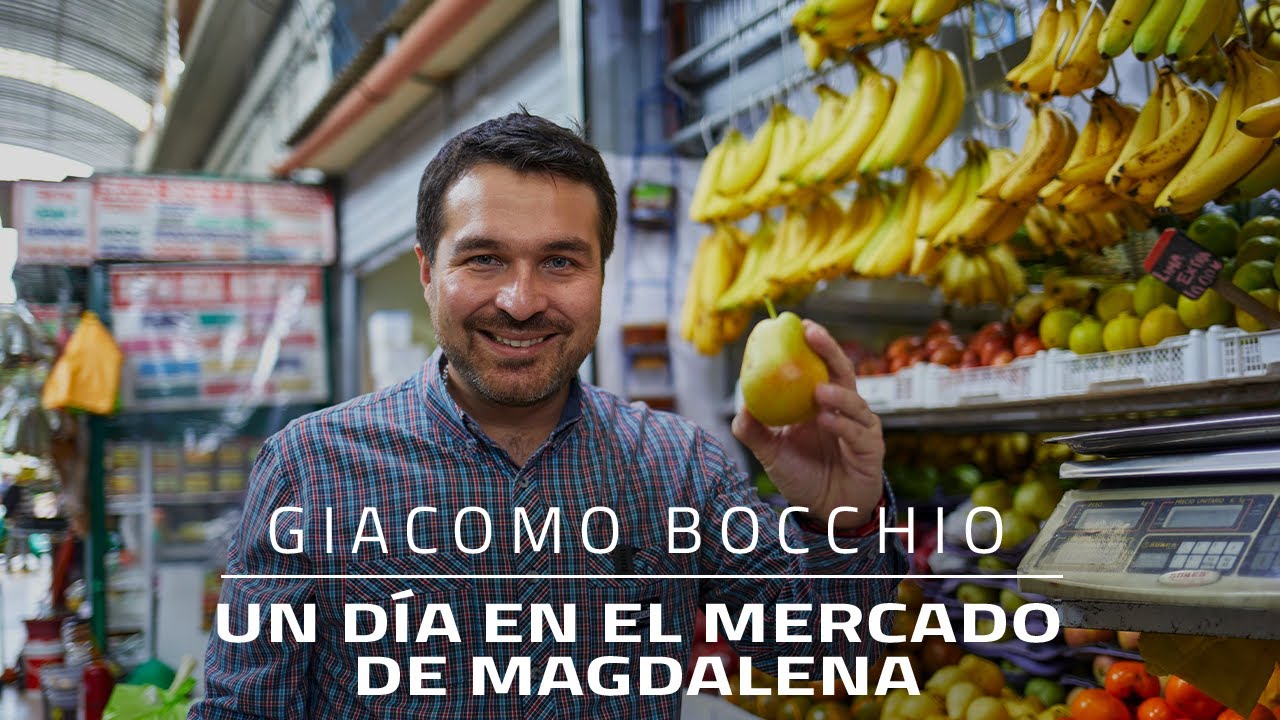
Giacomo Bocchio visits the Mercado de Magdalena in Lima alongside Brenda and his filming crew, scouting fresh fruits and vegetables for an upcoming event. The episode blends a vlog of the market with expert tips on how to choose, identify, and appreciate Peru's extraordinary variety of produce — from maracuyá and guanábana to higos, pitahayas, tumbo, and bananas — interspersed with conversations with local vendors and a stop at a specialty coffee stand inside the market.
Ingredients
- Maracuyá (Passion Fruit)
- Lima (Sweet Lime)
- Lúcuma
- Manzana Santa Rosa / Manzana Caña (Non-Oxidizing Apple)
- Guanábana (Soursop)
- Chirimoya (Cherimoya)
- Higos (Figs)
- Guaymanto / Golden Berry (Physalis)
- Williams Pear
- Pitahaya (Dragon Fruit)
- Tumbo (Banana Passionfruit)
- Dátiles (Dates)
- Tomate de Árbol (Tree Tomato / Tamarillo)
- Plátano de Freír (Frying Banana)
- Mandarina (Mandarin Orange)
- Granada (Pomegranate)
- Naranja Canelo (Navel Orange)
- Papaya
- Algarrobina (Carob Syrup)
Steps
-
1Arrive early at the Mercado de Magdalena (ideally by 8–9 a.m.). The market is located next to the Plaza Túpac Amaru in the Magdalena del Mar district of Lima. Fruit and vegetable stalls, food stands, and specialty shops are all active from early morning.Tip: The market is open Monday to Sunday including holidays. Vendors start setting up as early as 4–5 a.m. Going early means the best selection and freshest produce.
-
2Start with a fresh juice at 'La Frescura de Mi Juguito', the family-run juice stall in the market. Try their signature 'Súper Especial' — a mixed fruit blend with 30% dark beer — or their 'Especial con Malta' (malt drink blend). When ordering plain papaya juice, ask for the most yellow papaya for maximum sweetness.Tip: The juice masters at this stall say that making great juice is like cooking — it must be seasoned well. They mix less sweet papayas with honey or algarrobina (carob syrup) to balance flavor. The secret to great juice is ingredient selection before you even blend.
-
3Walk the fruit section and look for maracuyá. In Peru, maracuyá is large and yellow — unlike the purple, smaller passion fruit sold in other parts of the world. Maracuyá belongs to the Passiflora family (passionflower plants), as do granadilla and tumbo. The name 'passion fruit' refers to the plant family, not the concept of romantic passion.Tip: When you see limes (limas) in the market, note they are a completely different fruit from lemons or key limes. In Peru, 'lima' is a sweet citrus associated with cocktails and rarely eaten as a standalone fresh fruit by most people.
-
4Look for guanábana (soursop). A good guanábana should be white inside when cut and should NOT oxidize (turn brown). This makes it excellent for juices, smoothies, and the traditional Peruvian criollo dessert champús. It is considered the 'prehistoric ancestor' of chirimoya — both belong to the Annonaceae family.Tip: Chirimoya's name comes from the Quechua words 'chiri' (cold) and 'moya' (seed) — meaning 'cold seed.' Both guanábana and chirimoya grow better in cooler highland areas than on the coast.
-
5Find the manzana Santa Rosa or manzana caña (also called Golden or Ocaña apple). When you cut this apple variety, the flesh stays white and does not turn brown — making it ideal for school lunchboxes, fruit salads, and plating where you need to work ahead without lemon juice.Tip: The non-oxidizing property of this apple may be linked to lower iron content compared to other varieties. The classic 'Delicia' apple, by contrast, oxidizes quickly once bitten or cut.
-
6Inspect the higos (figs). While figs are traditionally a summer fruit, Peru's diverse growing regions and climates allow for year-round availability. 'Brevas' are figs harvested in their early pre-ripe state, before reaching full fig maturity.Tip: Giacomo's recommendation: combine fresh figs with manjar blanco (Peruvian dulce de leche) — skewer the fig on a toothpick, dip in manjar blanco, and eat as a simple dessert. The same technique works well with guaymanto (golden berry).
-
7Look for guaymanto (also called golden berry or Physalis peruviana). This small orange fruit inside a papery husk is a Peruvian superfood — one of the most powerful natural sources of antioxidants, vitamin C, and vitamin E. Skewer on a toothpick, dip into manjar blanco, and enjoy as a fresh dessert.Tip: The scientific name is Physalis peruviana — it is literally named after Peru. This is one of Peru's great gifts to world nutrition.
-
8At a pear stall, look for pera Williams (Williams or Bartlett pear). When you see 'William' written on a high-end restaurant menu, it often describes a pear-shaped preparation or a dish featuring this pear. The Williams pear arrived in Peru from Europe and was first cultivated in the Cinti-Aya region of Arequipa. Traditional Peruvian pear soups exist in Arequipa and Cusco.Tip: Poire Williams is one of the most famous fruit liqueurs in the world — a French/Swiss brandy made from Williams pears, sometimes bottled with a whole pear inside the bottle.
-
9Seek out tumbo (Banana Passionfruit / Curuba). This elongated yellow fruit from the Passiflora family is an intensely Peruvian ingredient. It is sweet and aromatic — ideal for refreshing drinks. Historically, pre-Hispanic Peruvian cultures used tumbo juice in place of lime to 'cook' (acidify) ceviche before the lime arrived with the Spaniards (lime itself had been brought from the Arab world to Spain).Tip: Tumbo comes primarily from Chimbote, Ica, and Chilca. Price at time of filming: approximately 5 soles per kilo.
-
10When buying plátanos for frying (plátano de freír), select a 'pintón' — a banana that has started to ripen but is not yet fully yellow. This stage gives structure and a touch of sweetness. Avoid fully ripe (very yellow/spotted) bananas for frying — they become too soft, lose texture, and stick to the pan. Very ripe bananas are better for boiling (sancochar) or grilling.Tip: A small addition of a very ripe banana mixed with less ripe ones can add sweetness while the less ripe banana provides the structural integrity needed for frying.
-
11When choosing oranges (naranja), look for the navel. Oranges without a prominent navel tend to last longer. Oranges from the jungle ('selva') variety tend to have a more pronounced navel. Huaral (north of Lima) is one of the main orange-producing zones in Peru.Tip: The Canelo variety from Huaral is a popular choice in Lima markets.
-
12When choosing granada (pomegranate), don't judge entirely by the depth of red on the skin. Luis's tip: some varieties that appear less intensely red on the outside are actually sweeter inside, with lighter-colored seeds. Pomegranates in the market come primarily from Cañete, south of Lima.Tip: Peru's size and diverse microclimates mean figs, pomegranates, and many other fruits are available year-round from different growing regions — north, south, coast, and highlands.
-
13End your market visit at Café Máximo Placer, the specialty coffee shop operating inside the Mercado de Magdalena. This café sources and roasts single-origin Peruvian coffees, including varieties from the northern regions of Peru. The owner's family background includes coffee farming (his mother is a caficultora), and the café uses quality equipment to produce espresso-based drinks and specialty brews.Tip: Peruvian specialty coffee is quietly surpassing Colombia in quality according to some local experts — though production volume is still smaller. Having a specialty coffee shop inside a traditional neighborhood market is unusual and worth seeking out.
Cultural Context
The Mercado de Magdalena is one of Lima's beloved neighborhood fresh-food markets, located in the Magdalena del Mar district next to the Plaza Túpac Amaru. Family-run stalls — some operating for over 54 years — carry produce sourced from Lima's parada (wholesale market) and from regions across Peru. The market reflects Lima's deep food culture: fruit vendors like Luis carry rare native varieties such as tumbo (a passionfruit relative used by pre-Hispanic cultures to make ceviche before limes arrived), guaymanto (Physalis peruviana / golden berry), and cherimoya alongside imports. A specialty coffee shop, Café Máximo Placer, operates inside the market, demonstrating how artisan food culture is penetrating even traditional market spaces. Vendors rise at 4–5 a.m. daily, seven days a week, and take pride in hospitality that goes beyond simple service — treating every customer like a known friend.