› Browse Recipes › Causa Acevichada (Potato Terrine with Ceviche)
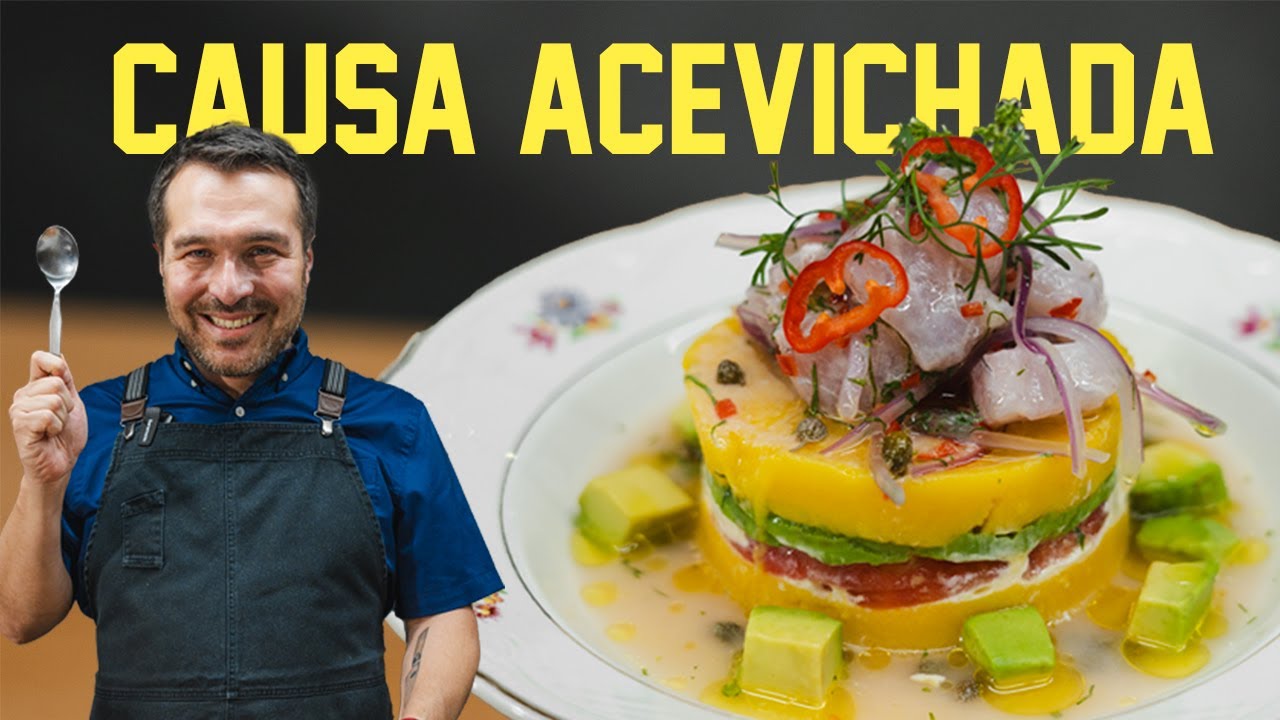
Causa Acevichada (Potato Terrine with Ceviche)
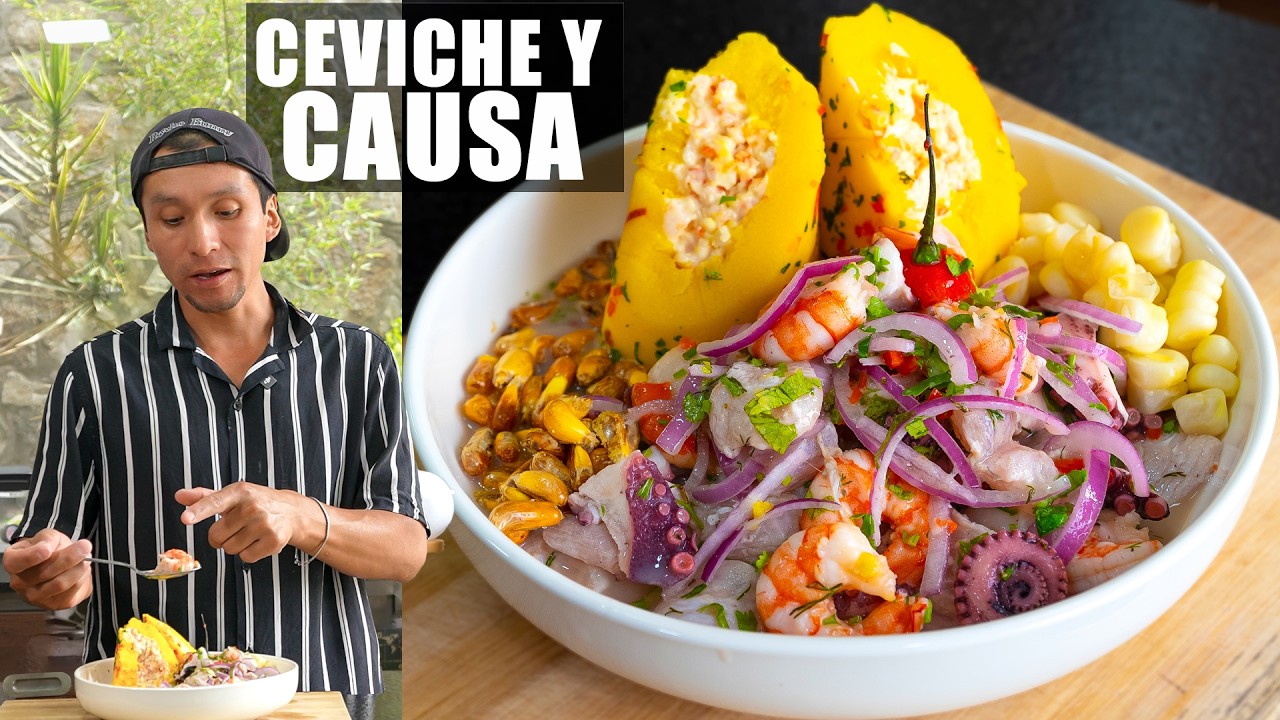
A modern Peruvian classic combining two beloved dishes — causa (seasoned mashed yellow potato) layered with avocado and tomato, topped with fresh ceviche in leche de tigre, finished with capers, olive oil, and cilantro. One of the most popular dishes in Lima's cevicherias.
download Extracted 2026-03-30
Ingredients
Causa
- 800 g Yellow potato (cooked and mashed while hot)
- 80 g Aji amarillo paste (garlic-confit) (aji deseeded and deveined, cooked low with garlic in oil, then blended)
- 40 ml Vegetable oil
- 30 ml Lime juice (freshly squeezed)
- 1 tsp Salt
Causa filling
- 1 unit Avocado (Hass) (sliced)
- 1 unit Tomato (diced)
- 60 g Homemade mayonnaise (with a good squeeze of lime)
Ceviche
- 400 g Fresh white fish (corvina/sea bass) (cleaned, trimmed, cut into cubes)
- 15 g Rocoto pepper (finely diced) opcional
- 10 g Cilantro leaves (chopped)
Leche de tigre
- 100 g Fish trimmings (from cleaning the fish)
- 0.5 unit Red onion (sliced, washed in ice water (reserve onion water))
- 10 g Celery (small piece)
- 5 g Ginger (small piece)
- 1 clove Garlic
- 1 unit Aji limo (for leche de tigre and ceviche)
- 15 g Cilantro stems (stems only, added at the end to avoid turning green)
- 6 unit Peruvian lime (limón sutil) (cut top off to avoid crushing seeds, squeeze larger halves)
- 4 unit Ice cubes
Topping
- 20 g Capers
- 15 ml Extra virgin olive oil (Tacna olive oil preferred)
Steps
-
1Steam yellow potatoes until fully cooked. Peel while hot and press through a potato ricer.Tip: Mashing while hot prevents lumps and gives a smoother texture.~25 min
-
2Make the confit aji paste: remove seeds and veins from aji amarillo, roughly chop with garlic, place in a pan with oil, and cook on low heat until soft. Blend until smooth.Tip: Removing seeds and veins controls the heat level.~15 min
-
3Mix the pressed potato with vegetable oil, confit aji paste, lime juice, and salt. Knead until smooth and uniform. Divide into 100g portions.Tip: With a tested recipe, exact measurements eliminate the need for tasting adjustments.~5 min
-
4Prepare the leche de tigre: blend fish trimmings, red onion, celery, ginger, garlic, aji limo, salt, onion water, lime juice, and ice cubes with an immersion blender. Add cilantro stems at the end and pulse briefly to avoid turning the liquid green. Strain through a fine sieve, pressing the solids with a ladle (fouler technique).Tip: Using onion water instead of fish fumet gives the leche de tigre a longer shelf life. Add cilantro stems (not leaves) at the very end to prevent oxidation and green color.~10 min
-
5Prepare the ceviche: cut the fish into cubes, season with salt to draw out moisture. Add diced rocoto and cilantro. Cut an aji limo in half and rub the inside of the bowl for capsaicin flavor. Add sliced red onion and fresh lime juice.Tip: Cut the lime by removing the top cap first, then squeeze the larger halves — this prevents crushing seeds which can make the juice bitter.~5 min
-
6Pour the cold leche de tigre over the fish mixture and gently combine.Tip: Keep the leche de tigre on ice until ready to use — it must be very cold.~1 min
-
7Assemble the causa: place 100g of causa dough as a base in a ring mold, spread homemade mayonnaise, add diced tomato and sliced avocado, then top with another 100g layer of causa dough. Remove the mold.~5 min
-
8Top the causa with the ceviche mixture. Garnish with capers, extra virgin olive oil, avocado slices, cilantro leaves, and sliced aji limo. Serve immediately.Tip: The ceviche topping with capers and olive oil is inspired by Lima's legendary restaurant El Cantarrana — it elevates the simple beauty of ceviche.~3 min
Nutrition (por porción)
420
Calorías
28g
Proteína
38g
Carbohidratos
18g
Grasa
5g
Fibra
Cultural Context
Causa has deep roots in Peruvian history. The name may derive from the Quechua word 'kausay' meaning 'giver of life,' referring to the sacred union of potato and aji. During colonial Lima, the dish evolved with European additions like olives and avocado. A third origin story ties it to Peru's independence in 1821, when women sold these potato cakes 'for the cause' to fund soldiers. The ceviche topping reflects the modern Lima cevicheria tradition popularized by restaurants like El Cantarrana.