Dashboard › Browse Recipes › How to Organize Your Kitchen Like a Professional
How to Organize Your Kitchen Like a Professional
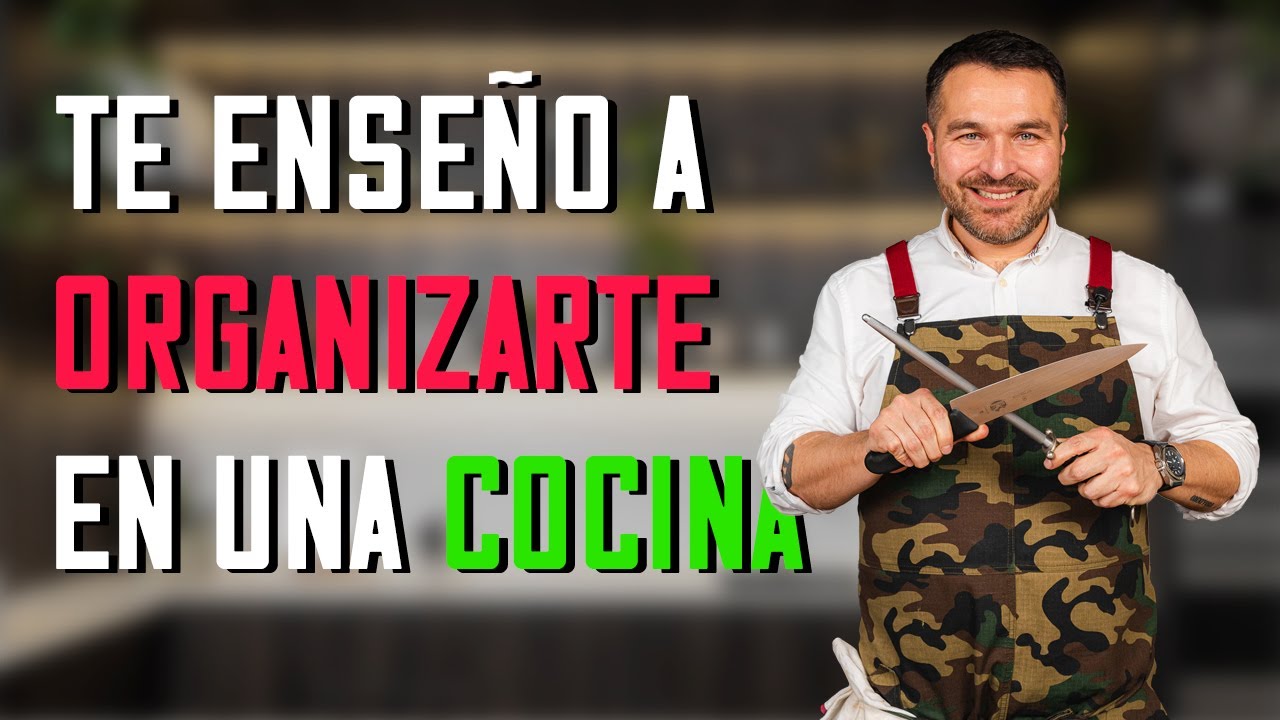
Chef Giacomo Bocchio shares the essential principles of kitchen station management, from mise en place organization to selecting the right tools. Using a lomo saltado as a practical example, he demonstrates how to set up a workstation with three key zones (raw ingredients on the left, waste in the center, finished product on the right), maintain cleanliness throughout the cooking process, and work efficiently with professional-grade tools. A masterclass in the discipline and order that separates home cooks from professionals.
Ingredients
No ingredients listed
Steps
-
1Always wash your hands first before entering the kitchen. This is the golden rule that cannot fail.Tip: This prevents cross-contamination and is the very first thing a professional cook does.
-
2Secure your cutting board by placing two sheets of dampened paper towels underneath it. A board that moves leads to imprecise cuts and potential injuries.Tip: What starts badly ends badly — if your board is sliding around, your precision cuts won't come out right.
-
3Set up your essential knife toolkit: a chef's knife, a paring knife (cuchillo de oficio), a peeler, a serrated bread knife, a serrated saw knife (for pineapple, baked goods, and bones), and a honing steel (chaira) to maintain the edge.Tip: The chaira does not sharpen — it maintains the edge. Use a whetstone for actual sharpening. A sharp knife reveals a cook's dedication to the craft.
-
4Place a clean drying rack or towel nearby for washed tools. Instead of drying each tool one by one, leave them on the rack to air dry while you continue working on something else.Tip: This saves time and keeps your workflow uninterrupted.
-
5Organize three zones in front of you: (1) raw ingredients on your non-dominant side (left if right-handed), (2) a waste bowl in the center for scraps, and (3) containers for finished mise en place on your dominant side. Product flows from left to right as you work.Tip: Separate useful waste (like potato trimmings that can become puree) from actual garbage. Use small containers (cocots) for each prepped ingredient.
-
6Always have salt and a pepper mill ready. Use whole peppercorns in a mill rather than pre-ground pepper, which loses significant flavor. Grind pepper over meat after searing, not before, to prevent burning.Tip: Grinding fresh pepper over a seared piece of meat makes an abysmal difference — it truly elevates your culinary game.
-
7Set up a supervision station (puesto de supervisión): a container of water with your tasting spoons, a tester/cake tester, and other frequently used tools. Change the water every 5-6 minutes to keep it clean.Tip: A tester is invaluable: poke potatoes to check doneness without damaging them like a knife would, and test meat by pressing the heated probe to your lip (cold = raw, warm = medium, hot = well done).
-
8Keep kitchen paper towels folded and ready at your station. Use them to wipe tools, clean the cutting board between ingredients, and maintain a spotless work surface at all times.Tip: In restaurants, paper towels are reused: plates are polished with gin-dampened paper, then the paper is dried in the plate warmer, cut into squares, and reused for cleaning.
-
9Use metal trays and gastronorms (hotel pans) instead of plates for transporting and holding ingredients in the kitchen. They won't break like ceramic, preventing dangerous shards from contaminating food.Tip: A shard from a broken plate can end up in a pot of stew and you'd have to throw everything out. Metal trays also make it easy to move multiple items at once when you need to clear the workspace.
-
10Equip yourself with versatile hand tools: a fish spatula (enter the spatula reversed/backwards under food for a better angle and less sticking), strong tongs for flipping hot items, precision tweezers for plating, and a heat-resistant silicone spatula for keeping pot walls clean during sauces like bechamel.Tip: The fish spatula trick: insert it reversed (upside down) and food releases much more easily. The silicone spatula prevents sauce from splashing on pot walls and burning, which darkens your bechamel.
-
11Follow logical and chronological order: always have something cooking in the background (water boiling, rice cooking, sauce reducing) while you prep your mise en place. Cook with everything ready in front of you for a more pleasant and controlled experience.Tip: Cooking with mise en place ready means you're making conscious decisions instead of solving problems on the fly. This leads to better learning and better dishes.
-
12Cut uniformly: when cutting vegetables like onions into wedges, remove the core first. Uniform cuts ensure even cooking — a larger piece takes longer to cook while a tiny piece may burn before the larger one is done.Tip: Save onion cores for making sofrito or aderezo base later. Useful waste becomes tomorrow's mise en place.
-
13Use the blade edge (not the spine) of the knife to scrape cut items off the cutting board. Clean the board with paper between each ingredient to maintain an impeccable workspace. Order builds success; disorder and dirt build nothing.Tip: The knife only cuts when it slides and scrapes — a flat contact won't hurt you. Don't be afraid to use the sharp side for scraping.
Cultural Context
Kitchen organization (mise en place) is a cornerstone of French culinary tradition adopted worldwide. Giacomo references his experience working in restaurants in Spain, and the discipline of professional Peruvian kitchens. He also draws from his role as a judge on 'El Gran Chef Famosos', Peru's biggest cooking competition show, where he frequently sees contestants struggle with basic kitchen organization. The concept of the 'puesto de supervisión' (supervision station) with tasting spoons kept in water is standard practice in professional kitchens globally, though often debated by home cooks unfamiliar with the system.