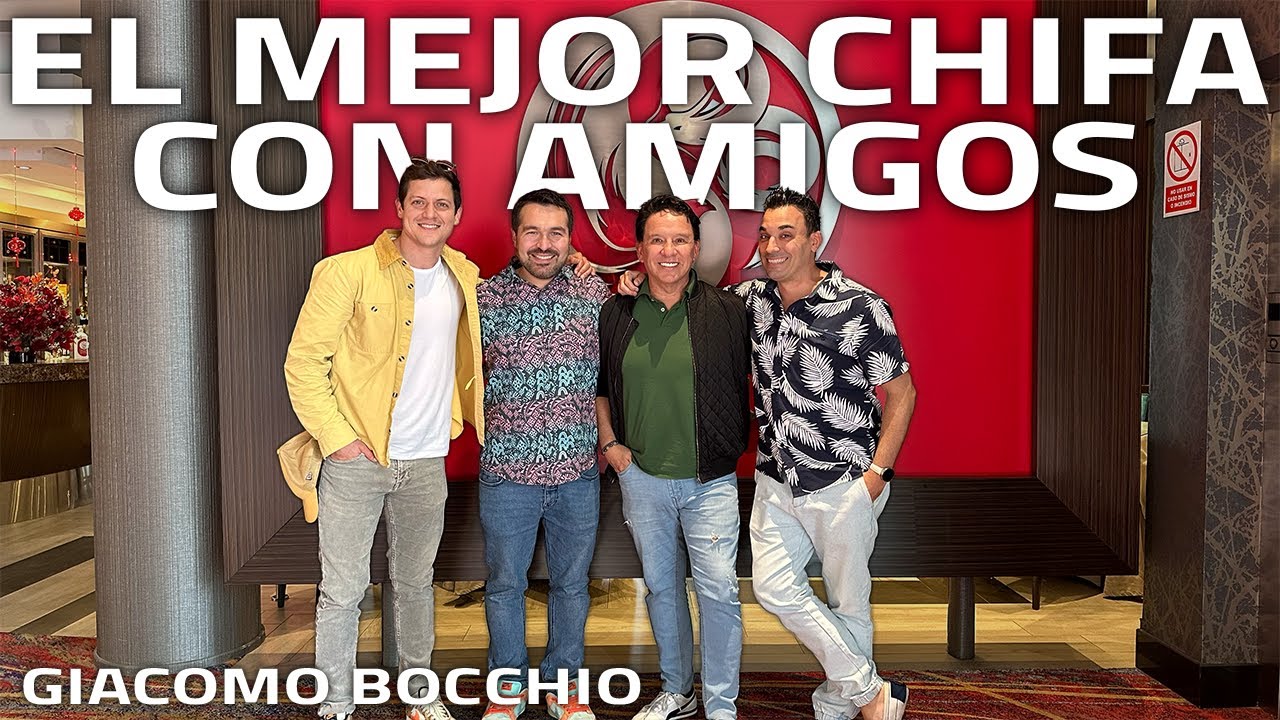
The Best Chifa to Share with Friends — Lung Fung Restaurant Guide
Giacomo Bocchio visits Chifa Lung Fung, a legendary 57-year-old Peruvian-Chinese restaurant inside the Golden Palace casino in Lima, alongside friends Ricardo Rondón, Gino Pesaresi, and Santi Lesmes. The video showcases the restaurant's new menu curated by Cantonese chef May Chen (known locally as Michael), explores the kitchen with its high-powered dragon burners and cylindrical roasting ovens, and highlights the importance of having a knowledgeable maître d' like Osmar Peralta. Dishes tasted include wonton soup, arroz chaufa de res con lechuga, calamares al tausi, sahofan con carne (fresh rice noodles), cac coxon lettuce wraps, costillas chuyin chua with Sichuan pepper, steamed egg (huevo al vapor), pollo chupikay, jumbo langostinos, corvina frita with garlic butter sauce, coconut jelly, and artisanal ice cream sorbets.
Ingredients
Steps
-
1When ordering at a chifa, always request at least one dish you haven't tried before — the cuisine is vast and surprising beyond the classic menu most Peruvians default to.Tip: Giacomo emphasizes that chifa has much more to offer than the standard arroz chaufa and wonton soup most people order.
-
2Authentic chifa arroz chaufa should be light and glossy with minimal soy sauce — Chinese chefs prioritize a brilliant, oily shine over dark color. Some chifas even serve white chaufa.Tip: The lettuce addition in arroz chaufa de res adds a particular freshness to the dish.
-
3In authentic Chinese cooking, wonton and dumpling fillings are always chopped by hand with a cleaver — never processed in a machine. This preserves texture and is a matter of technique and cultural tradition.Tip: The cleavers allow chefs to control the exact thickness needed for each preparation.
-
4Tausi (fermented black bean sauce) is a foundational sauce in Chinese cuisine. To prepare it properly, Chinese chefs chop and lightly toast the fermented beans before using them — this releases their distinctive aroma.Tip: The calamares al tausi at Lung Fung uses both body and head of the squid, sautéed with vegetables.
-
5Chinese rice noodles (sahofan) should ideally be fresh, made the same day — not dried industrial noodles. Fresh rice noodles have a softer, chewier texture. Never cut long noodles, as they symbolize long life in Chinese culture.Tip: Like all pastas in Chinese cuisine, long noodles are cooked whole and never cut.
-
6Cac coxon (lettuce wraps) are made with a mix of meats — chicken, Chinese sausage, duck, and beef — hand-chopped and sautéed with Chinese spices. Serve in lettuce cups with a squeeze of lime and Chinese chili oil for the best flavor.Tip: Gino Pesaresi's trick of adding lime drops elevated the dish dramatically — the acidity lifts all the flavors.
-
7Sichuan-style ribs (costillas chuyin chua) get their flavor from garlic oil and a Chinese spice mix where Sichuan peppercorn is key — it provides both the heat and the distinctive reddish color.Tip: Sichuan cuisine is known as the cuisine of the emperor, from one of the five cantons of China.
-
8Steamed egg (huevo al vapor) is a traditional Chinese side dish — just beaten egg steamed plain with no seasoning, topped with Chinese chives. Chinese diners use it to refresh the palate between rich dishes, adding moisture and lightness to the meal.Tip: Can be paired with fish, meat, pork, or any protein — Chinese diners often place the protein inside the egg before steaming.
-
9Pollo chupikay is essentially a Peking duck technique applied to chicken — the skin goes through a drying and inflating process before roasting in a large cylindrical oven, resulting in an incredibly crispy skin with juicy meat.Tip: The same cylindrical oven is used for Peking duck, dim sum, and fresh rice pasta.
-
10A good chifa experience depends not just on the food but on knowledgeable service — a skilled maître d' who can explain dishes from an unfamiliar cuisine makes all the difference. Family-style dining (all dishes to the center) is the proper way to eat at a chifa.Tip: Osmar Peralta, the maître d' at Lung Fung, speaks four languages and has extensive cruise ship experience — more restaurants in Peru need service professionals like him.