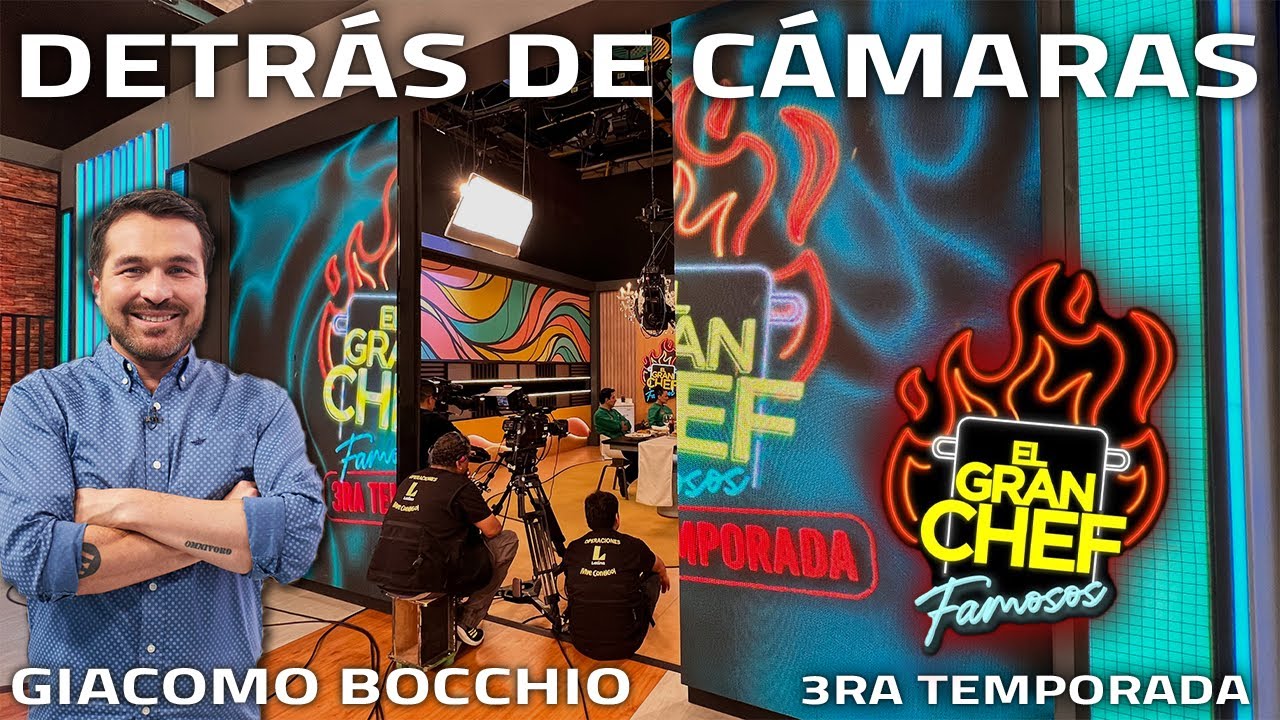
Behind the Scenes: El Gran Chef Famosos Season 3 Finale
A behind-the-scenes vlog from the Season 3 finale of El Gran Chef Famosos, Peru's beloved celebrity cooking competition. Giacomo Bocchio takes viewers through the entire day of the grand finale between contestants Armando Machuca and Mariella Zanetti. The video features candid interviews with the production director, fellow judges Javier Masías and Nelly, culinary producer Héctor Li, and the finalists themselves. Giacomo shares insights on the three-course finale menu (steak tartare with poached quail egg, paiche with sachaculantro air foam and yuca, and sabayon soup with sweet potato gnocchi), discusses the contestants' growth trajectories, and reveals kitchen techniques like making quenelles and lecithin-based air foams. A heartfelt tribute to the production crew and an honest look at what makes competitive cooking television work.
Ingredients
Steps
-
1Giacomo arrives early at the set and greets the camera crew, calling them the anonymous heroes behind the scenes who make everything possible.Tip: Giacomo emphasizes always greeting the production crew first — building relationships with the team behind the cameras creates a better working environment for everyone.
-
2He discusses the finalists' evolution: Armando Machuca arrived unable to cook but showed incredible perseverance, while Mariella Zanetti entered as a strong home cook and developed technical sophistication throughout the season.Tip: The judges note that transitioning from home cooking to restaurant-level technique is one of the hardest jumps in culinary development — it requires mental focus and not losing confidence under pressure.
-
3The finale menu is revealed: Course 1 is steak tartare with poached quail egg; Course 2 is paiche (Amazonian fish) with sachaculantro air foam, yuca, ají amarillo, and coconut chalaquita; Course 3 is cold sabayon soup with port aromas, sweet potato gnocchi, and vanilla cream quenelle.Tip: This finale menu deliberately bridges traditional Peruvian ingredients (paiche, sachaculantro, ají amarillo, camote) with modern European techniques (air foams, quenelles, sabayon), showcasing how competition cooking pushes contestants beyond their comfort zone.
-
4Culinary producer Héctor Li explains the air foam technique: sachaculantro broth is combined with soy lecithin, which maintains the foam solid for 12-15 minutes — the first time this modern technique was introduced on the show.Tip: Soy lecithin creates stable foams (airs) that hold for 12-15 minutes. The technique works by blending the flavored liquid with lecithin using an immersion blender at the surface to incorporate air, similar to soap foam when washing hands.
-
5Héctor Li shares his quenelle training story: at age 21 working at the Ritz-Carlton in the US, a chef threw his plate in the trash when he couldn't make a proper single-spoon quenelle for a salmon crudo. He went to Walmart, bought a liter of cream, and practiced at home until he mastered it.Tip: There are two quenelle techniques: the classic single-spoon method (harder but more elegant) and the two-spoon method (easier fallback). For contestants without formal training, teaching both ensures they can deliver a presentable plate even under pressure.
-
6Sweet potato gnocchi can be frozen before frying — they actually fry better from frozen. This was a practical tip shared during the finale preparation.Tip: Freezing gnocchi before frying helps them hold their shape and develop a crispier exterior. This is especially useful for sweet potato gnocchi which can be softer than traditional potato versions.
-
7Interviews with the finalists reveal the emotional and mental side of competition cooking: Mariella describes a progressive falling in love with cooking through small victories, while Armando demonstrates the importance of humility and accepting corrections from expert judges.Tip: Mariella's insight applies to any cooking journey: measure your progress in small victories. Her approach of connecting with the kitchen environment and building confidence gradually mirrors how professional chefs develop — it is a progressive love affair with the craft.