› Browse Recipes › The Perfect Peanut Butter Cookie
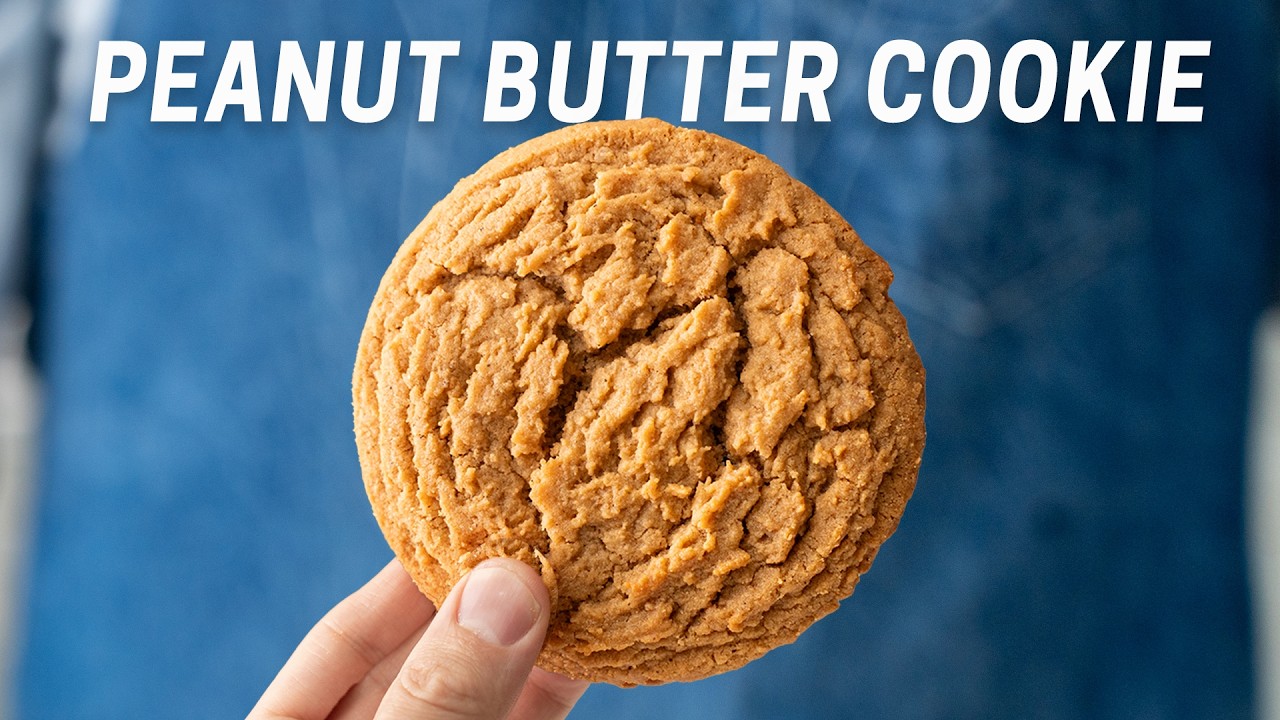
The Perfect Peanut Butter Cookie
Dense, chewy, and roasty peanut butter cookies with a crispy exterior and moist interior. Brown butter and white miso are the secret ingredients that amplify peanut butter flavor and add subtle umami depth.
smart_display Published 2026-04-12
download Extracted 2026-04-17
Ingredients
- 115 g unsalted butter, softened (softened to room temperature)
- 145 g unsalted butter (for browning) (browned, cooled to semi-solid (yields ~115g))
- 350 g peanut butter (standard creamy (e.g., Jif); natural peanut butter may alter texture)
- 185 g granulated sugar
- 185 g brown sugar, packed
- 25 g honey
- 65 g white miso paste
- 90 g whole eggs, beaten (beaten (about 1½ large eggs))
- 20 g vanilla extract
- 330 g all-purpose flour (or gluten-free cup-for-cup flour)
- 7 g baking powder
- 7 g baking soda
- 12 g salt
- for topping raw or demerara sugar
Steps
-
1Melt 145g butter in a small saucepan over medium-low heat for 4-5 minutes, stirring occasionally, until the milk solids turn deep chestnut brown and the butter smells nutty.Tip: Cook past the khaki stage to deep chestnut — it's the Maillard-browned solids that amplify the peanut butter flavor.~5 min
-
2Pour the brown butter into a shallow dish and refrigerate for 15 minutes, stirring every 5 minutes, until it reaches a semi-solid consistency similar to softened butter (about 115g yield). Do not let it harden completely.Tip: Re-emulsifying the browned butter (rather than using it melted) prevents the cookies from spreading flat in the oven.~15 min
-
3In the bowl of a stand mixer fitted with the paddle attachment, combine the cooled brown butter, softened butter, peanut butter, both sugars, white miso, and honey. Cream on medium speed for 5 minutes until lightened in color. Scrape the bowl and mix 10 seconds more. Do not over-cream.Tip: Creaming beats air into the butter and lightens the texture. Over-creaming causes the cookie to puff and then collapse.~6 min
-
4With the mixer on low speed, slowly stream in the beaten eggs and vanilla extract. Mix until just incorporated, about 10-15 seconds. Do not over-beat.Tip: Whipping air into the eggs causes excessive puffing and collapse — keep speed low and time short.~1 min
-
5In a separate bowl, whisk together the flour, baking powder, baking soda, and salt until evenly combined.Tip: Whisking the dry ingredients separately prevents uneven distribution of salt and leaveners, which causes inconsistent baking.~1 min
-
6Add the dry ingredients to the mixer on the lowest speed. Mix only until the flour just disappears — stop immediately. Do not overmix.Tip: Every extra second of mixing develops more gluten, which makes cookies tough. Stop the moment flour is incorporated.~1 min
-
7Using a 4oz portion scoop, scoop 120g balls of dough onto parchment-lined sheet trays. Place 6 cookies per tray with about 4 inches of space between each. Do not smooth or over-handle the dough.Tip: The craggly top from the scoop creates ridges that get extra crispy during baking — don't flatten them.~5 min
-
8Sprinkle the tops of each cookie ball generously with raw or demerara sugar.~1 min
-
9Bake at 325°F (165°C) for 20-22 minutes until the edges are golden brown. The centers will look slightly underdone — this is correct. Remove the pizza steel from the oven if you have one, as it transfers too much heat to the tray.Tip: Avoid convection mode — it bakes too fast and creates raw centers with overly dark edges.~22 min
-
10Cool the cookies completely on the tray for at least 1 hour before moving or eating. Do not eat warm — the high fat and sugar content means the starch needs time to set, otherwise the cookie falls apart.Tip: Cooling on the tray (not a rack) keeps the bottom from losing heat too fast, helping the cookie set evenly.~60 min
Nutrition (per serving)
580
Calories
11g
Protein
54g
Carbs
30g
Fat
2g
Fiber
Cultural Context
Peanut butter cookies are a quintessentially American baked good with roots in early 20th-century home baking. The classic fork-crosshatch pattern first appeared in a 1930s Pillsbury cookbook and became an enduring symbol of the genre. This version elevates tradition with two key techniques: browning the butter to develop toasty, nutty Maillard flavors, and incorporating white miso — a Japanese pantry staple — as a secret ingredient that adds umami, saltiness, and a subtle savory complexity that makes the cookie taste significantly more peanut-buttery. The result is a modern American classic that respects its heritage while drawing on cross-cultural flavor science.