› Browse Recipes › Grandma's Peruvian Pumpkin Stew (Locro de Zapallo)
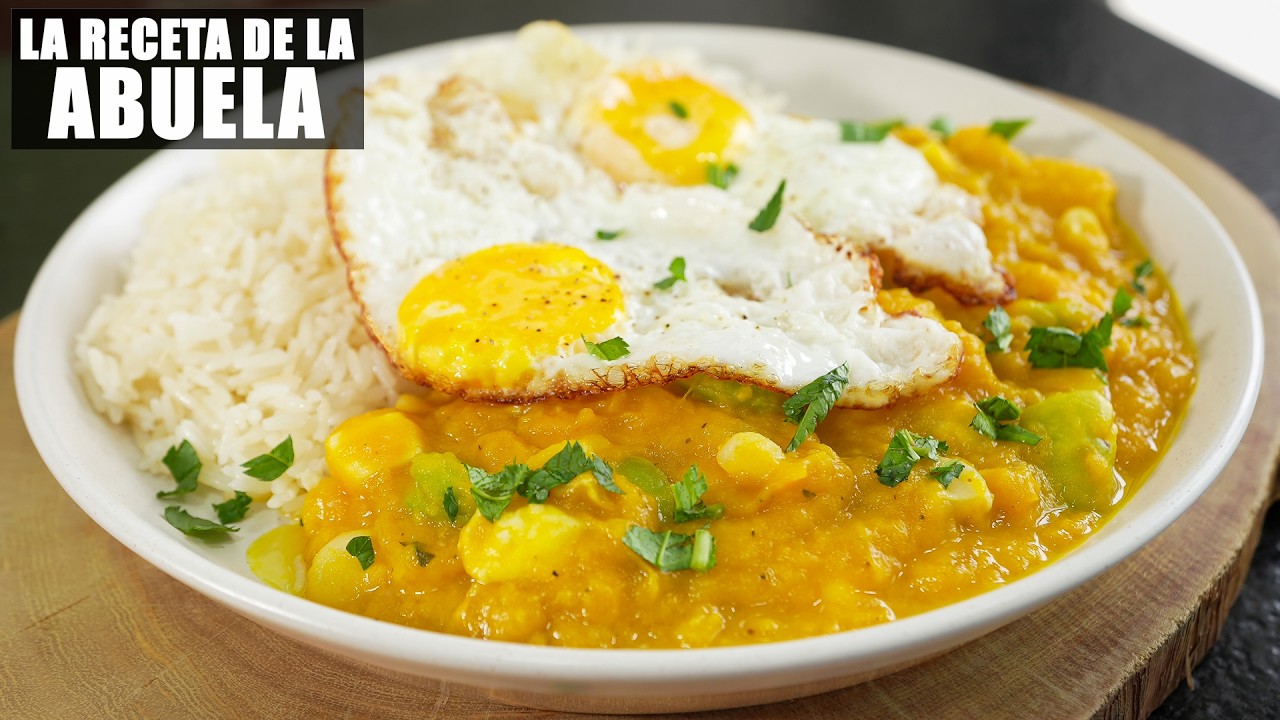
Grandma's Peruvian Pumpkin Stew (Locro de Zapallo)
A thick, creamy Peruvian pumpkin stew with yellow potatoes, corn, fava beans, and fresh cheese, aromatic with guacatay (Peruvian black mint). Served with white rice and a golden fried egg, this humble grandmother's recipe is comfort food at its finest.
smart_display Published 2026-04-16
download Extracted 2026-04-17
Ingredients
- 1500 g zapallo (Peruvian pumpkin / kabocha squash) (peeled and cut into medium chunks)
- 2 medium yellow potatoes (papa amarilla) (peeled and cut into small pieces)
- 1 medium red onion (finely diced (brunoise))
- 2 cloves garlic cloves (minced)
- 7 tbsp yellow chili paste (pasta de ají amarillo)
- 1 ear corn kernels (choclo) (shelled / kernels cut off the cob)
- a handful fava beans (habas) (peeled of both outer skins)
- 1 sprig guacatay (Peruvian black mint / Tagetes minuta) (1 whole sprig for cooking + a few leaves chopped for garnish)
- ½ small cup chicken broth (or water)
- to taste fresh cheese (queso fresco) (diced)
- a splash evaporated milk (leche de tarro) (added at the end for creaminess)
- a splash vegetable oil (for sautéing and frying eggs)
- to taste salt
- to taste black pepper
- 1 per serving eggs (fried) optional
- for serving white rice (cooked) optional
Steps
-
1Peel the zapallo and cut into medium-sized chunks (doesn't need to be precise — they'll turn into mash). Peel the yellow potatoes and cut into small pieces. Set aside.~10 min
-
2Heat a pot over medium heat. Add a splash of vegetable oil, then the finely diced red onion and minced garlic. Add a pinch of salt and pepper. Sauté for 6-8 minutes over medium heat, stirring so nothing burns.~8 min
-
3After about 15 minutes of aderezo total cooking time, add the yellow chili paste (7 tablespoons). Stir in and continue cooking over low heat until the aderezo is concentrated and fragrant.Tip: The aderezo needs time — patience here builds the deep flavor base of the locro.~7 min
-
4Add the zapallo chunks and yellow potato pieces. Tuck in one whole sprig of guacatay (stem and all). Add half a small cup of chicken broth (or water) and a touch of salt. Cover and cook over medium heat.Tip: Use the stem of the guacatay — that's where most of the flavor and aroma are concentrated.~5 min
-
5While the locro cooks, dice the fresh cheese and chop a few guacatay leaves for garnish. Set both aside.~5 min
-
6Once the zapallo and potato begin to break down into mash, add the corn kernels. Adjust salt to taste. Continue cooking for 10-12 minutes until the corn is tender.~12 min
-
7About 3 minutes before turning off the heat, add the peeled fava beans. Remove and discard the whole guacatay sprig — it has done its job.~3 min
-
8Add the diced fresh cheese and a splash of evaporated milk. Stir gently to incorporate. Turn off heat. The stew should be super creamy.~2 min
-
9In a separate pan, heat vegetable oil and fry eggs to taste (one per serving). Season with salt and pepper.~3 min
-
10Serve white rice alongside the locro. Top with the fried egg and a sprinkle of freshly chopped guacatay leaves. Optionally accompany with chicken or meat.Tip: Classic serving: rice on one side, locro on the other, golden fried egg on top — the yolk breaking into the creamy stew is the payoff.~2 min
Nutrition (per serving)
420
Calories
14g
Protein
38g
Carbs
18g
Fat
6g
Fiber
Cultural Context
Locro de Zapallo is one of Peru's most beloved and deeply rooted home-cooked dishes. The word 'locro' derives from the Quechua word 'ruqru,' reflecting the dish's pre-Columbian origins among the indigenous Andean peoples who cultivated squash (zapallo) as a staple crop. A humble, economical stew traditionally made during winter months, locro de zapallo embodies Peruvian comfort food — thick, creamy, and warming. The combination of zapallo, papa amarilla, choclo, habas, and queso fresco represents the agricultural bounty of the Peruvian highlands. Guacatay (Tagetes minuta, Peruvian black mint) is the irreplaceable herb that gives the dish its distinctive floral, anise-like aroma. Every Peruvian family has their own version, often passed down from grandmothers, making it both a national staple and deeply personal food memory.