› Browse Recipes › Chicken Marengo: A Classic French Dish, Napoleon's Favorite Chicken?
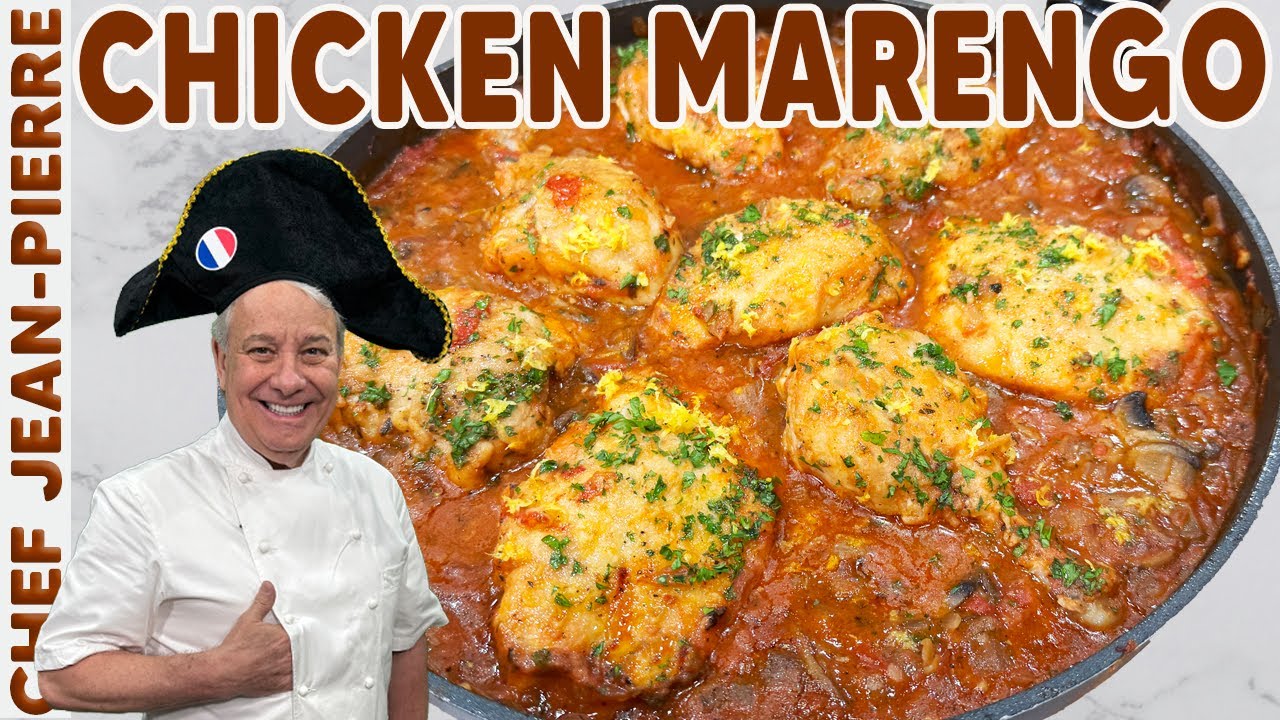
Chicken Marengo: A Classic French Dish, Napoleon's Favorite Chicken?
A rustic French braised chicken dish made with tomatoes, white wine, mushrooms, garlic, and finished with fresh lemon zest. Simple one-pot cooking with deep, comforting flavor — reportedly inspired by Napoleon's era.
smart_display Published 2025-05-26
download Extracted 2026-04-18
Ingredients
- 1 whole chicken whole chicken, cut up (thighs and breasts, skinless) (cut into thighs and breasts, skin removed)
- enough to dredge chicken all-purpose flour (for dredging chicken pieces)
- 1 whole large yellow onion (chopped)
- 8 oz mushrooms (sautéed)
- 2 tsp garlic (minced)
- a few sprigs fresh thyme
- 1 cup dry white wine
- 20 oz chopped tomatoes (San Marzano recommended) (peeled and chopped)
- 1 cup chicken stock
- 1 leaf bay leaf
- to taste fresh parsley (chopped, for finishing)
- 1 whole (zest only) lemon (zested)
- to taste salt and black pepper
- to taste black olives optional
- 1 tbsp cornstarch (mixed with cold water to make a slurry if needed) optional
Steps
-
1Season the chicken pieces generously with salt and pepper, then dredge each piece in flour to coat lightly on all sides.Tip: Removing the skin before braising prevents soggy texture — skin only stays pleasant when fried, sautéed crisp, or roasted.~5 min
-
2Heat oil or butter in a large heavy pan over medium-high heat. Sear the chicken pieces until golden brown on both sides. Remove and set aside.Tip: Get a beautiful deep golden-brown color on the chicken — this Maillard reaction is what gives the dish its depth of flavor.~10 min
-
3In the same pan, sauté the chopped onion and pre-sautéed mushrooms until softened. Add the garlic and fresh thyme. Season with salt and pepper.~5 min
-
4When you smell the garlic, add the white wine. Reduce the wine almost completely over medium-high heat before adding anything else. Taste the wine as it reduces — it should lose all sharpness and acidity.Tip: Never add tomatoes or stock before the wine has fully reduced. If you add liquids before the wine reduces, it will never reduce properly and the dish won't taste good.~8 min
-
5Once the wine is nearly evaporated, add the chopped tomatoes, chicken stock, and bay leaf. Stir to combine.Tip: Only one bay leaf is needed — unless cooking for an army!~2 min
-
6Nestle the seared chicken pieces back into the pan, placing them into the sauce. Cover the pan, reduce heat to low, and braise slowly until the chicken reaches an internal temperature of 165°F (about 35–40 minutes).Tip: Boneless breasts cook faster than bone-in legs. Check breasts early and remove them when done; continue cooking legs until fully cooked through.~40 min
-
7If the sauce needs thickening, stir in 1 tablespoon of cornstarch mixed with a little cold water. Simmer briefly until thickened.Tip: If you dredged the chicken properly in flour before searing, the sauce should naturally thicken to the right consistency without needing cornstarch.~2 min
-
8Finish the dish by sprinkling with freshly chopped parsley and zesting one whole lemon directly over the top. Serve immediately with rice, polenta, fresh pasta, or mashed potatoes.Tip: The lemon zest at the end is transformative — it brightens the entire dish from good to wow. Don't skip it.~2 min
Nutrition (per serving)
420
Calories
38g
Protein
14g
Carbs
20g
Fat
3g
Fiber
Cultural Context
Chicken Marengo is a classic French dish with a legendary origin story: it was supposedly created by Napoleon's chef after the Battle of Marengo in 1800, in the Piedmont region of what is now northern Italy, where the French defeated the Austrians. However, as Chef Jean-Pierre notes, research suggests the dish was more likely popularized by a Parisian restaurant celebrating the victory rather than actually being cooked on the battlefield. Regardless of its true origins, it became a staple of French bistro cooking and a fixture on classic French restaurant menus through the 20th century.
Chef Jean-Pierre
Chicken Marengo: A Classic French Dish, Napoleon's Favorite Chicken? | Chef Jean-Pierre
Watch on YouTube →