Behind the Scenes at El Gran Chef Famosos Finale — Culinary Insights & Chef's Uniform History
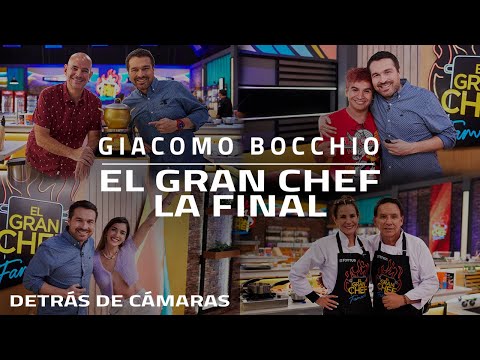
A behind-the-scenes vlog from the Season 1 finale of El Gran Chef Famosos, Peru's hit celebrity cooking competition on Latina TV. Giacomo Bocchio takes viewers through the entire finale day — from arriving at the studio, meeting the makeup and production teams, to watching finalists Ricardo Rondón and Karina Calmet compete through three courses. Along the way, Giacomo shares rich culinary history about the origins of the chef's uniform (the dolma), explains how the French Revolution shaped modern restaurant culture, and interviews eliminated contestants who share practical cooking tips they learned during the competition. The finale menu features a classic direct ceviche, lamb chops over quinoa risotto with ají amarillo, and a dual chocolate-lúcuma mousse with almond croquant. Participants reflect on overcoming fear in the kitchen, the importance of knife skills, and how the discipline of cooking transformed their personal lives. The video also reveals the massive production effort — 100+ crew members, 10 cameras, 18 microphones, 12-14 hour shooting days — that goes into creating each 70-minute episode.
Ingredients
Steps
-
1The chef's uniform (dolma) has a double-breasted front with side buttons, representing the French military uniform. During the French Revolution, chefs who worked for royalty fled to convents — hence the priest's collar (neru) and the tall hat representing the papal mitre.Tip: Before the French Revolution, restaurants did not exist — only fondas serving a single dish. The concept of a menu emerged after chefs began opening restaurants for the rising bourgeoisie.
-
2For the finale, the competition menu was structured as three courses: a classic direct ceviche (without leche de tigre), lamb chops over a quinoa risotto (quinoto) made with white and black quinoa flavored with ají amarillo and aromatic herbs, and a dessert of dual chocolate and lúcuma mousse with an almond croquant.Tip: When making mousse for competition, prepare the dessert first so it has time to set in the refrigerator while you work on the other courses. Both finalists started with the mousse before moving to the lamb.
-
3Lose your fear of the knife — once you overcome that, you can maneuver freely in the kitchen. Treat the knife with respect; if something does not cut properly, it is never the knife's fault. When making purées, sweet potato (camote) is more forgiving than potato — you can even blend it without ruining the texture, unlike potato purée which becomes gluey when over-processed.Tip: Always strain your purée through a colador (sieve) to catch impurities. One contestant was eliminated because a tiny piece of sweet potato skin ended up in an otherwise perfect purée — a simple straining step would have prevented it.
-
4Organization and cleanliness in the kitchen translate to organization in life. Multiple contestants noted that the discipline they learned from Giacomo on the show — keeping stations clean, working methodically — transformed how they manage their personal spaces and daily routines.Tip: Japanese cuisine was cited as the most challenging style for non-professional cooks due to its precision requirements. If you want to prepare for a cooking challenge, study unfamiliar cuisines in advance — one contestant noted the chef who taught Japanese food on the show also had tutorials on Giacomo's YouTube channel.
-
5Competition judging used a 0-to-5 scale per dish, with three judges scoring independently. The judges did not share scores with each other — only the show's director knew the combined results until the final reveal. This blind scoring approach ensures fairness and prevents bias between judges.Tip: When evaluating food as a cook, focus on what makes one dish edge out another — technical execution, seasoning balance, and presentation all contribute to the final assessment.