› Browse Recipes › Carbonara
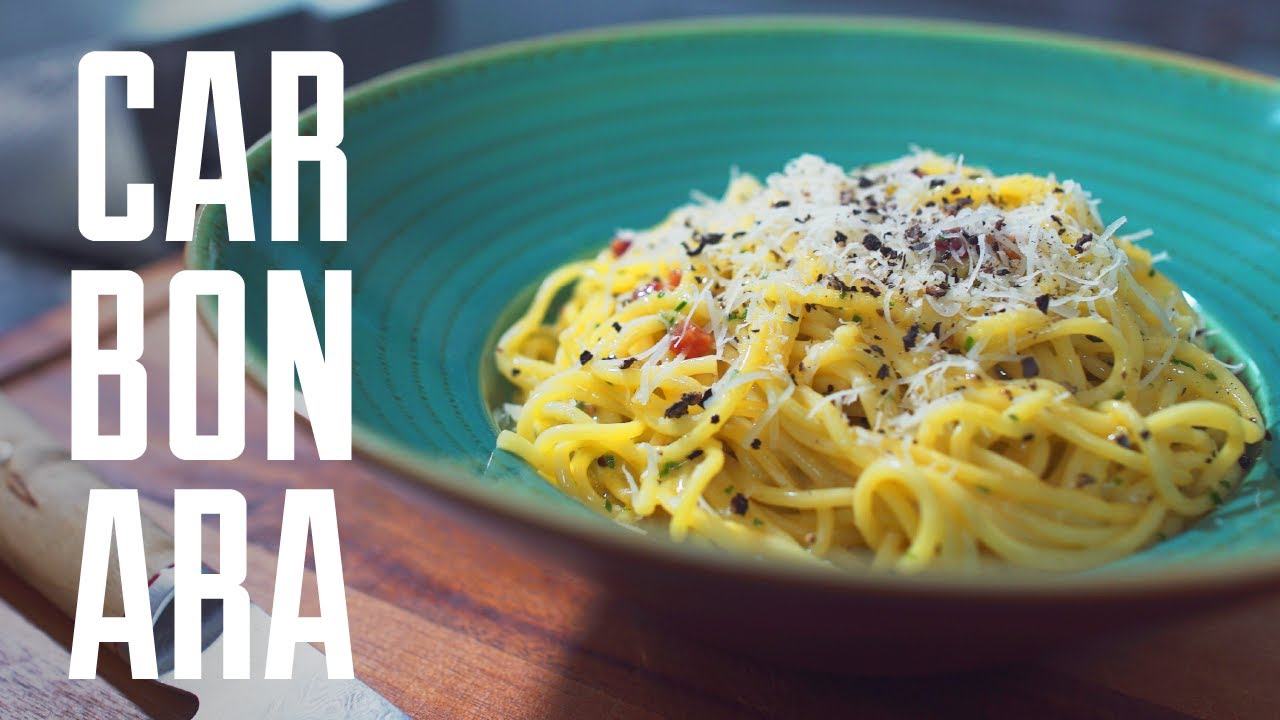
Carbonara
Chef Giacomo Bocchio presents a foolproof carbonara recipe using traditional Italian techniques. He explains the origins of the dish's name, demonstrates how to properly cook bacon from cold for maximum fat rendering, and shows the classic egg yolk and Parmesan emulsion technique.
download Extracted 2026-03-29
Ingredients
Garnish
- 1 tbsp Chives (ciboulette) (finely chopped) optional
Pasta
- 200 g Spaghetti (dry pasta)
Sauce
- 150 g Smoked bacon or guanciale (cut in 3-4mm macedoine (small cubes))
- 2 units Egg yolks
- 0.5 cup Parmesan cheese (finely grated, plus extra for serving)
- 1 tbsp Black pepper (Parisian ground) (freshly and coarsely ground)
- 1 pinch Salt (small amount since pasta water is salty)
- 0.25 cup Pasta cooking water (starchy, reserved)
Steps
-
1Boil a large pot of water with salt (it should taste like seawater). Cook spaghetti for 10-11 minutes until al dente - when broken in half, you should see a thin white line (pin) running through the center, indicating the pasta center is still slightly raw.Tip: Italians eat pasta al dente and stay thinner because the body can't fully metabolize the slightly uncooked starch. To put long pasta in the pot: hold it vertically, let the bottom soften, then open your hands like a flower.~11 min
-
2While pasta cooks, place diced bacon in a COLD non-stick pan. Start heating gradually from cold. This allows the fat to render slowly and evenly, giving you the perfect amount of flavorful fat for the sauce.Tip: Starting from cold is essential when you want to render fat (same technique for duck confit). If you start hot, the outside sears and traps the fat inside.~8 min
-
3In a bowl, combine egg yolks with generous freshly ground black pepper, a tiny pinch of salt, and a generous amount of grated Parmesan. Mix into a thick paste. Add a splash of starchy pasta water to create a smooth cream.Tip: Don't discard the pasta water - it's liquid gold! The starch in it acts as a natural binder for the sauce. Add chives for a nice onion-family note.~3 min
-
4When bacon is golden and crispy with rendered fat, reduce heat to minimum. Drain pasta (reserving water), add to the bacon pan. Toss briefly to coat pasta in the flavorful rendered fat.~2 min
-
5Remove pan from heat. Add the hot pasta to the yolk-cheese mixture (not the other way around) and toss vigorously. The residual heat creates a silky emulsion without scrambling the eggs. Add more pasta water if too dry. Serve immediately with extra Parmesan and black pepper on top.Tip: The generous black pepper on top is why it's called Carbonara - the dark specks look like coal dust (carbone), honoring the coal miners of northern Italy.~2 min
Nutrition (per serving)
580
Calories
25g
Protein
60g
Carbs
28g
Fat
2g
Fiber
Cultural Context
Carbonara originates from northern Italy's coal mining regions. The dish is named after the black pepper that tops it, resembling grains of coal (carbone). It is one of the most traditional and beloved Italian pasta dishes, traditionally made with guanciale (cured pork cheek), though Giacomo uses homemade smoked bacon cured for 7 days.