› Browse Recipes › Wonton Soup (Sopa Wantan)
Wonton Soup (Sopa Wantan)
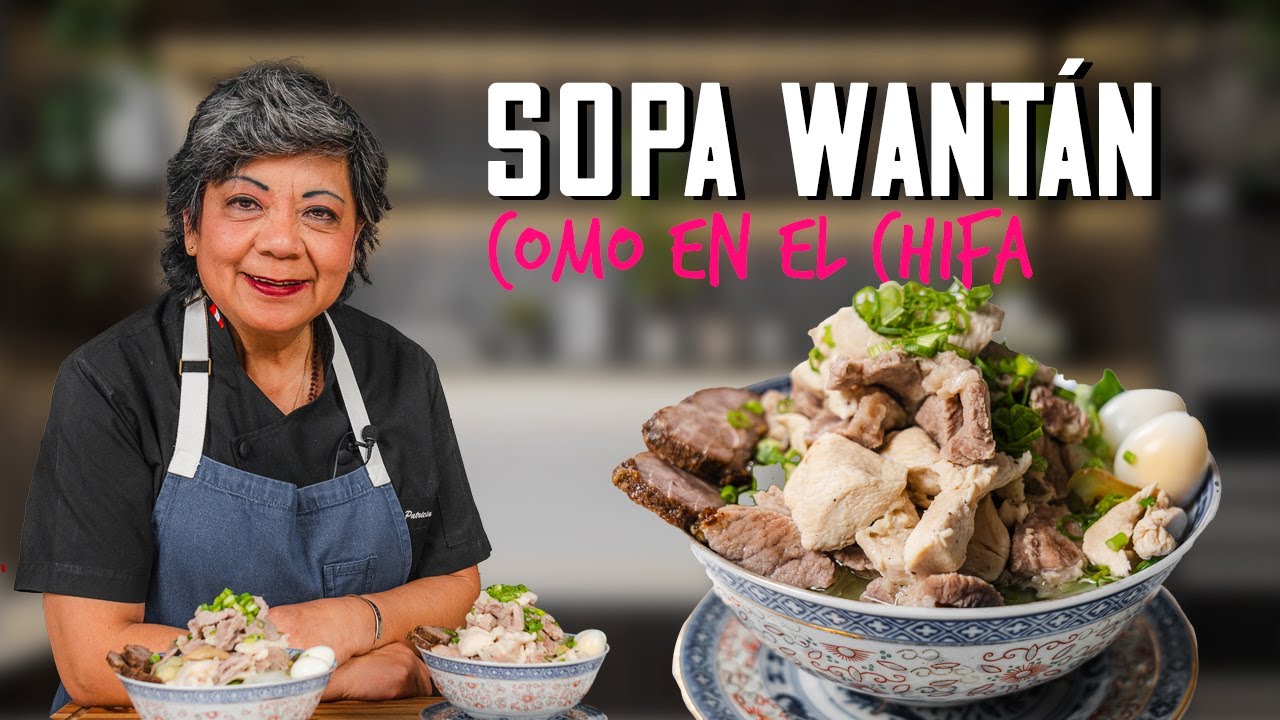
A traditional Chinese-Peruvian (chifa) wonton soup taught by Chef Pati Chong on Giacomo Bocchio's channel. Includes a homemade Chinese stock made from pork bones, chicken bones, and chicken feet, plus hydrated proteins (pork and chicken), Chinese cabbage, snow peas, mushrooms, char siu pork, quail eggs, and wontons cooked separately to keep the broth clear.
download Extracted 2026-03-31
Ingredients
Chinese Stock (Fondo Chino)
- 500 g pork bones (cleaned, rib or any pork bones)
- 500 g chicken bones (cleaned, backbone/breast area preferred, skin and fat removed)
- 300 g chicken feet (cleaned)
- 3 L water (3 to 5 parts water per volume of bones)
Garnishes
- 150 g char siu pork (chasu) (sliced thin, pre-made)
- 8 pieces quail eggs (hard-boiled and peeled)
- 2 stalks Chinese chives (green onion) (sliced into thin rounds)
Protein Hydration
- to taste salt
- to taste white pepper (or black pepper)
- pinch MSG seasoning optional
- 2 tsp cornstarch (or potato starch) (1 tsp per 250g of meat)
- 0.33 cup water (for hydration) (1/3 cup per 500g meat, let rest 10 min)
Proteins
- 250 g pork bondiola (shoulder) (sliced 2-3mm thin diagonal slices (chu yok pin cut), fat trimmed)
- 250 g chicken breast (sliced thin diagonal slices (kai pin cut), tenderloin removed)
Soup
- 1 piece ginger (kion) (sliced or smashed)
- 200 g Chinese cabbage (napa cabbage) (leaves cut into bite-size pieces, stalks reserved for other use)
- 100 g snow peas (holantao) (trimmed both ends, strings removed, large ones halved diagonally)
- 1 can canned mushrooms (drained; fresh mushrooms can substitute)
- 1 tbsp sesame oil (added at the end for fragrance)
- to taste salt
Wontons
- 12 pieces wontons (pre-made) (boiled separately in salted water with oil for 4-5 min)
- 1 tbsp vegetable oil (for wonton boiling water and greasing tray)
Steps
-
1Make the Chinese stock (fondo chino): Place cleaned pork bones, chicken bones, and chicken feet in a large pot. Add water (3-5 parts water to 1 part bones by volume). Bring to a moderate-high heat.Tip: Remove any excess fat, skin, or viscera from bones before starting. Use backbone/breast bones for lighter color stock.~5 min
-
2As the stock heats, skim all impurities (foam) that rise to the surface. Once it reaches a boil, reduce heat to low and simmer gently for 1.5 to 2 hours until the liquid reduces by one-quarter to one-third.Tip: Let the stock cool with the bones still in it for maximum flavor extraction, then strain.~105 min
-
3While the stock simmers, prepare the pork: Cut bondiola into thin diagonal slices (2-3mm) against the grain — this is the traditional 'chu yok pin' cut. Trim excess fat.Tip: The pin (slice) cut is a classic Chinese knife technique that allows fast, even cooking in soups and stir-fries.
-
4Prepare the chicken: Remove the tenderloin from the breast, then cut thin diagonal slices — the 'kai pin' cut. Can be done with circular horizontal cuts (traditional with cleaver) or diagonal outward cuts.Tip: Pieces should be bite-sized since Chinese cuisine traditionally doesn't use knives at the table.
-
5Hydrate the proteins: Season both meats lightly with salt, pepper, and optional MSG. Add 1 tsp cornstarch per 250g of meat, then add water (1/3 cup per 500g). Mix well and let rest for 10 minutes to absorb the liquid.Tip: This ancient Chinese hydration technique (buting) makes proteins more tender. The starch coating locks in moisture during the thermal shock of cooking.~10 min
-
6Prepare vegetables: Cut Chinese cabbage leaves into bite-size pieces (discard or save stalks for stir-fry). Trim snow peas at both ends, remove string, halve large ones diagonally. Slice ginger into thin rounds or smash it.
-
7Bring the strained stock to a boil. Add sliced ginger and let it infuse while heating. Slice the char siu (chasu) into thin pieces for garnishing.
-
8Cook the wontons separately: Bring a pot of salted water with a splash of oil to a boil. Add wontons and cook 4-5 minutes. Remove to an oiled tray to prevent sticking.Tip: Cook wontons separately to keep the broth clear. Unlike Western pasta, Chinese pastas are boiled in oiled water.~5 min
-
9With the stock at a rolling boil, add the pork slices one by one (to prevent sticking from the starch). Skim any impurities. Cook for 3 minutes before adding chicken.Tip: Add pork first as it needs longer cooking time than chicken. Add pieces individually along the pot edges for even cooking.~3 min
-
10Add the chicken slices one by one. Season the broth with salt. Add the Chinese cabbage and cook for 2 minutes.~2 min
-
11Add the snow peas and canned mushrooms near the end to preserve their flavor and texture. Drizzle with sesame oil. Taste and adjust seasoning.Tip: Add mushrooms and snow peas last to avoid overcooking. Canned mushrooms are preferred for soups as they hold their flavor better than fresh.
-
12To serve: Place wontons in a large soup bowl. Ladle the hot soup with proteins and vegetables over the wontons. Garnish with sliced char siu, peeled quail eggs, and sliced Chinese chives. Finish with a drizzle of sesame oil and optional white pepper.Tip: If wontons have cooled, briefly reheat them in the hot soup before serving. This is practically a complete meal on its own.
Nutrition (per serving)
380
Calories
32g
Protein
28g
Carbs
14g
Fat
3g
Fiber
Cultural Context
Wonton soup (sopa wantan) is one of the most iconic dishes of chifa cuisine, the Chinese-Peruvian culinary tradition born from Chinese immigration to Peru in the 19th century. The word 'wantan' comes from Cantonese: 'wan' means cloud and 'tan' means to swallow — 'swallowing clouds' — because the boiled wontons resemble soft, amorphous clouds floating in broth. Chef Pati Chong explains that the traditional recipe should include both fresh pork and chicken in the broth (not just chicken and shrimp as many modern chifas serve), and that the Chinese stock (fondo chino) made from three types of bones is foundational. She also demonstrates the ancient Chinese hydration technique for tenderizing proteins with cornstarch and water before cooking, and traditional Chinese knife cuts: 'chu yok pin' (pork slices) and 'kai pin' (chicken slices).
Giacomo Bocchio
TE ENSEÑO A PREPARAR LA MEJOR SOPA WANTAN | ELEVA TU JUEGO CULINARIO CON LA CHEF PATI CHONG
Watch on YouTube →