› Browse Recipes › Kam Lu Wantan (Golden Dragon Wonton) with Pickled Turnip
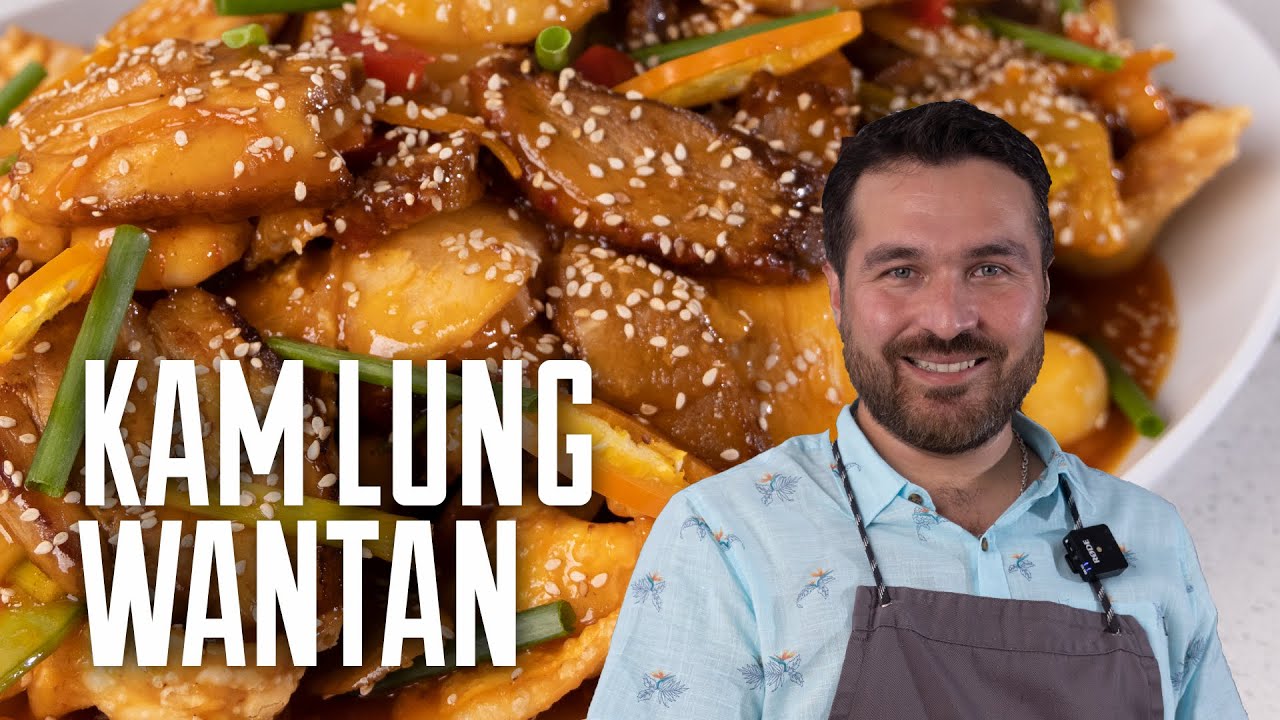
Kam Lu Wantan (Golden Dragon Wonton) with Pickled Turnip
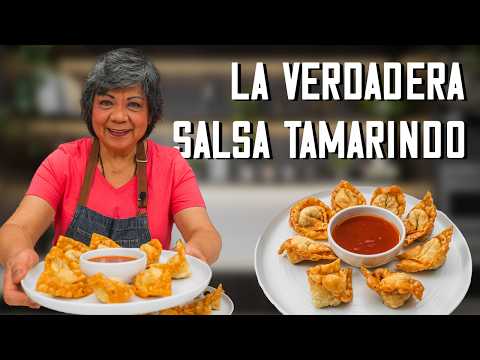
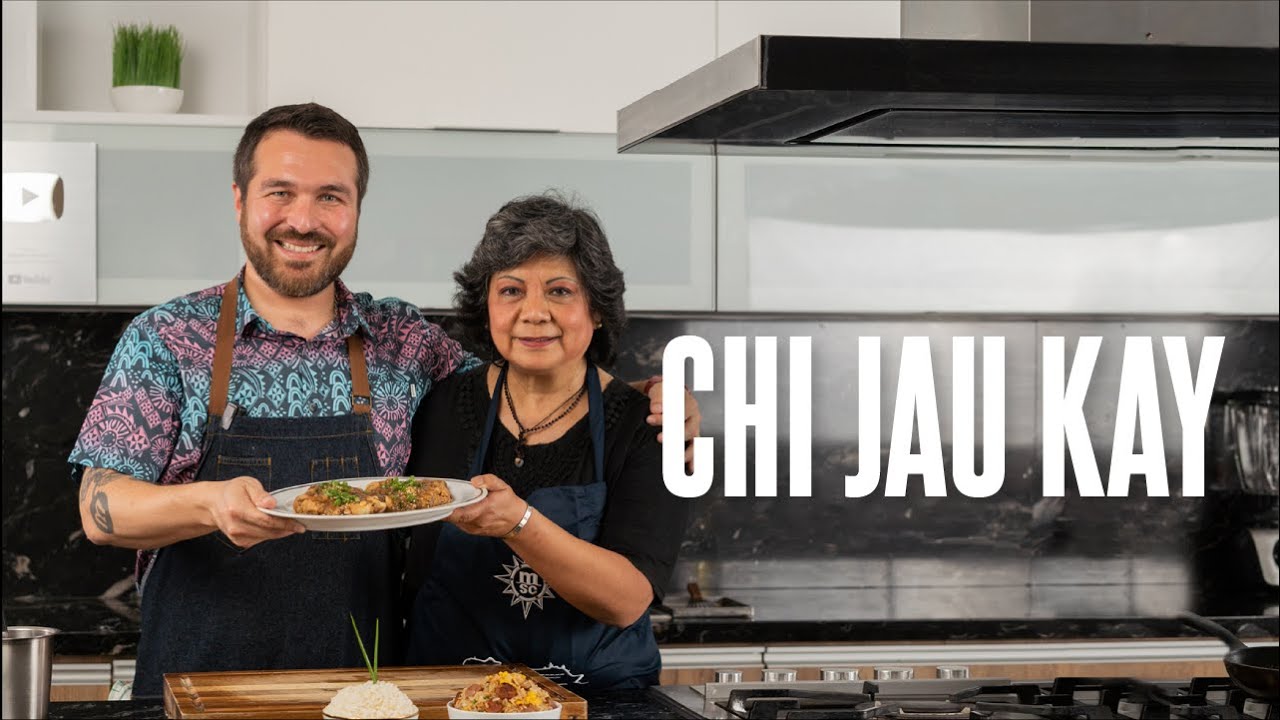
A classic Chifa dish meaning 'Golden Dragon' — crispy pork wontons bathed in a sweet-and-sour tamarind-style sauce with sauteed shrimp, poached chicken, roast duck, pineapple, quail eggs, and pickled turnip. Giacomo learned this recipe from master Chinese chef Pati Chong.
download Extracted 2026-03-30
Ingredients
Assembly
- 300 g shrimp (langostinos) (quickly sauteed then removed; re-added at the end)
- 200 g chicken breast (for sauce) (poached in chicken broth (by concentration), brined beforehand, sliced)
- 300 g roast duck (bought from a Chifa or roasted; sliced and sauteed) opcional
- 200 g canned pineapple (must be cooked/canned (fresh pineapple enzymes break down the sauce))
- 12 units quail eggs (hard-boiled)
- 100 g snow peas (holantao) (sauteed quickly)
- 1 unit bell pepper (cut and sauteed)
- 1 unit aji amarillo (yellow chili) (some pieces with seeds and veins for heat) opcional
- 2 cloves garlic (sauteed to aromatize the oil)
- 1 tbsp ginger (kion) (sliced, sauteed to aromatize the oil)
- 4 stalks green onion (cebolla china) (white part sauteed with vegetables, green part for garnish cut large)
- 1 tbsp sesame seeds (toasted, for garnish)
- 500 ml vegetable oil (for frying) (heated to 180°C for deep frying wontons)
Char Siu Pork
- 1.8 kg pork belly (panceta) (brined for 3 hours, then marinated with char siu syrup)
Char Siu Syrup
- 2 units star anise (for the char siu syrup)
- 35 g soy sauce (for the char siu syrup)
- 60 g ginger (kion) (for the pickling liquor)
- 50 ml pisco or grape brandy (added off the heat; use a simple, non-oaky spirit) opcional
Pickled Turnip
- 1 large turnip (nabo) (peeled deeply (removing outer fibrous layer), sliced into 1.5-2mm rounds)
- 2 tbsp salt (for bleeding turnip) (generous amount to draw out liquid, then rinse thoroughly)
Pickling Liquor
- 900 g sugar (dissolved in syrup on heat)
- 600 g vinegar (white vinegar for pickling liquor)
- 1200 g water (for pickling liquor)
Serving
- 3 cups white rice (steamed, for serving)
Tamarind Sauce
- 500 g ketchup (fried in oil to concentrate flavor)
- 200 g sugar (for tamarind sauce)
- 520 g pickling liquor (from the turnip pickling liquor recipe)
- 500 g water (to extend the sauce)
- 40 g ginger (kion) (added when ketchup starts to split)
- 35 g soy sauce (for tamarind sauce)
- 40 g sesame oil (added at the end to aromatize the sauce)
- 43 g white vinegar (for tamarind sauce)
- 2 tbsp cornstarch (maizena) (dissolved in water to thicken the sauce)
Wontons
- 300 g chicken breast (for wonton filling; processed with green onion, sesame oil and cornstarch slurry)
- 3 heads green onion (cebolla china) (for wonton filling)
- 1 tsp sesame oil (for wonton filling)
- 2 tsp cornstarch (maizena) (dissolved in water; mixed into filling to retain moisture during frying)
- 24 sheets wonton wrappers (kept covered with damp cloth to prevent drying)
- 1 tsp salt (for wonton filling)
Steps
-
1Combine 600g vinegar, 900g sugar, 60g ginger, and 1200g water. Bring to a boil, stirring until sugar dissolves. Blend with an immersion blender to fully dissolve. Reserve half for the turnip and half for the tamarind sauce.~10 min
-
2Make a perfumed syrup with star anise, soy sauce, ginger, sugar, and pisco (added off heat). Brine the pork belly for 3 hours, then coat with the char siu syrup on all sides.~200 min
-
3Place the marinated pork on a rack over a tray with water (to prevent dripping fat from burning). Roast at 180°C until golden and internal temperature reaches 63-70°C. Flip halfway through and brush with more syrup.~60 min
-
4Peel the turnip deeply, removing the outer fibrous layer. Cut in half and slice into 1.5-2mm rounds. Salt generously and let sit 35-45 minutes to bleed out the strong vegetative liquid. Rinse thoroughly with cold water and squeeze dry like a cloth. Submerge in half the pickling liquor for 1.5 hours, then replace with fresh pickling liquor for another 1.5 hours. For best results, let it sit 12-24 hours.~240 min
-
5Process chicken breast with green onion heads, a few drops of sesame oil, salt, and a cornstarch slurry (2 tsp cornstarch dissolved in a little water). The cornstarch acts as a gel to keep the filling moist during frying. Traditionally this is done with two cleavers (machetes), but a food processor works too.~15 min
-
6Keep wonton wrappers covered with a damp cloth. Moisten the edges with water, place filling toward one corner, fold diagonally leaving a small margin while pressing out excess air. Fold up and moisten the tips, pressing them firmly together.~20 min
-
7Deep fry the wontons in oil at 180°C until golden and crispy.~10 min
-
8Heat oil in a pot on low heat. Add 500g ketchup and fry it, stirring constantly, to extract moisture and concentrate the flavor. When it starts to split (ojos de sapo), add ginger, 200g sugar, and 43g vinegar. Once the sugar dissolves, add 500g water and 520g pickling liquor. Simmer for 10 minutes. Thicken with cornstarch slurry. Strain and finish with 40g sesame oil.~25 min
-
9In a hot pan with oil, quickly sear the shrimp for Maillard reaction — do not overcook. Remove and set aside. Sear the sliced poached chicken breast briefly for color. Remove. Sear the sliced roast duck for color. Remove all proteins.~10 min
-
10In the same pan, add a bit more oil. Saute sliced ginger and garlic cloves to aromatize the oil. Add snow peas, the white part of green onions, bell pepper, and aji amarillo. Saute briefly — vegetables should remain crisp.~5 min
-
11Return all seared proteins to the pan. Add canned pineapple, pickled turnip, and quail eggs. Pour in the tamarind sauce and toss everything together. Serve over white rice, topped with fried wontons. Garnish with pieces of aji amarillo with seeds, large-cut green onion tops, and toasted sesame seeds.~5 min
Nutrition (por porción)
680
Calorías
38g
Proteína
55g
Carbohidratos
34g
Grasa
3g
Fibra
Cultural Context
Kam Lu Wantan (meaning 'Golden Dragon') was created nearly 100 years ago in Peru by Cantonese Chinese immigrants. The word 'Chifa' comes from 'chi fan' meaning 'to eat rice' in Chinese. The tamarind sauce is actually a Peruvian adaptation — originally a Cantonese apricot-plum sauce that was recreated with ketchup and vinegar when the original fruits were unavailable in Peru. Some modern Chifa restaurants have reintroduced actual tamarind fruit into the sauce.
Giacomo Bocchio
COMO PREPARAR KAM LU WANTAN (KAM LUNG WANTAN) Y NABO ENCURTIDO | GIACOMO BOCCHIO | CHIFA
Watch on YouTube →