› Browse Recipes › Olluquito con Carne (Olluco with Beef and Chalona)
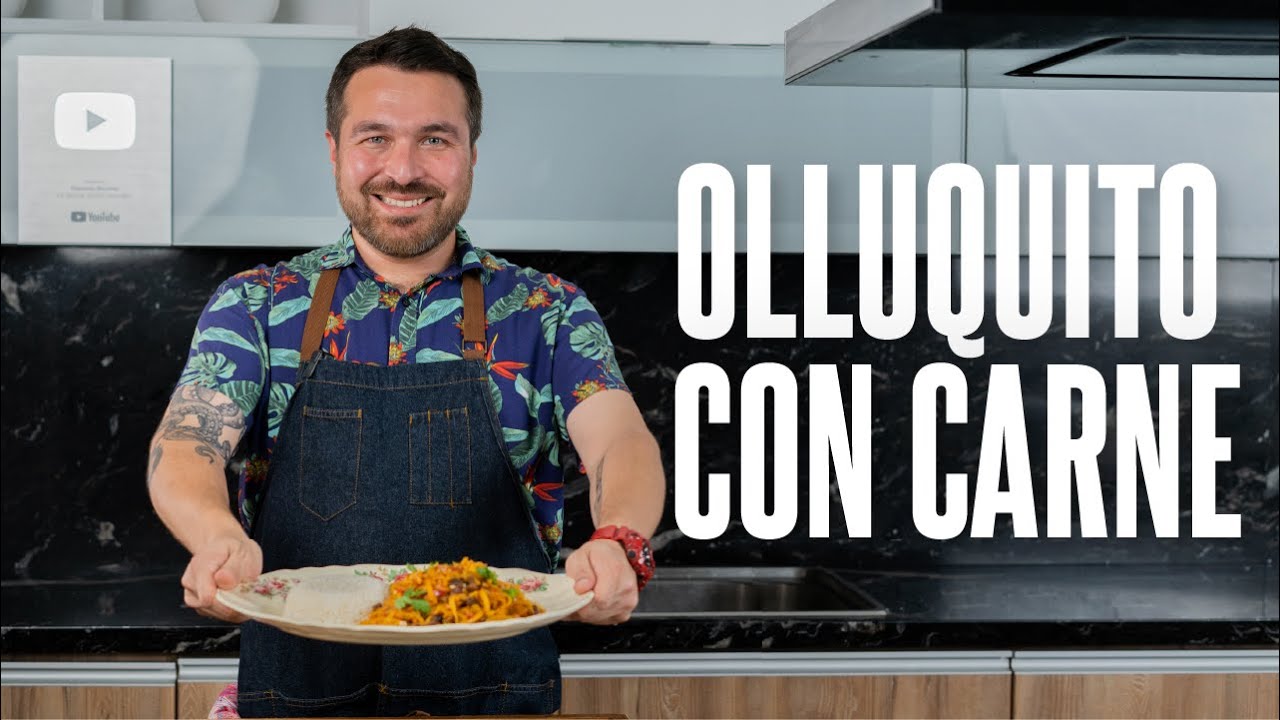
Olluquito con Carne (Olluco with Beef and Chalona)
A beloved Peruvian home stew of olluco (ulluco tuber) cut in julienne and braised with seared beef cubes and chalona or charqui (dried salted lamb or llama), seasoned with a classic Peruvian aderezo of onion, garlic, ají amarillo, and ají panca, and finished with fresh parsley. The olluco releases its own moisture, requiring no added liquid.
download Extracted 2026-03-31
Ingredients
Aderezo
- 1 unit white onion (finely diced (brunoise))
- 4 cloves garlic (minced or grated)
- 2 tbsp ají amarillo paste
- 1 tbsp ají panca paste
- pinch ground cumin
- to taste black pepper
- to taste salt (use sparingly — chalona/charqui contributes significant salt)
- 3 tbsp neutral oil (vegetable or sunflower)
Finishing
- handful fresh flat-leaf parsley (finely chopped with a sharp knife; reserve some leaves for garnish)
Main
- 800 g olluco (ulluco) (washed, peeled, cut in julienne; if using purple/lilac variety, give a quick rinse after cutting to reduce sliminess)
- 400 g beef rump tail (colita de cuadril) or rump cap (cuadril) (cut across the grain first into slices then into medium cubes; small piece of external fat left on for flavour)
- 150 g chalona (dried salted lamb) or charqui (dried salted llama/alpaca) (cut into strips and small pieces; bone-in pieces kept whole; rinsed briefly to remove surface salt and dust — do not soak)
Serving
- to serve steamed white rice (cooked separately)
Steps
-
1Prepare the chalona or charqui: cut the dried meat into strips and small pieces, leaving bone-in pieces whole (they add deep flavour to the stew). Give all the pieces a quick rinse under cold water to remove surface salt and any dust from the market — do not soak or submerge, as you want to preserve the concentrated flavour of the cured meat.Tip: Giacomo prefers chalona (dried salted lamb from Tacna) over charqui (dried llama) for its more intense aroma. If using high-quality chalona, a brief rinse is sufficient — overnight soaking is unnecessary and loses flavour.~5 min
-
2Prepare the beef: cut the rump tail (colita de cuadril) first into slices, then into medium-sized cubes, cutting against the grain to maximise tenderness. Leave any small pieces of exterior fat on — they add flavour. Season the cubes with a small amount of salt (go easy, the chalona brings salt) and a drizzle of neutral oil, tossing to coat every piece evenly.Tip: Rump tail (colita de cuadril) is a secondary-category working muscle — ideal for stews. It has large fibres that break down beautifully in a medium-long braise without becoming dry like a premium lean cut would.~8 min
-
3Prepare the olluco: wash and peel the ollucos. Cut each one first into slices (láminas) and then into julienne strips. If you are using the smaller purple or lilac variety, give the cut olluco a quick rinse in water — these tend to have slightly more sliminess, which disappears after rinsing. Yellow or pink ollucos need no rinsing.Tip: Olluco contains far less starch than potato and much more internal moisture. This means it will not stick together, does not need to be rinsed after cutting (unless very mucilaginous), and — crucially — will release enough liquid during cooking that no broth or water needs to be added.~10 min
-
4Heat a splash of oil in a wide pot or Dutch oven over high heat. When hot, sear the beef cubes in batches (do not overcrowd) until deeply browned on all sides — this Maillard reaction creates the umami crust that is the foundation of the dish's flavour. Do not remove the beef from the pot; it stays in for the whole cook.Tip: Never add protein to a cold dish or to a liquid without searing it first — you lose the caramelisation (Maillard reaction) that gives depth of flavour. Unlike a tender loin, this secondary cut benefits from long cooking, so there is no risk of overcooking it by leaving it in.~6 min
-
5Add the chalona/charqui pieces (including bone-in pieces) to the pot with the seared beef. Stir and allow them to briefly toast and release their aroma. Add a little more oil if needed, then add the diced onion. Season with a pinch of cumin, pepper, and a small touch of salt. Cook over medium-high heat, stirring, until the onion softens and its water evaporates — about 4–5 minutes.Tip: Allowing the onion's water to evaporate before adding garlic and chilli concentrates its natural sugars, giving a balanced sweet-savoury flavour to the final dish.~6 min
-
6Add the minced garlic and cook for 1–2 minutes until fragrant. Then add the ají panca paste and ají amarillo paste. Stir everything together and cook the chilli pastes for at least 10 minutes over medium heat, allowing the fats to carry and develop the colour and aroma. The aderezo should turn a rich orange-red colour.Tip: Cooking is building layers of flavour like constructing a castle: the seared beef Maillard, the potent umami of chalona, and the classic Peruvian aderezo of onion, garlic, and chilli are the three foundations of this dish.~12 min
-
7Add all the julienned olluco to the pot and fold thoroughly to coat every piece with the aderezo. Add a small pinch of salt to help draw out the olluco's moisture. Cover the pot with a lid and cook over medium heat for 18–20 minutes, allowing the olluco to cook in its own released liquid (a technique called 'al vapor de sus propios líquidos' — steaming in its own juices). Do not add water or broth.Tip: Olluco has so much internal water that it creates its own steam and braising liquid when cooked covered. This is a fundamental difference from potato, which would burn without added liquid. The resulting juices are part of the dish and are meant to be soaked up with rice.~20 min
-
8After 18–20 minutes, uncover and test the olluco: it should be cooked through but still have a slight bite (al dente) — not mushy. Taste and adjust salt carefully, keeping in mind the saltiness of the chalona. Add a final grinding of black pepper. Turn off the heat.Tip: Remove the bone-in chalona pieces at this point if desired — they have given all their flavour and can be discarded or saved for a second preparation.~2 min
-
9Fold in the freshly chopped parsley, reserving a few whole leaves for garnish. Serve immediately in bowls with steamed white rice on the side. Spoon the abundant cooking juices over the rice.Tip: In Peruvian home cooking, parsley — not cilantro — is the traditional herb for olluquito. Giacomo notes that while cilantro dominates most Peruvian dishes, olluquito is one of the few preparations where parsley is correct and gives the right aromatic balance.~3 min
Nutrition (per serving)
390
Calories
34g
Protein
28g
Carbs
15g
Fat
4g
Fiber
Cultural Context
Olluquito con charqui (or con carne) is one of the oldest and most iconic dishes in Peruvian cuisine, rooted in the pre-Columbian Andean tradition of preserving both tubers and meat through dehydration and salting. Olluco (Ullucus tuberosus) is an Andean tuber in the same family as oca, cultivated in Peru for thousands of years. Charqui is llama or alpaca meat that has been salted and air-dried at high altitude — the Andean precursor to modern jerky — while chalona is the same technique applied to lamb, a specialty of Tacna and the Peruvian south. Giacomo Bocchio, himself from Tacna, expresses a personal preference for chalona for its more intense, aromatic flavour derived from the monounsaturated fat in lamb. The dish is traditionally served with steamed white rice, using the abundant cooking juices to moisten each bite.