› Browse Recipes › Chicken Ceviche (Ceviche de Pollo)
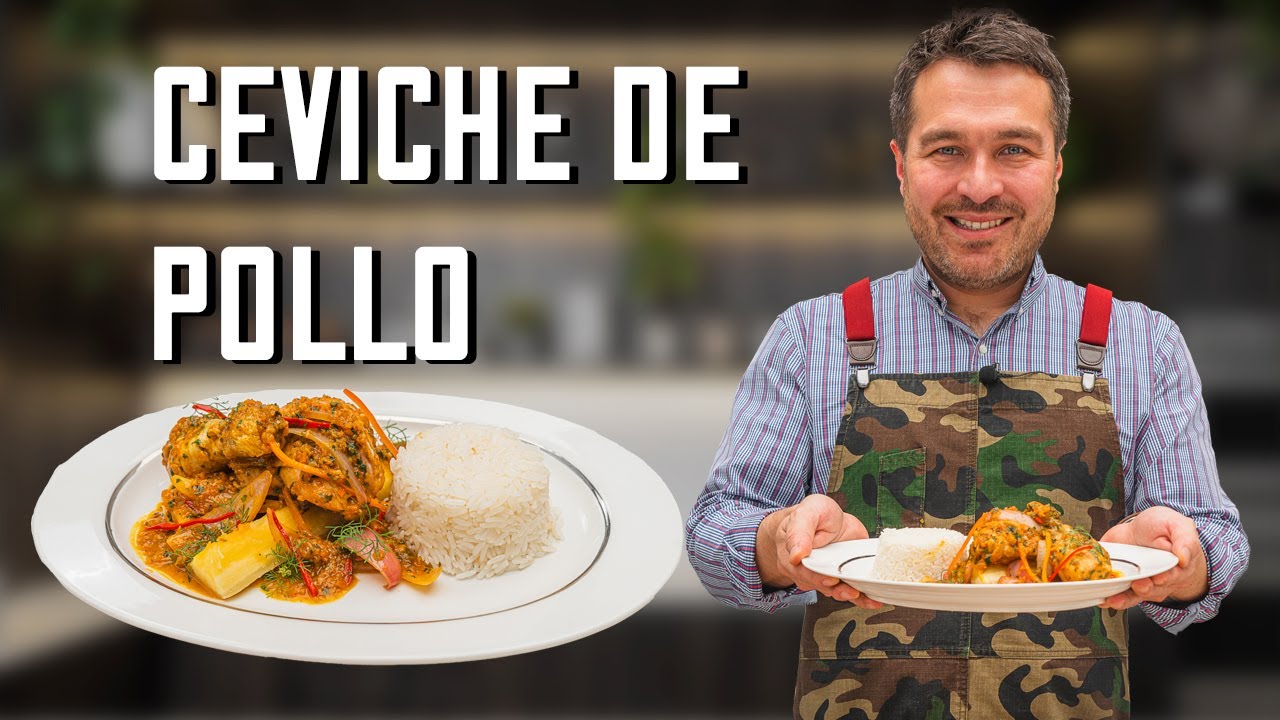
Chicken Ceviche (Ceviche de Pollo)
A beloved Peruvian comfort dish that merges the bright citrus spirit of ceviche with a hearty chicken stew. Chicken pieces are brined, marinated in lime juice with cumin and pepper, seared until golden, then braised in an aderezo of onion, garlic, and aji amarillo paste. Finished with fresh onion wedges, cilantro, and a final squeeze of lime, served alongside yuca and rice.
download Extracted 2026-03-30
Ingredients
Aderezo & Garnish
- 2 medium Red onion (One in brunoise for aderezo (use cores), one in wedges for garnish)
- 4 cloves Garlic (Minced)
- 3 tbsp Aji amarillo paste (cooked) (Cooked paste preferred for smoother texture; raw paste works too)
- 1 unit Aji amarillo (fresh) (Brunoise for aderezo, plus julienne for garnish; remove seeds and veins)
- 1 bunch Cilantro (Stems tied in bouquet for cooking; leaves roughly chopped for finishing)
Brine & Marinade
- 2 tbsp Salt (For 10% brine plus seasoning to taste)
- 6 limes Lime juice (Freshly squeezed, reserve some for finishing)
- 1.5 tsp Cumin (Ideally toasted whole seeds, then ground)
- 0.5 tsp Black pepper (Freshly ground)
Cooking Liquid
- 2 cups Chicken stock (Warm; add to half-cover the chicken, plus more if desired)
- 4 tbsp Vegetable oil (Generous amount for searing; pork lard is an excellent alternative)
Garnish
- 1 unit Aji limo (Thinly sliced for garnish) optional
Main
- 1 whole Chicken (Cut into eighths (octavos))
Sides
- 500 g Yuca (cassava) (Boiled with a pinch of sugar to enhance natural sweetness)
- 2 cups White rice (Cooked)
Steps
-
1Brine the chicken: Cut the chicken into eighths and submerge in a 10% salt brine for only 15 minutes (shorter than the usual 20-25 minutes because this dish is very acidic and you need room to balance salt and acidity later).Tip: For food safety, never taste raw chicken marinade directly from the chicken. Make the marinade separately and taste it before combining.~15 min
-
2Make the marinade separately in a bowl: combine salt, cumin, freshly ground black pepper, and most of the lime juice (reserve a little for the end). Mix well to dissolve the salt. Taste and adjust. Then pour the marinade over the brined chicken and massage it in with gloves.Tip: Giacomo emphasizes inocuidad (food safety): always prepare and taste the marinade separately, never from raw chicken.~5 min
-
3Sear the chicken: Heat generous oil in a heavy casserole. Sear the marinated chicken pieces on all sides until golden. Be extra vigilant — the lime's fructose causes faster caramelization and can burn quickly. Remove chicken and set aside.Tip: Use plenty of oil from the start so it picks up protein flavor and protects subsequent ingredients. Pork lard is an excellent alternative.~8 min
-
4Build the aderezo: In the same casserole with the fond, add onion brunoise (using the onion cores). Deglaze with the onion's natural liquid, scraping up all the browned bits. Once the onion is half-translucent and golden from the Maillard reaction, add minced garlic and cook until fragrant and lightly colored.Tip: If the pan gets dry, add a splash of stock or water instead of more oil to protect the vegetables while building flavor.~5 min
-
5Add the aji amarillo brunoise and cook briefly. Then add the cooked aji amarillo paste — this gives the sauce body, a silky texture, and a rounder, more refined flavor than raw paste. Let it cook until the mixture is nearly dry and you see 'ojos de sapo' (toad eyes — oil bubbling through).Tip: Always use a clean spoon to scoop from the aji paste jar to extend its shelf life.~5 min
-
6Season with salt and cumin. Add the bouquet of cilantro stems and a splash of the original lime marinade. Add chicken stock to half-cover, then nestle the seared chicken pieces back into the casserole. Cover and braise for about 12-15 minutes until the chicken reaches 63°C internally.Tip: Use a probe thermometer — poke to the bone on thigh pieces. If clear serum comes out, it is done. You can also test by touching the probe to your lip: if hot, the center is cooked.~15 min
-
7Uncover, add the onion wedges and a hit of black pepper. If you want a saucier result, add a bit more chicken stock. Cook uncovered for 5-6 minutes until the onion wedges are just tender but still slightly crunchy. Taste and adjust salt, cumin, and a final spoonful of lime juice.Tip: The sauce should have body like a stew — not watery, not a puree, but a chunky sauce that coats the chicken.~6 min
-
8Remove the cilantro stem bouquet. Turn off the heat, add the roughly chopped cilantro leaves, and gently fold in. Cover for 3 minutes to let residual heat wilt the cilantro and finish the onions. Serve with boiled yuca and white rice, garnished with julienned aji amarillo and optional sliced aji limo.Tip: Add a pinch of sugar to the yuca cooking water to enhance its natural sweetness, which beautifully contrasts the dish's acidity. This dish tastes even better the next day.~3 min
Nutrition (per serving)
420
Calories
38g
Protein
18g
Carbs
22g
Fat
3g
Fiber
Cultural Context
Ceviche de pollo is a uniquely Peruvian creation born from the country's dual love of chicken and ceviche. Peru is one of the highest per-capita chicken consumers in Latin America, and ceviche is the undisputed national dish. This inventive stew bridges both traditions — it is essentially a guiso (stew) that borrows the acidic lime-forward profile of classic fish ceviche. Unlike raw-fish ceviche, the chicken is fully cooked for food safety, a point chef Giacomo Bocchio emphasizes. The dish is everyday home cooking, economical and satisfying, typically served with boiled yuca (with a pinch of sugar to enhance its natural sweetness) and white rice to soak up the flavorful sauce.
Giacomo Bocchio
CÓMO PREPARAR UN DELICIOSO CEVICHE DE POLLO | ELEVA TU JUEGO CULINARIO
Watch on YouTube →