› Browse Recipes › Seco de Res with Beans (Beef Cheek Stew with Cilantro and Beans)
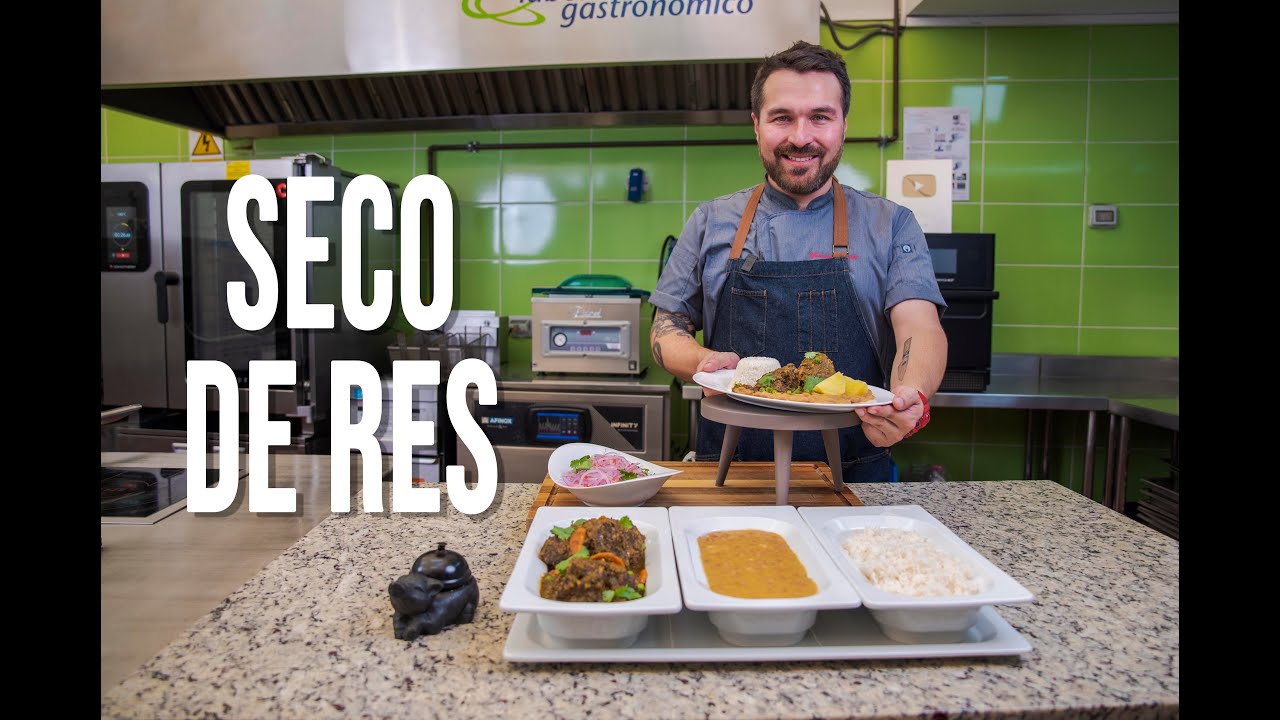
Seco de Res with Beans (Beef Cheek Stew with Cilantro and Beans)
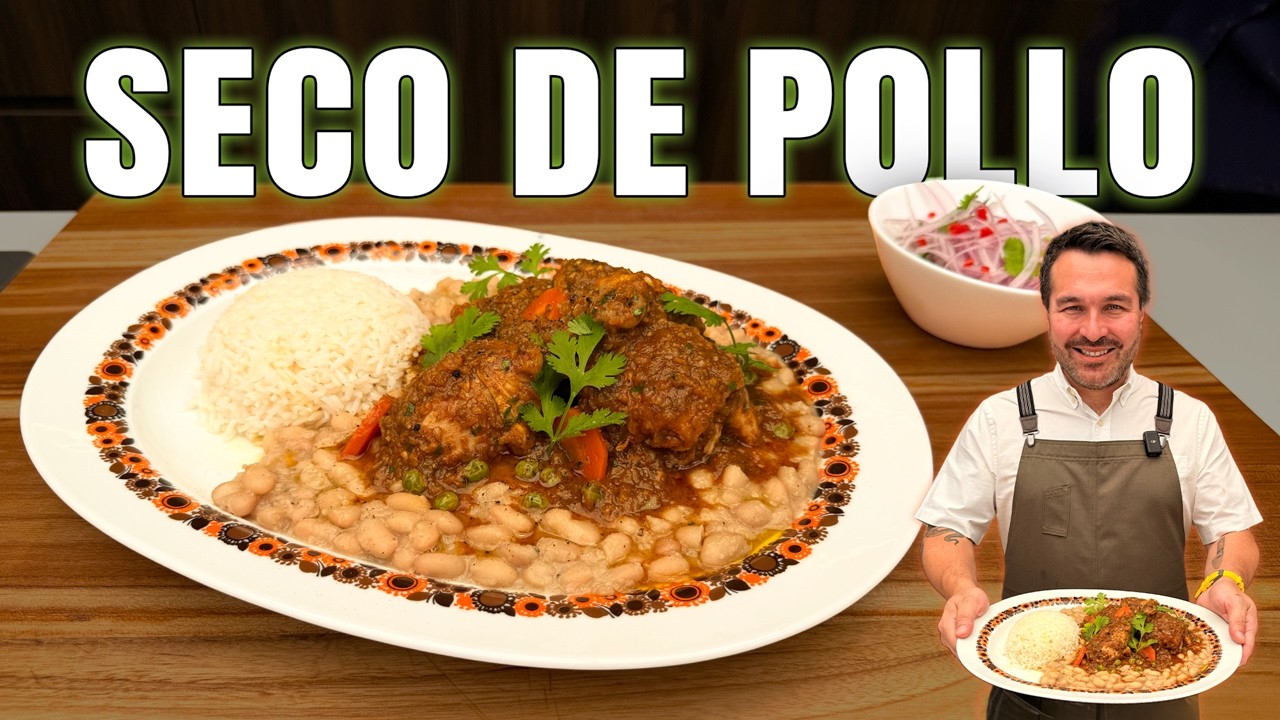
A classic Peruvian seco made with beef cheeks (carrilleras), marinated in chicha de jora, spices, and cilantro, then slow-braised for 2–3 hours in a deeply flavored cilantro-onion-garlic-ají sauce with zapallo loche squash and dark beef stock. Served with creamy seasoned beans cooked with pork jowl (papada de cerdo), white rice, peas, carrots, and a side of potatoes — the traditional Lima and Huacho style.
download Extracted 2026-03-31
Ingredients
Beans
- 400 g dry Beans (frejoles / canary beans or black beans) (soaked overnight; cooked from scratch in water with the pork jowl until tender; do not add salt until end of cooking)
- 200 g Pork jowl (papada de cerdo) (cooked together with the beans to add creaminess and umami; blended partially with some beans and cooking liquid to create a creamy base; substitute with panceta if unavailable)
- 1 unit White onion (for beans aderezo) (finely diced; cooked in the aderezo for the beans)
- 3 cloves Garlic (for beans aderezo) (minced; cooked in the aderezo for the beans)
- 2 tbsp Ají amarillo paste (for beans aderezo) (cooked until well-matured (tomó punto) in the aderezo for the beans)
- 1 leaf Bay leaf (for beans aderezo) (added to the beans aderezo)
- 1 tsp Cumin (for beans aderezo) (added to the beans aderezo; also helps reduce gas from the beans)
Beef Seco
- 1500 g Beef cheeks (carrilleras / cachete de toro) (silver skin and outer connective tissue removed; cut in half; patted dry before searing)
- 4 tbsp Neutral oil (for searing the beef cheeks and building the aderezo)
- 2 units White onion (large) (roughly chopped; added to the aderezo after searing the beef to deglaze the pan)
- 2 large bunches Fresh cilantro leaves (blended) (leaves blended with a little water until smooth; most is cooked down into the aderezo until all raw flavor is gone; a small amount reserved to add at the very end for freshness and color)
- 200 g Zapallo loche (Peruvian squash) (peeled and cut into cubes; added to the aderezo after the blended cilantro is incorporated; stir frequently as the squash caramelizes quickly) opcional
- 750 ml Dark beef stock (fondo oscuro de res) (used to braise the meat; add enough to just cover; substitute with water if unavailable (flavor will be reduced))
- 2 units Carrots (cut into rounds or batons; added to the stew during the last 7 minutes of cooking)
- 150 g Green peas (alverjas / alverjitas) (fresh or frozen; added 3 minutes before serving)
Marinade
- 500 ml Chicha de jora (fermented corn beer) (used in the marinade; the dregs (conchito) are included for flavor; substitute with a dry golden beer plus good vinegar or white wine with vinegar)
- 2 tsp Cumin (added to the marinade and again to the aderezo)
- 2 tbsp Ají panca paste (a small amount used in the marinade; more added during the aderezo stage)
- 4 tbsp Ají amarillo paste (used in both the marinade and the aderezo; gives structure to the stew)
- 6 cloves Garlic (minced or paste) (added to the marinade; a generous amount also added to the aderezo during cooking)
- handful Fresh cilantro stalks and leaves (for marinade) (added whole to the marinade to aromatize the beef)
- to taste Black pepper (added to the marinade)
- to taste Salt (added to the marinade and adjusted throughout; be careful as the marinade liquid is also used in the stew)
To Serve
- 400 g White rice (cooked by your preferred method; served alongside)
- 500 g Potatoes (yellow or waxy) (boiled and served on the side; traditional Lima-style accompaniment) opcional
Steps
-
1Clean the beef cheeks: Remove the thick outer silver skin (tejido conjuntivo / piel plateada) from each beef cheek by inserting a knife at a low angle and peeling it away — similar to skinning a fish. Remove any blood clots and detach any attached tongue meat if present. The inner web of collagen is desirable and should remain. Cut each cheek in half.Tip: The silver skin will never soften during cooking — remove it entirely, or the surrounding meat will tighten and dry out before it tenderizes. The inner collagen web is different; it will melt into silky gelatin during the long braise.~20 min
-
2Make the marinade and marinate: In a bowl or container, combine salt, cumin, a small amount of ají panca paste, ají amarillo paste, garlic, black pepper, cilantro stalks and leaves, and the chicha de jora (including the sediment at the bottom of the bottle). Mix well. Add the cleaned beef cheeks, coat well, and marinate for at least 3 hours and up to 12 hours (overnight is ideal).Tip: The chicha de jora is acidic and helps penetrate the thick connective tissue. If chicha is unavailable, combine a dry golden beer with good vinegar, or use dry white wine with vinegar. Do not use sweet beers.~180 min
-
3Dry and sear the beef cheeks: Remove the beef cheeks from the marinade and place them on a rack or on paper towels to dry as much as possible. Strain and reserve the marinade liquid. Heat a large, heavy-bottomed pot (steel is ideal) over high heat. Add a good splash of oil. Working in batches to avoid crowding, sear the beef cheeks on all sides until deeply browned — 3 to 4 minutes per side. Remove and set aside.Tip: Wet meat steams instead of browning. Drying the surface is essential. Do not rush the sear — those browned bits on the base of the pot (fond) are concentrated flavor that will be lifted when the onion is added.~20 min
-
4Build the aderezo: Reduce the heat to medium. Without cleaning the pot, add a little more oil if needed and add the chopped onion. Stir, scraping up all the browned bits from the base of the pot with the moisture from the onion. Cook until the onion softens and takes on color from the fond, about 5 minutes. Add the garlic and cook 2 minutes more. Add the ají panca paste and ají amarillo paste. Stir well and cook on low heat, stirring occasionally, until the aderezo 'takes point' (se corta / toma punto) — meaning the fat separates slightly and the mixture looks broken, about 10–15 minutes.Tip: The caramelized fond from the seared meat that clings to the pot is like a built-in bouillon cube. The onion moisture lifts all of it into the sauce.~20 min
-
5Add the blended cilantro: Blend the cilantro leaves with just enough water to form a smooth, pourable green liquid. Reserve a small amount for the end. Add the majority to the aderezo and stir. Raise the heat to high and cook the cilantro vigorously, stirring frequently, until it has fully cooked down, no longer smells raw, and has concentrated — the water must evaporate and the chlorophyll will cling to the base of the pot. This can take 10–15 minutes. Do not shortcut this step or the stew will taste bitter and raw.Tip: The chlorophyll that sticks to the pot during this phase will be incorporated into the stew just like the protein fond from the searing step — both add layers of flavor.~15 min
-
6Add the zapallo loche: Add the cubed zapallo loche to the aderezo and stir constantly for 2–3 minutes, as it has natural sugars that will caramelize and burn quickly if left unattended.Tip: Zapallo loche adds sweetness, umami, and body to the stew. Outside Peru, substitute with any dense, flavorful squash (kabocha works well). This ingredient is primarily northern Peruvian but Giacomo includes it because of the flavor value it adds.~3 min
-
7Braise the beef: Return the seared beef cheeks to the pot. Add the reserved strained marinade liquid and pour in the dark beef stock until the meat is mostly submerged. Mix everything well so the aderezo is distributed throughout and not just sitting on the base. Add the juices that accumulated from the resting beef cheeks. Taste and season carefully with salt — remember that the stew will reduce significantly. Cover and simmer on very low heat for 2 to 3 hours, checking every 20–25 minutes, gently turning the pieces and making sure nothing is sticking or burning on the bottom.Tip: In a pressure cooker the beef cheeks will be ready in about 1 hour. In a conventional pot, 2–3 hours. The chicha de jora may smell overpowering at first — like when making adobo — but after sustained cooking its umami quality emerges and the sourness rounds out.~150 min
-
8Cook the beans: In a separate pot, cook the soaked beans in unsalted water with the pork jowl until completely tender. Do not add salt until the beans are fully cooked, as salt creates a calcified film that prevents the beans from softening. Reserve the cooking liquid. Remove some of the pork jowl pieces and some beans and blend them together with some of the cooking liquid until smooth. This creates a creamy bean base to mix back in with the whole beans.Tip: The pork jowl (papada) adds collagen and fat that creates extraordinary creaminess in the beans. Panceta (pancetta/bacon) can substitute. This cooking liquid is umami-rich — do not discard it.~90 min
-
9Make the beans aderezo and finish the beans: In a separate saucepan, prepare the beans aderezo: cook the finely diced onion in a little oil until soft, add garlic, then add the ají amarillo paste, bay leaf, and cumin. Cook until the aderezo takes point. Add the whole cooked beans, some reserved pork jowl pieces, and the cooking liquid (including the blended creamy portion). Gently fold together — the beans should remain mostly whole. Do not over-stir. Taste and adjust salt. The beans should be saucy but not soupy.Tip: The key to great frejoles is textural contrast: some beans should be intact and whole while the blended portion provides a creamy, saucy coating. Handle gently.~20 min
-
10Finish the seco: When the beef cheeks are fork-tender and can be cut with a spoon, add the carrot pieces and cook 7 minutes. Add the green peas and cook 3 minutes more. Add the reserved small amount of fresh blended cilantro to brighten the color and lift the fresh herb note. Taste and adjust salt one final time.Tip: The stew should be juicy (jugoso), not dry — despite being called 'seco' (dry), a well-made seco is always served with plenty of sauce. The sauce is what you mop up with the rice.~12 min
-
11Plate and serve: Serve the seco buffet-style or plated individually. On each plate, arrange a portion of white rice, a generous serving of seco with 1–2 pieces of beef cheek and plenty of sauce, and a portion of the beans. Add boiled potatoes on the side for the classic Lima presentation. The sauce from the seco should be allowed to flood into the rice — this is one of the great pleasures of the dish.Tip: As Giacomo says: one of the best things about seco is mojar el arroz — soaking the rice in the juices and mixing in the beans. Serve with plenty of extra sauce.~5 min
Nutrition (por porción)
620
Calorías
48g
Proteína
42g
Carbohidratos
24g
Grasa
8g
Fibra
Cultural Context
Seco is one of Peru's most beloved stews, found across the country from Lima to the north coast. Its origins are debated — historian Rodolfo Hinostrosa links it to Arab-Moorish cooks (moriscas) who arrived during the Spanish colonial period, bringing with them lamb tagines flavored with cilantro. There are also theories connecting the name to 'sheco,' a dried gourd (mate) used as a cooking vessel. By the 19th century, seco appeared in Peruvian written records and is now made with virtually every protein. The Lima and Huacho versions are distinguished by a blended cilantro sauce rather than chopped cilantro as used in the north. Chef Giacomo Bocchio uses beef cheeks (carrilleras), a collagen-rich cut similar to ossobuco but without the bone, prized for becoming fork-tender after long, slow braising.