› Browse Recipes › Green Noodles with Breaded Beef Steak (Tallarines Verdes con Bistec Apanado)
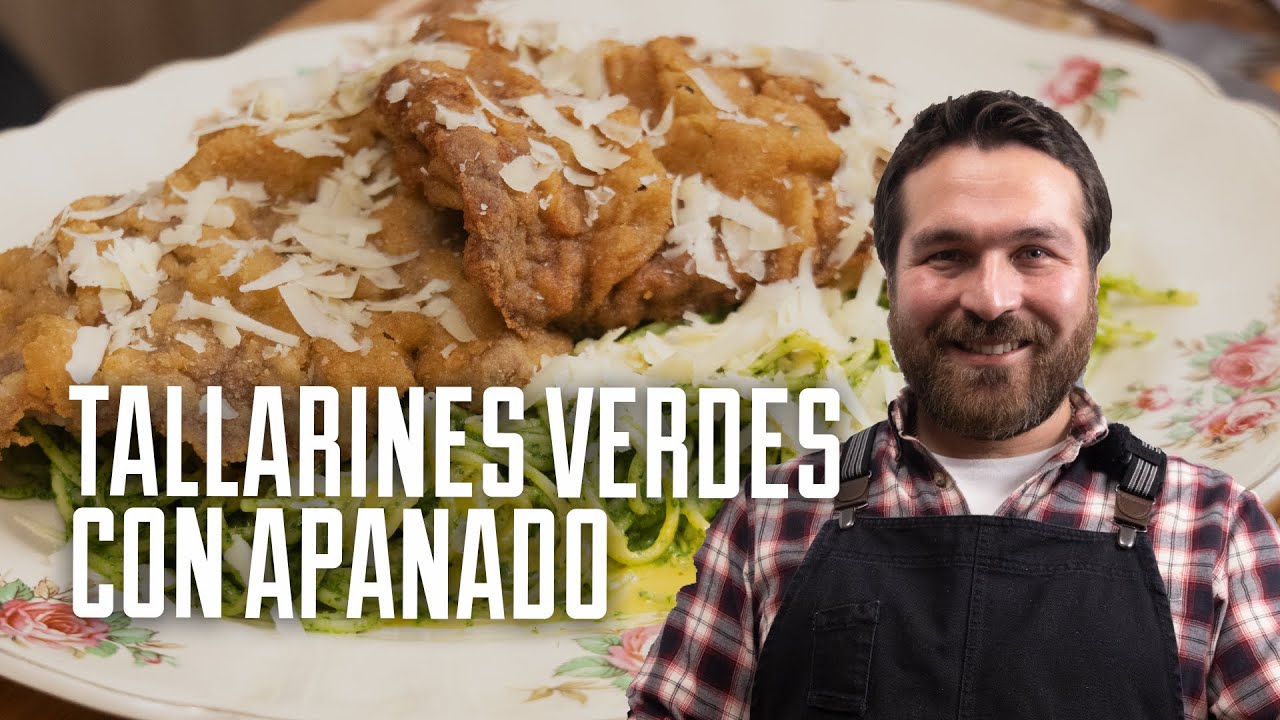
Green Noodles with Breaded Beef Steak (Tallarines Verdes con Bistec Apanado)
A beloved Peruvian home classic — spaghetti tossed in a vibrant green pesto criollo made with blanched spinach and basil, sautéed onion and garlic, fresh cheese, Parmesan, pecans, milk, and cumin. Served alongside crispy breaded beef steaks (bistec apanado) made from thinly pounded tapa cut, coated in flour, beaten egg, and crushed soda crackers, then fried at 180 °C. Optionally finished with a drizzle of huancaína sauce for contrast.
download Extracted 2026-03-31
Ingredients
Bistec Apanado
- 400 g Beef tapa cut (top sirloin cap / rump) (cut butterfly-style then pounded thin between plastic sheets with a meat mallet to an even thickness; salted on both sides)
- as needed All-purpose flour (for the first coating of the breading; helps the egg adhere)
- 2 units Eggs (beaten and strained through a sieve to remove stringy whites; a pinch of salt added to the egg wash)
- as needed Soda crackers (galleta de soda) (crushed into fine crumbs; used instead of breadcrumbs for a crispier, lighter coating)
- as needed Vegetable oil (for frying) (heated to 180 °C for frying; semi-deep fry level)
Green Sauce
- 150 g Spinach (thick stems removed; blanched in boiling water until bright vivid green, then immediately shocked in ice water to stop cooking; squeezed well to remove excess water)
- 30 g Fresh basil leaves (blanched briefly in boiling water then shocked in ice water (to extend shelf life, kill pathogens, and reduce moisture); some extra fresh raw basil can be added to the blender if more fragrance is desired)
- 0.5 medium Onion (roughly chopped; sautéed with garlic in vegetable oil until translucent but not caramelized; reserved to add to the blender)
- 3 cloves Garlic cloves (minced and sautéed together with the onion)
- 2 tbsp Vegetable oil (for sofrito) (used to sauté the onion and garlic)
- 80 g Fresh white cheese (queso fresco) (added directly to the blender; note: Tacna-style queso fresco is quite salty, so adjust salt accordingly)
- 30 g Parmesan cheese (national / domestic style) (added to the blender with the other sauce ingredients)
- 30 g Pecans (added to the blender; substitute for traditional pine nuts (piñones) used in classic pesto genovese)
- splash Milk (added carefully to the blender to loosen the sauce; add conservatively — more can be added when reheating in the pan)
- splash Pasta cooking water (reserved from cooking the pasta; contains starch and salt; used in the blender and when reheating the sauce in the pan to loosen and bind)
- small pinch Ground cumin (added to the blender; optional but characteristic of Peruvian criolla cooking) optional
Pasta
- 200 g Spaghetti (or any pasta) (cooked al dente in well-salted water (salty as the sea), drained, rinsed with cold water to stop cooking, tossed with a splash of olive oil; pasta cooking water reserved)
- 1 tbsp Olive oil (for pasta) (tossed with the drained pasta to prevent sticking)
Seasoning
- to taste Salt (used for pasta water, sofrito, meat, and sauce; be cautious if using a salty fresh cheese)
- to taste Black pepper, freshly ground (added to the sauce in the blender and again when finishing in the pan)
To Serve
- to taste Parmesan cheese (to finish) (grated over the plated dish) optional
- to taste Huancaína sauce (drizzled over the plated tallarines verdes for color and flavor contrast; optional but highly recommended by Giacomo) optional
Steps
-
1Cook the pasta: Bring a large pot of water to a full boil (100 °C). Salt generously — the water should taste as salty as the sea. Add the spaghetti and cook according to package instructions (typically 9–10 minutes) until al dente. Before draining, reserve a cup of the starchy cooking water. Drain the pasta, rinse briefly under cold water to stop the cooking, then toss with a splash of olive oil to prevent sticking. Set aside.Tip: The ratio for cooking pasta is 9–10 parts water to 1 part pasta. Never let the pasta boil in under-salted water — the salt must be in the water, not just the sauce.~12 min
-
2Prepare and pound the beef: Take the tapa cut and slice butterfly-style — cut partway through horizontally, then open the flap. For thicker pieces, make a second butterfly cut to open into three layers. Place each piece between two sheets of clear food-safe plastic film (not colored supermarket bags) and pound evenly with a meat mallet until uniformly thin. Season both sides with salt, sprinkled from a height for even distribution. Set aside to rest.Tip: Pounding the meat evenly is key — uneven thickness means parts will be overcooked while others are underdone. Salting from height gives more even coverage than pinching the salt close to the surface.~10 min
-
3Make the sofrito: Heat vegetable oil in a sauté pan over medium heat. Add the chopped onion and minced garlic with a pinch of salt (the salt draws out moisture chemically, helping the onion sweat). Cook until the onion is translucent and softened but not caramelized. Remove from heat and set aside to cool slightly before adding to the blender.Tip: The sofrito should be lightly cooked — you want it soft and fragrant but not browned, so the final sauce stays bright green.~8 min
-
4Blanch the spinach and basil: Have a bowl of ice water ready (inverted bain-marie). Remove the thick stems from the spinach leaves — the stems are denser than the leaves and if left in, they do not cook evenly and will oxidize the sauce. Working in batches, drop the spinach into the boiling pasta water (or a separate pot) until the chlorophyll activates and turns a brilliant, vivid green — just seconds. Immediately transfer to the ice water to stop cooking. Do the same with the basil leaves. Once cold, squeeze out all excess water by hand.Tip: Blanching the basil is a deliberate technique: it extends its shelf life, eliminates surface pathogens, and reduces water content. If the blended sauce still lacks basil fragrance, add a small amount of raw fresh basil directly to the blender.~5 min
-
5Blend the green sauce: In a blender or immersion blender cup, combine the blanched spinach and basil, the onion-garlic sofrito, queso fresco, Parmesan, pecans, a small pinch of cumin, a splash of milk, and a splash of the reserved pasta water. Season with salt and freshly ground black pepper. Blend until completely smooth and vibrant green. Taste and adjust seasoning. If the sauce is too thick, add a little more pasta water or milk.Tip: Giacomo prefers a hand (immersion) blender over a countertop blender for this sauce. Add the milk and pasta water conservatively — you can always add more when heating the sauce in the pan.~5 min
-
6Bread the steaks: Set up a three-station breading line: (1) flour, (2) beaten egg strained through a fine sieve with a pinch of salt, (3) crushed soda crackers. Coat each pounded steak first in flour, shake off the excess, then dip in the egg wash, then press firmly into the cracker crumbs so they adhere all over. Set aside.Tip: Straining the beaten egg removes the chalazae (stringy white threads) that prevent even coating. The flour layer is essential — without it, the egg slides off the meat and the cracker crumbs will not stick.~8 min
-
7Fry the bistec apanado: Heat vegetable oil in a deep-sided pan or skillet to 180 °C. The fry level should be semi-deep (not fully submerged, but enough to cover most of the steak). Carefully lower each breaded steak away from you into the hot oil (this prevents splashing back toward you). Fry until golden brown on the first side, then flip. The thin cut cooks quickly. Remove and drain on paper towels.Tip: Always add the steak into the oil away from yourself — if it slides from near to far, any splatter goes away from you. The correct oil temperature is 180 °C; below that, the breading absorbs oil and turns soggy.~8 min
-
8Heat and finish the green sauce with the pasta: In a wide pan over medium heat, add a splash of reserved pasta water first and let it warm. Add a generous amount of the green sauce and heat through — do not boil, as boiling will dull the bright green color and turn it olive drab. Once the sauce is hot, add the cooked pasta and toss well to coat. Taste and add a pinch more salt and freshly ground pepper if needed. Optional: add a small knob of butter for extra creaminess.Tip: Start with the liquid (pasta water) in the pan, then the sauce, then the pasta — this sequence prevents sticking and ensures even heating. The green sauce must only be warmed, never boiled, to preserve its color.~5 min
-
9Plate and serve: Serve the green pasta in a generous mound. Place one or two bistec apanado steaks alongside. Grate Parmesan over the top. Optionally, drizzle small dots of huancaína sauce over the pasta for a striking color contrast and flavor counterpoint. Serve immediately.Tip: The huancaína drizzle is Giacomo's personal touch — the creamy, mildly spicy yellow sauce against the vivid green pasta is visually striking and adds a fun flavor contrast typical of Peruvian plating creativity.~3 min
Nutrition (per serving)
820
Calories
52g
Protein
72g
Carbs
34g
Fat
5g
Fiber
Cultural Context
Tallarines verdes is Peru's beloved criollo take on Italian pesto genovese — a legacy of the large Italian immigrant community that settled in Lima in the late 19th and early 20th centuries. While the traditional Ligurian pesto uses only basil, pine nuts, pecorino, and olive oil ground in a mortar, the Peruvian version blends spinach with basil (to tone down the intensity and add volume), replaces pine nuts with native pecans, swaps pecorino for local fresh cheese and Parmesan, and adds a sofrito of onion, garlic, and cumin — hallmarks of criolla cooking. Pasta in Peru is universally called 'tallarines,' regardless of shape. The dish is a staple of family Sunday lunches and school cafeteria menus alike. Paired with bistec apanado (a breaded and fried beef steak), the combination is one of the most iconic plates in Lima's everyday gastronomy.
Giacomo Bocchio
TE ENSEÑO A PREPARAR TALLARINES VERDE CON BISTEC APANADO ¦ GIACOMO BOCCHIO
Watch on YouTube →