DashboardBrowse Recipes › Bacon-Wrapped Pork Loin Roll with Prune and Pecan Filling
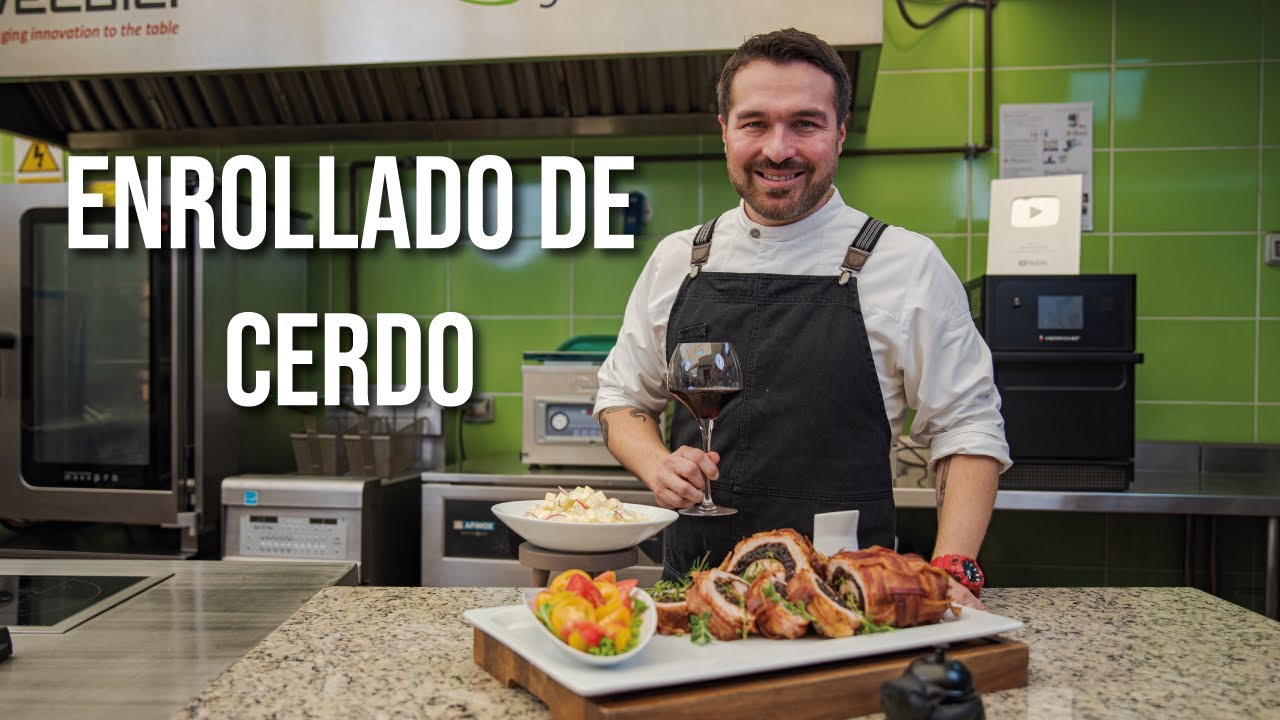
Bacon-Wrapped Pork Loin Roll with Prune and Pecan Filling

Bacon-Wrapped Pork Loin Roll with Prune and Pecan Filling

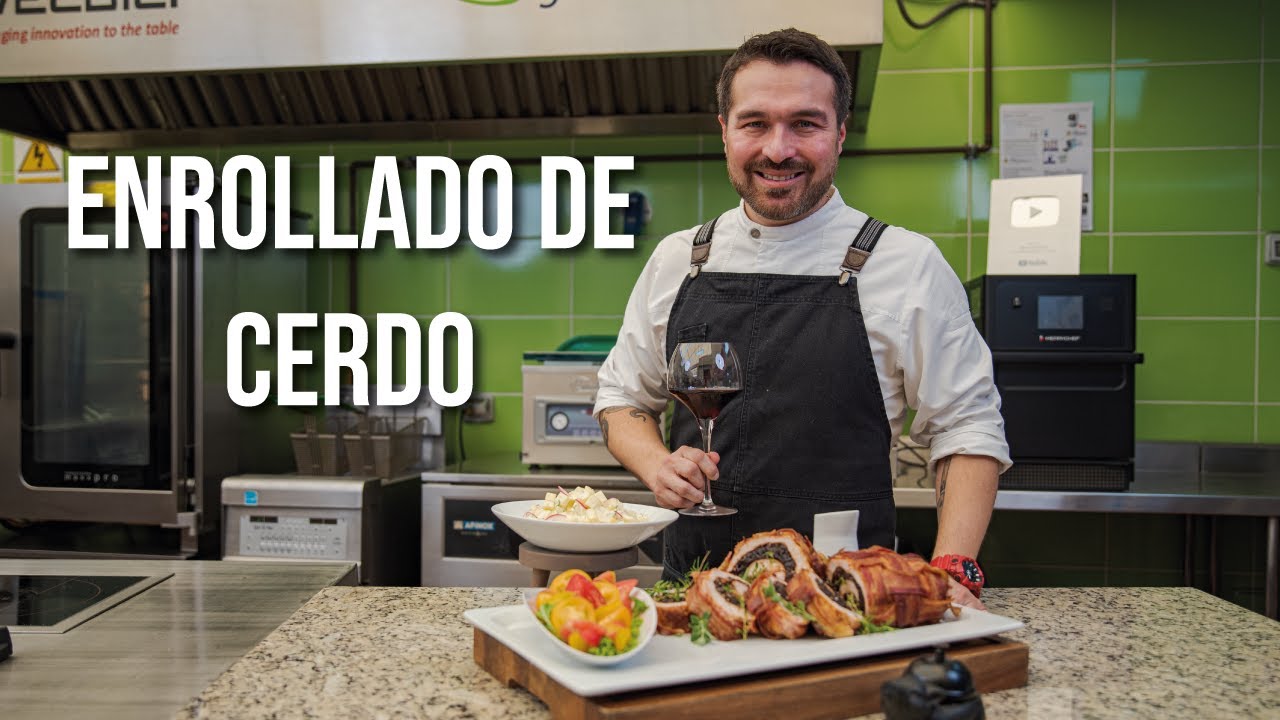
A showstopper pork loin roll dedicated to Mother's Day: a Duroc pork loin butterflied open, filled with a spiral of chopped prunes and pecans, rubbed with smoked Spanish paprika (pimentón de la vera), rosemary, cumin, garlic powder and sugar, then wrapped in an interlaced bacon lattice and roasted to 70 °C internal. Served with a sweet-and-sour orange gastrique, a potato-and-egg salad dressed with mayonnaise and mango vinegar, and a fresh tomato salad garnished with radishes.

45m Prep
80m Cook
2h 5m Total
6 Servings

Ingredients

Dry Rub
  • Smoked Spanish paprika (pimentón de la vera ahumado)
  • Fresh rosemary (finely chopped)
  • Ground cumin
  • Garlic powder
  • 1 tsp Sugar
  • Salt (coarse/flaked for finishing)
Filling
  • Pitted prunes (dried plums) (roughly chopped into 3–4 mm pieces)
  • Pecans (roughly chopped or left whole)
Main
  • 2 kg Pork loin (Duroc) (brined in salt water for 4.5 hours, silver skin and external fat removed, butterflied open like a book into three equal layers)
  • Bacon slices (German-style deli bacon) (woven into an interlaced lattice sheet large enough to wrap the loin)
Orange Gastrique
  • 50 g Sugar (for gastrique)
  • Mango vinegar (or good-quality wine vinegar)
  • Fresh orange juice
  • Chicken stock (a small splash for body and umami)
  • 3 leaves Fresh sage leaves
  • Fresh thyme optional
  • Fresh oregano optional
  • Black pepper (freshly ground)
Potato Salad
  • White potato (cut into cubes, boiled in salted water until fully cooked)
  • White onion (sliced into thin feather strips (pluma), soaked in ice water until crisp and translucent)
  • Hard-boiled eggs (roughly chopped)
  • Mayonnaise (homemade preferred)
  • American-style yellow mustard
  • Mango vinegar (for acidity to cut through fat)
  • Fresh flat-leaf parsley (chopped (chiffonade style))
Tomato Salad
  • Tomatoes (dressed with a simple vinaigrette)
  • Radishes (sliced into thin rounds for garnish; optionally served with softened butter)

Steps

  1. 1
    Brine the pork loin: submerge a 2 kg pork loin in a salt-water brine solution for 4.5 hours. This adds juiciness and seasons the meat from within. Remove from brine and pat dry.
    Tip: Giacomo has a dedicated sous vide and brine video on his channel for a full theory explanation. The pork gains about 8% of its weight in water during the brine.
    ~270 min
  2. 2
    Trim the loin: using a long, sharp knife, remove the silver skin and outer fat layer by angling the blade flat — the same technique used to remove fish skin. Also separate and reserve any external secondary muscles attached to the main loin muscle. Those trimmings can be used for scrambled eggs, stews or other preparations.
    Tip: Always keep the blade angled toward the silver skin, not the meat, to waste as little meat as possible.
    ~10 min
  3. 3
    Make the dry rub: in a dry bowl combine smoked Spanish paprika (pimentón de la vera), finely chopped fresh rosemary, a small pinch of cumin, a small spoonful of sugar, garlic powder, and a touch of salt. Mix well and taste to adjust.
    Tip: The rub flavors are intense — use a light hand. The pimentón de la vera gives the same red color and smoky aroma found in Spanish chorizos and charcuterie.
    ~5 min
  4. 4
    Make the prune and pecan filling: roughly chop pitted prunes into 3–4 mm pieces. Place in a bowl and add a generous amount of pecans (or other preferred nuts). Mix well. The simplicity is intentional — the rub on the pork will perfume the filling during cooking.
    Tip: Add a small pinch of salt to the filling to create contrast with the sweet dried prunes.
    ~5 min
  5. 5
    Butterfly the loin open like a book: place the trimmed loin on the cutting board with the presentation side down. Using a long knife, make a horizontal cut at one-third of the total height, cutting almost to the other edge but leaving about a finger-width intact. Open that flap, then repeat the cut at the same one-third depth on the next layer, again leaving a finger-width uncut. You should end up with three layers of equal thickness that open flat like a three-page book.
    Tip: Cover with plastic wrap and pound gently with a heavy pan or mallet to even out the thickness across all three layers.
    ~10 min
  6. 6
    Apply the rub and filling: spread a thin, even layer of the dry rub over the interior surface of the butterflied loin. Distribute the prune-and-pecan filling evenly across the surface, leaving a 2-finger margin on all sides so the filling does not spill out when the meat contracts during cooking.
    Tip: Spread the filling so it covers the entire interior for a beautiful spiral cross-section when sliced.
    ~5 min
  7. 7
    Roll the loin tightly: starting from one of the short ends, roll the loin tightly, pressing firmly as you go — apretadito (tight). Place the roll seam-side down.
    ~3 min
  8. 8
    Albardar (wrap in bacon lattice): prepare a woven bacon lattice sheet — lay strips of bacon in one direction and weave perpendicular strips through them. Apply the dry rub to the outside of the roll. Place the roll seam-side up on the bacon lattice, and use the lattice and plastic wrap to wrap the roll completely. Secure loose bacon ends with toothpicks if needed, leaving them slightly exposed so they can be removed before serving.
    Tip: Albarding means covering a lean piece of meat with fat — the bacon provides fat and flavor and creates a Maillard crust in the oven. The bacon lattice tightens as it cooks, holding the roll together without the need for kitchen twine.
    ~10 min
  9. 9
    Roast the pork: place the bacon-wrapped roll on a wire rack set over a baking tray and roast in a preheated oven. Use a probe thermometer to monitor internal temperature. Target 70 °C at the core. If the bacon is browning quickly before the interior is cooked, lower the oven temperature to about 150 °C. Estimated total roasting time: approximately 1 hour 10 minutes to 1 hour 30 minutes.
    Tip: If you don't have a built-in oven probe, use a digital instant-read thermometer — insert it into the center of the roll every 15–20 minutes to track progress. Cover with foil if the outside is browning too fast.
    ~80 min
  10. 10
    Rest the roast: once the internal temperature reaches 70 °C, remove from the oven and allow to rest for 10–15 minutes before slicing. This allows the internal juices to redistribute so they don't all run out when the meat is cut.
    Tip: Remove the toothpicks during the rest time.
    ~15 min
  11. 11
    Make the orange gastrique: in a small saucepan over medium heat, melt approximately 50 g of sugar until it begins to caramelize to a golden amber. Carefully add mango vinegar (or wine vinegar) — stand back as it will steam aggressively. Reduce the heat and let the alcohol evaporate. Add the fresh herb bundle (sage, thyme, oregano) and let them infuse for a few minutes. Add fresh orange juice and a splash of chicken stock. Simmer over low heat for about 15 minutes until slightly reduced and syrupy — the consistency of a thin jus. Season with salt and pepper. Strain out the herbs and reserve warm.
    Tip: Never lean over the pot when adding vinegar to hot caramel — the steam is irritating. A gastrique is technically a jus, not a sauce, because it is unbound (not thickened with starch or butter).
    ~20 min
  12. 12
    Make the potato and egg salad: in a large bowl combine the cooked potato cubes, drained ice-water-soaked white onion strips, roughly chopped hard-boiled eggs, and chopped parsley. Add a spoonful of mustard, a generous amount of mayonnaise, and mango vinegar. Season with salt and black pepper. Toss gently so the potatoes do not break. Refrigerate until serving. Remove from fridge shortly before serving so it is cold but not ice-cold.
    Tip: Salt draws moisture from the onion (hygroscopic effect), helping to dress the whole salad. The acidity from vinegar is essential to cut through the fat of the bacon and pork.
    ~15 min
  13. 13
    Prepare the tomato salad: dress sliced tomatoes simply with a vinaigrette of mango vinegar, salt, and black pepper. Garnish with thinly sliced radishes.
    Tip: Try dipping radish slices in softened (pomaded) butter — a trick from chef Fabián Belén — the peppery radish with creamy butter is a classic pairing.
    ~5 min
  14. 14
    Slice and plate: slice the rested pork roll into rounds, revealing the spiral prune-and-pecan filling. Arrange the slices on a large plate. Scatter any fallen bacon crisps over and around the slices. Finish with a few grains of coarse salt, a crack of black pepper, and fresh herb sprigs (thyme, rosemary, oregano). Serve the orange gastrique in a sauce boat on the side. Plate the potato salad separately and add the tomato-radish salad alongside.
    Tip: Arrange the herbs naturally — imagine plants growing through cracks in the pavement, not placed in a straight line.
    ~5 min

Nutrition (per serving)

720
Calories
52g
Protein
24g
Carbs
45g
Fat
4g
Fiber
Cultural Context
This recipe was created by Giacomo Bocchio as a special Mother's Day tribute on his YouTube channel, dedicated to his mother Rosana. It draws on classic French and Spanish culinary techniques — albarding (wrapping lean meat in bacon fat), the French gastrique (caramel-and-vinegar sweet-sour sauce), and the butterfly-book opening of a large muscle — applied to a Peruvian context with local ingredients like mango vinegar from Tacna and Peruvian potatoes. The prune-and-pecan filling echoes the sweet-savory tradition of Peruvian roasts while the pimentón de la vera nods to Spanish charcuterie heritage.
Video thumbnail
Giacomo Bocchio
TE ENSEÑO A PREPARAR UN ENROLLADO DE CERDO CON TOCINO PARA ENGREIR A NUESTRA MADRE | GIACOMO BOCCHIO
Watch on YouTube →