› Browse Recipes › Perfectly Cooked Octopus & Hearty Parihuela (Peruvian Seafood Soup)
Perfectly Cooked Octopus & Hearty Parihuela (Peruvian Seafood Soup)
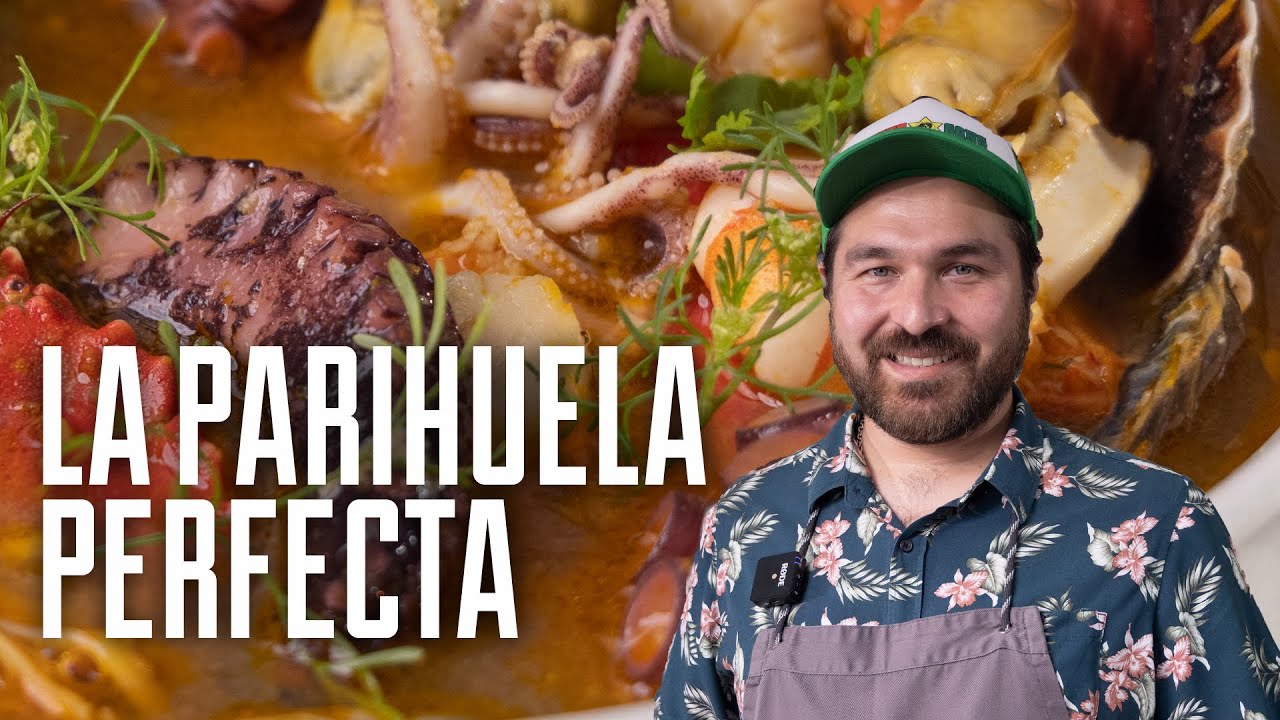
Two iconic Peruvian seafood preparations in one session: a professionally cooked whole octopus with intact skin and tender flesh, served alongside a rich parihuela — a traditional Peruvian seafood soup made with a crustacean base (americana), Peruvian chili pastes, mussels, squid, prawns, crab, rockfish (tramboyo), and scallops. Giacomo shares his personal story with octopus from age 7 and teaches pro techniques for skin-perfect octopus cooking.
download Extracted 2026-03-31
Ingredients
Parihuela — Accompaniment
- to taste Yuca (cassava) (Cooked and cut into cubes; served on the side for dipping into the broth) optional
Parihuela — Base
- 4 cloves Garlic cloves (Crushed flat with the back of the knife, then scraped into a paste)
- 2 tbsp Aji mirasol paste (Sun-dried ají amarillo, blanched, hydrated, and blended with a little oil)
- 2 tbsp Aji amarillo paste (Blanched, hydrated, and blended with a little oil; check for added salt if using commercial paste)
- splash White wine (Added to deglaze, alcohol cooked off before adding stock)
- 2 liters Crustacean stock (americana) (Prepared previously from crab and prawn shells; see separate video)
- good amount Neutral oil (To sauté garlic and chili pastes)
- 1 bouquet Culantro bouquet (cilantro + culantro macho) (Tied together, added whole to the soup)
- to taste Salt
- to taste Black pepper (Freshly ground)
- to taste Lemon juice (Added at end to lift the broth; also used to marinate seafood)
Parihuela — Seafood
- generous handful Mussels (choros) (Scrubbed, debearded, soaked overnight in salted water in refrigerator to remove sand)
- to taste Squid (calamares) (Fully cleaned; seasoned with salt and a squeeze of lemon juice before adding)
- to taste Prawns (langostinos) (Cleaned, deveined; seasoned with salt and lemon juice)
- 1 large Whole crab (cangrejo) (Well scrubbed; cooked whole in the soup for 10–12 minutes)
- 1 whole Rockfish / tramboyo (whole fish) (Cleaned, gutted, gills removed; cooked whole with bones — bones protect moisture and extend cooking time)
- to taste Scallops (conchas) (Seasoned with salt and lemon juice)
Pulpo — Cooking
- 1.8 kg Whole octopus (Cleaned — organs removed, head turned inside out, rinsed and lightly salted to remove excess slime but not all of it)
- enough to submerge octopus Water (Brought to a full boil)
- piece Carrot (Roughly chopped)
- piece Tomato (Roughly chopped)
- stalk Celery (Roughly chopped)
- sprig Thyme
- 2 tbsp Salt (Added to cooking water — water should taste like the sea)
- sufficient to fill bowl Ice (Cold water + ice bath to stop cooking)
Steps
-
1Clean the octopus: turn the head inside out and remove all internal organs. Turn the head back to its original shape and wash the octopus well. Rub with a little salt to remove excess slime, but leave some slime — it protects the skin during cooking. Leave the beak (pico de loro) in place; it is much easier to remove after cooking.Tip: The goal when cooking octopus is to keep the skin intact, preserve the collagen layer, and achieve tender muscle. Never strip all the slime — it is the skin's protector.~5 min
-
2Bring a large pot of water to a full, vigorous boil with carrot, tomato, celery, thyme, and 2 tablespoons of salt. The water should taste like seawater.~10 min
-
3Susto (scare) the octopus: holding it by the head, submerge it into the boiling water three times. This causes the tentacles to curl tightly, making portioning much easier later. Then submerge it fully.Tip: The curling from the susto makes the octopus much neater and easier to portion after cooking.~2 min
-
4Cook the octopus at a very gentle simmer (not a rolling boil — vigorous boiling destroys the skin). For an octopus of about 1.8 kg, cook 45–60 minutes. At 30–35 minutes, test doneness by inserting a toothpick at the thickest part of the widest tentacle base. When it passes through easily, the octopus is done.Tip: A vigorous boil will tear the skin. Keep it at a very light simmer throughout. Minimum cooking time for a 1 kg octopus is 35 minutes.~55 min
-
5Immediately transfer the cooked octopus to an ice bath (cold water + ice) to stop cooking. Leave it until fully cooled. While warm, the skin is extremely delicate and any handling will cause it to peel.Tip: This thermal shock is critical — it sets the skin and stops carryover cooking.~10 min
-
6Once cooled, remove the beak: push from below the junction of the tentacles and it pops out easily. To portion, find the hole where the beak was and cut out individual tentacles from that central hub. Leave some whole for presentation.Tip: The head is not used in haute cuisine, but Giacomo recommends saving it for empanadas or seafood ceviche.~5 min
-
7Begin the parihuela base: crush garlic cloves flat with the back of a knife, then scrape into a paste. In a large pot, heat a generous amount of oil over medium heat. Add the garlic paste and cook gently — do not let it brown.Tip: Cook garlic gently to soften flavor without bitterness. The moment it starts to separate (cortado) it is ready for the chili pastes.~3 min
-
8Add 2 tablespoons each of ají mirasol paste and ají amarillo paste. Stir to combine and cook for a couple of minutes until fragrant. If using commercial pastes, be careful — many contain added salt already.Tip: If you can't find Peruvian chili pastes, balance a yellow bell pepper with a local hot chili as a substitute.~3 min
-
9Add a splash of white wine and let the alcohol cook off. Then pour in the 2 liters of crustacean stock (americana). Add the culantro/cilantro herb bouquet. Bring to a boil.Tip: The americana base was made from crab and prawn shells. See Giacomo's separate video on making fondo americano.~10 min
-
10Once boiling, add the mussels (choros). Cook 30–40 seconds until they just barely open. Remove them immediately with a spoon. Once cool enough to handle, remove the mussel meat from the shells, discarding the beard. Reserve the mussel meat and add back at the very end.Tip: Mussels open in 30–40 seconds. Pull them immediately — overcooked mussels become rubbery erasers. The mussel meat should be silky and tender.~2 min
-
11Season the squid and prawns with salt and a squeeze of lemon juice. Also season the scallops similarly. Set aside.Tip: A light lemon-salt pre-marinade elevates the natural flavor of all seafood.~3 min
-
12Add the whole crab and whole cleaned rockfish (tramboyo) to the simmering broth. Cook 10–12 minutes. The bones in the fish protect it from overcooking and keep it juicy — cooking fish on the bone always extends the safe cooking window.Tip: The tramboyo (rockfish) is a strong-flavored fish that lived among crabs and shellfish on the rocky coast — its flavor is intense and perfect for this soup.~12 min
-
13Push the fish to the side of the pot. Add the scallops, then the squid and prawns. These cook very quickly — just 1–2 minutes at most. Taste the broth and adjust salt.Tip: Remember that food continues cooking from its own heat even off the flame. Pull seafood early.~2 min
-
14Add a grinding of black pepper. Just before serving, squeeze in lemon juice to lift the broth. Return the reserved mussel meat to the pot. Taste and adjust seasoning.Tip: Acidity from lemon always lifts the natural marine flavors. Add it last so it stays bright.~1 min
-
15To serve: place some herb leaves at the bottom of the bowl for height. Arrange the whole rockfish or a portion, the crab, tentacles of octopus (whole and sliced), scallops, mussels, squid, and prawns. Ladle the hot broth over everything. Add a final squeeze of lemon. Serve with boiled yuca on the side for dipping.Tip: Giacomo serves this in a classic Peruvian sopera (soup tureen). The dish is meant to be shared with family and friends on a warm summer evening.~5 min
Nutrition (per serving)
320
Calories
32g
Protein
18g
Carbs
12g
Fat
3g
Fiber
Cultural Context
Parihuela is a classic Peruvian port stew, with origins in the port of Callao where dock workers (estibadores) cooked it over wooden parihuelas (cargo pallets) using whatever seafood they could find — crab, rockfish, shellfish. It is Peru's answer to dishes like cioppino (San Francisco) and bouillabaisse, and represents the working-class seafood culture of Lima's coastline. Octopus has a minimum legal catch size of 1 kg in Peru to protect the species, which only reproduces once in its lifetime.
Giacomo Bocchio
TE ENSEÑO COMO COCINAR UN PULPO DE BUENA MANERA Y UNA PARIHUELA CONTUNDENTE
Watch on YouTube →