› Browse Recipes › The Best Chicken Soup (with Clear Chicken Stock)
The Best Chicken Soup (with Clear Chicken Stock)
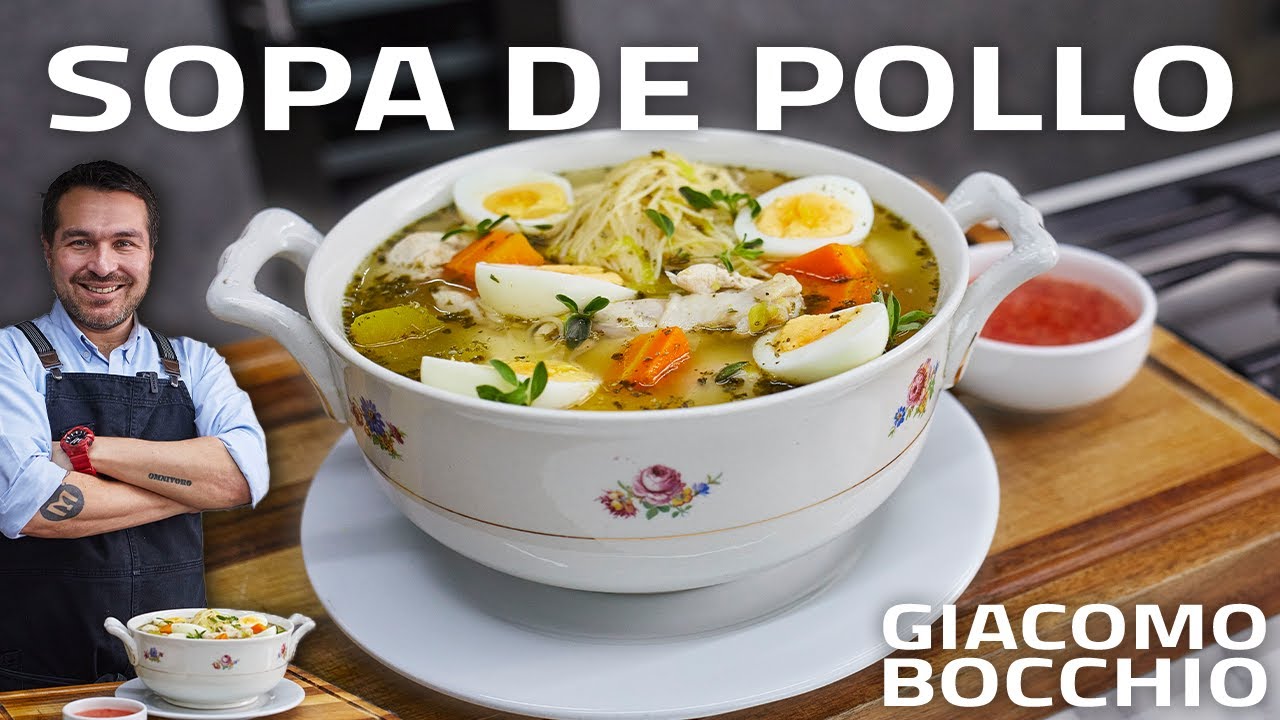
A masterclass chicken soup built from a proper clear chicken stock (fondo blanco de ave). Whole chicken pieces — thighs, drumsticks, breast, and sasami — are first used to make a stock from cold water with aromatic vegetables (leek, carrot, celery, bouquet garni), cooked uncovered for 40–60 minutes. The strained stock is then brought back to a boil and the chicken, carrot, and pumpkin (zapallo) are added in stages. Yellow potatoes and angel hair pasta finish the soup. Served with a spicy rocoto condiment with lemon juice and water on the side.
download Extracted 2026-03-31
Ingredients
Chicken
- 1 whole Whole chicken (skin removed, broken down) (Skin and excess fat removed; backbone/carcass reserved for stock; thighs and drumsticks left whole; breast cut into 3 pieces; sasami left whole)
Chicken Stock
- Chicken backs and bones (for stock) (De-blooded (soaked in cold water), excess fat and skin removed) optional
- Cold water (Tap water, cold — enough to cover bones generously)
- 1 stalk Leek (Roughly chopped)
- 1 medium Carrot (for stock) (Cut into rough macedoine (coarse dice))
- 2 stalks Celery (for stock) (Roughly chopped)
- 1 medium Onion (for stock) (Roughly chopped)
- 1 bundle Bouquet garni (Tied bundle of parsley, thyme, and bay leaf)
Rocoto Condiment
- 1 medium Rocoto chili (Finely brunoise; seeds mostly removed; some veins left for moderate heat) optional
- 1 tbsp Lemon juice (Freshly squeezed; about 5 parts relative to water) optional
- Water (for condiment) (1–2 parts relative to lemon juice; balances the acidity) optional
- pinch Salt (for condiment) (Added to the rocoto before the lemon juice) optional
Soup Garnish
- 2 medium Carrot (for soup garnish) (Peeled, cut into large chunks (tropezones))
- Macre squash (zapallo macre) (Peeled and cut into large chunks; adds color, texture, and sweetness)
- 4 medium Yellow potatoes (papa amarilla) (Peeled and cut into large chunks; added in the last 12–15 minutes of cooking)
- Angel hair pasta (cabello de ángel) (Added in the last 2 minutes of cooking in the boiling soup)
Soup Seasoning
- Salt (Added to the soup only (never to the stock); adjusted to taste)
- Dried oregano (Freshly toasted; crumbled between the hands before adding)
Steps
-
1Prepare the chicken bones for stock. Use chicken backs, carcasses, and any bones saved from breaking down whole chickens. Remove excess fat and skin (skin contains too much fat). If possible, de-blood the bones by soaking in cold water beforehand.Tip: Giacomo keeps chicken backs and thigh bones in a freezer bag after breaking down whole chickens — never throw away bones.~10 min
-
2Place the bones in a large pot and cover with cold tap water. Do NOT start from hot water — starting cold is the key to the expansion method, which draws maximum flavor and nutrients out of the bones into the liquid.Tip: This is the fundamental difference between a stock and a sauté: cold water = expansion of flavor into the liquid. Hot water = concentration of flavor inside the meat.~2 min
-
3Add the raw aromatic garnish (guarnición aromática cruda): roughly chopped leek, carrot, celery, onion, and the bouquet garni (parsley, thyme, bay leaf bundle). Bring to a boil over high heat — you may cover the pot initially to speed up boiling, but as soon as it starts boiling, remove the lid.Tip: Cook uncovered for the entire stock duration. Evaporation concentrates flavor. The lid traps steam and returns it to the pot — useful for other preparations, but not for stocks.~15 min
-
4Reduce heat to a gentle simmer (mijoté / simmer) and cook uncovered for 40 to 60 minutes. Do NOT aggressively skim the foam continuously — the foam is coagulated protein, not impurities (as long as the chicken was fresh and handled hygienically). It will be skimmed at the end.Tip: Giacomo stopped skimming stocks years ago after learning from Chef Jack. Stocks with foam have more flavor. The foam will be removed just before building the soup.~50 min
-
5After 40–60 minutes, strain the stock through a fine sieve. Discard the spent aromatics and bones — they have given all their flavor. Skim off any remaining foam and fat from the surface of the strained stock. Do NOT add salt — stocks are always kept neutral (unsalted) so they can be used for any preparation.Tip: A fondo (stock) is unsalted. A caldo (broth) or sopa (soup) is seasoned. Never salt your stock.~5 min
-
6Break down the whole chicken: remove the skin and excess fat from all pieces. Reserve the backbone, carcass, and wing tips for future stocks. Separate the thighs and drumsticks. Cut the breast into 3 large pieces. Leave the sasami (tenderloin) whole.Tip: Removing skin from soup chicken prevents a greasy layer on the soup surface.~10 min
-
7Bring the strained stock back to a boil in a large pot. Add the peeled carrot (cut into large chunks) and the peeled zapallo macre squash (cut into large chunks). These go in first because they need more cooking time.Tip: Zapallo macre will partially dissolve, thickening the soup slightly and adding color and sweetness.~5 min
-
8Season the stock with salt and freshly toasted oregano (crumbled between the hands). Taste and adjust — this is the saturation step. Season the cooking medium BEFORE adding the chicken so the chicken pieces do not lose their flavor into an unseasoned liquid.Tip: Taste frequently. Many home cooks add salt and never check if it was enough. Seasoning the liquid before adding the protein is one of the key tricks for the best chicken soup.~3 min
-
9Add the chicken pieces (thighs, drumsticks, breast chunks, sasami) to the hot, already-seasoned stock. Adding them to hot liquid uses the concentration method — the flavor stays inside the meat while the stock gets fortified. Cook for approximately 12 minutes.Tip: Hot liquid = concentration (flavor stays in the meat). Cold liquid = expansion (flavor moves into the liquid). By using already-hot and already-seasoned stock you get the best of both worlds.~12 min
-
10While the chicken cooks, prepare the rocoto condiment. Finely brunoise the rocoto chili, keeping some veins but removing most seeds. Season with a pinch of salt. Add approximately 5 parts lemon juice to 1–2 parts water (about 1 tablespoon lemon juice diluted with a splash of water). Stir and refrigerate until serving — the liquid becomes potent by osmosis.Tip: Can also be made with ají limo. The water dilution is key for Peruvian lemon (limón sutil) which is very acidic. If your lemon is milder, adjust accordingly. This condiment works great with soups, empanadas, and pastel de acelga.~5 min
-
11After 12 minutes of chicken cooking, add the peeled yellow potatoes cut into large chunks. Cook for 12–15 minutes until just cooked through and slightly broken down — they should hold their shape but give a little body to the soup.Tip: Yellow potatoes (papa amarilla) are floury/starchy. Do not add them too early or they will completely dissolve.~12 min
-
12In the last 2 minutes of cooking, add the angel hair pasta (cabello de ángel) directly to the boiling soup. It cooks in just 2 minutes. Turn off the heat once the pasta is cooked.Tip: Angel hair pasta cooks very fast — add it at the very end to avoid it becoming mushy.~2 min
-
13Taste and make a final salt adjustment if needed. Serve the soup in a large soup tureen or individual bowls with chicken pieces, vegetables, and pasta. Serve the rocoto condiment on the side for guests to spoon over as desired.Tip: This soup travels well in a tupper. Share it with someone who needs it — the reaction people have when you bring them homemade soup is one of the most beautiful things you can experience.~5 min
Nutrition (per serving)
280
Calories
28g
Protein
18g
Carbs
10g
Fat
3g
Fiber
Cultural Context
Chicken soup holds a universal place in home cooking across Latin America and Peru as comfort food — the dish mothers and grandmothers prepare when someone is sick or needs care. In Peru it often includes zapallo (macre squash), yellow potatoes (papa amarilla), and angel hair pasta, and is brightened with a side condiment of rocoto chili in lemon juice. Giacomo uses this recipe to teach fundamental culinary concepts: expansion cooking (starting from cold water to draw flavor out of bones), concentration cooking (adding chicken pieces to hot, already-flavored stock), and saturation (seasoning the liquid before adding the main protein so it retains its flavor). The distinction between a fondo (unsalted stock) and a caldo (seasoned broth) is emphasized throughout.
Giacomo Bocchio
TE VOY A ENSEÑAR A PREPARAR LA MEJOR SOPA DE POLLO ¦ GIACOMO BOCCHIO
Watch on YouTube →