› Browse Recipes › 4 Types of Seafood Rice to Prepare at Home or in Your Restaurant
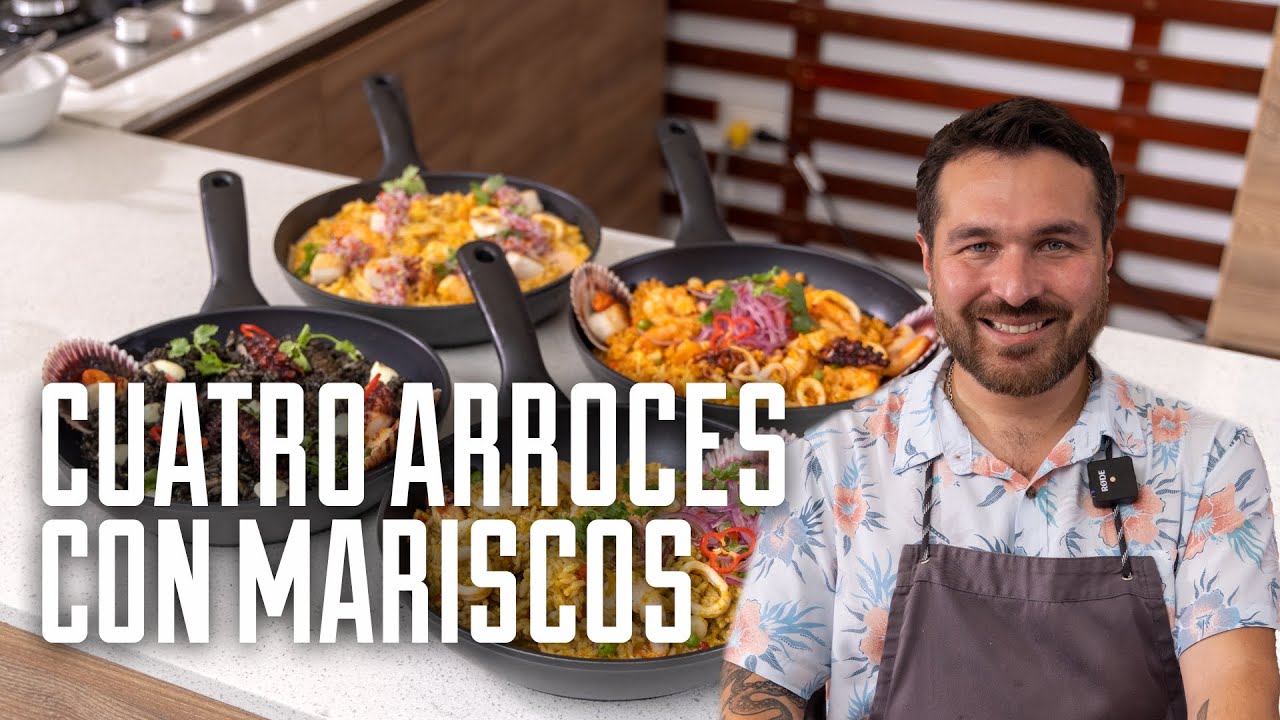
4 Types of Seafood Rice to Prepare at Home or in Your Restaurant
Chef Giacomo Bocchio teaches how to prepare four different types of Peruvian seafood rice: classic, risotto-style, green (norteño), and squid ink black. He demonstrates the base aderezo technique, squid cleaning, and mise en place philosophy for efficient restaurant-style cooking.
download Extracted 2026-03-29
Ingredients
Aderezo Base
- 2 medium Yellow onion (diced in brunoise)
- 8 cloves Garlic (blended or minced)
- 4 tbsp Aji amarillo paste (blended with water)
- 2 tbsp Aji panca paste (blended)
- 4 tbsp Vegetable oil
Base
- 4 cups White rice (day-old, refrigerated) (cooked and refrigerated 1-2 days)
Black Rice
- 2 tsp Squid ink
- 0.5 cup Dark beer
Classic & Risotto Rice
- 0.5 cup White wine (Chardonnay)
Garnish
- 0.5 cup Corn kernels (cooked, stored in cooking liquid)
- 0.5 cup Green peas (cooked)
- 1 small Carrot (diced small)
- 1 medium Roasted red peppers (fire-roasted, diced 3-4mm) opcional
- 2 units Aji limo (sliced in rings) opcional
- 0.5 medium Red onion (criolla) (julienned for criolla/chalaquita) opcional
- 2 tbsp Garlic sauce/mayo opcional
- 0.5 unit Rocoto (diced for criolla) opcional
Green Rice
- 0.5 cup Chicha de jora (Andean corn beer)
- 3 tbsp Zapallo loche (Peruvian squash) (grated or pureed)
- 1 bunch Cilantro (blended with water)
Liquids
- 4 cups Shellfish/crustacean stock (americana) (hot)
- 0.5 cup Leche de tigre (with a touch of oil) opcional
Risotto Rice
- 0.25 cup Heavy cream
- 0.5 cup Parmesan cheese (grated)
- 150 g White fish fillet (cubed, pan-seared for risotto topping) opcional
Seafood
- 400 g Squid (cleaned, cut in rings)
- 300 g Shrimp/langostinos (peeled, deveined)
- 200 g Octopus (cooked, diced)
- 200 g Scallops (conchas) (cleaned)
Seasoning
- 4 units Lime (juiced)
- 2 tsp Salt
- 1 tsp Black pepper (freshly ground)
- 0.5 tsp Cumin
Steps
-
1Prepare the base aderezo: heat oil in a pan, sauté diced onion until translucent, add blended garlic, cook until fragrant. Add aji amarillo paste and cook on low for 1-1.5 hours until concentrated and the oils separate (bien matado).Tip: The aderezo can be made in large batches and frozen in portions for months. When fully cooked, you should see oil separating around the edges.~90 min
-
2Split the aderezo: keep half as aji amarillo base. To the other half, add 2 tbsp aji panca paste and cook until amalgamated. This gives you two base aderezos for different rice variations.Tip: From these two bases, you can make dozens of Peruvian dishes: tallarines rojos, guisos, adobos, and more.~10 min
-
3Clean the squid: remove fins, peel the tube, extract the transparent cartilage (pluma), remove the ink sac carefully, separate the head from tentacles, remove the beak by pressing between the eyes. Cut tube into thick rings.Tip: Save the squid ink sac for the black rice. The fins can be used for ceviche or pasta. Store ink refrigerated since it's an animal product.~15 min
-
4Season all seafood with a squeeze of lime juice and salt. Sauté in very hot oil in two batches (to avoid steaming). Reserve sautéed seafood and juices.Tip: When oil passes 200C it becomes flammable - that initial flame is normal. Work in batches to maintain high heat.~10 min
-
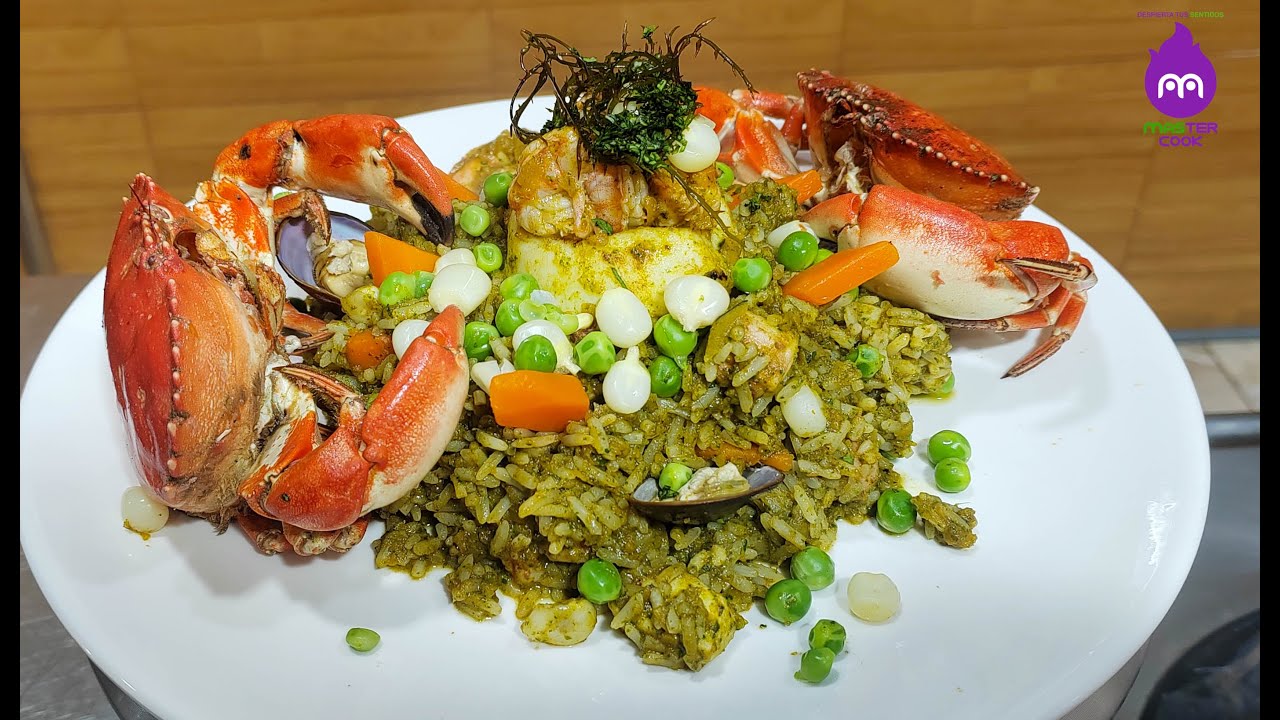
5GREEN RICE (Norteño): In the same pan, add aji amarillo aderezo base, grated zapallo loche, and chicha de jora. Reduce. Add salt, cumin, pepper. Add hot crustacean stock and blended cilantro. Add day-old rice, mix gently, let it absorb the liquid.Tip: Reserve some blended cilantro to add at the end if the green becomes too dull (military green) from the heat - chlorophyll is heat-sensitive.~15 min
-
6BLACK RICE (Squid Ink): Add aji amarillo and aji panca aderezo. Deglaze with dark beer, reduce. Add squid ink (a little goes a long way - mainly for color). Add hot crustacean stock, then day-old rice. Mix gently with a fork.Tip: Squid ink doesn't add much flavor - it's mainly aesthetic. Use a fork instead of a spoon to avoid crushing the rice grains.~15 min
-
7CLASSIC RICE: Add aji amarillo and aji panca aderezo. Deglaze with white wine, reduce. Add hot crustacean stock. Season with salt and pepper. Add day-old rice and mix. Add vegetable garnishes (peas, carrots, corn).Tip: The americana stock already contains tomato paste and tomato from its base recipe, so no need to add extra tomato.~15 min
-
8RISOTTO-STYLE RICE: Same as classic but add heavy cream and more stock for a looser texture. Finish with grated Parmesan and leche de tigre for umami and acidity. Top with pan-seared fish cubes and chalaquita.Tip: A true risotto should never be molded - it should flow flat on the plate. The Parmesan with leche de tigre creates an incredible umami-acid contrast.~15 min
-
9Finish all four rice dishes: reheat the green and black rice with a splash of stock. Add sautéed seafood and their juices to each rice. Add vegetable garnishes. Plate each rice and top with criolla, chalaquita, cilantro leaves, aji limo rings, and garlic sauce dots as desired.Tip: The criolla garnish is simply julienned red onion with aji limo, rocoto, lime juice, salt, and cilantro. The chalaquita uses cilantro stems and leche de tigre instead of lime.~10 min
Nutrition (por porción)
550
Calorías
28g
Proteína
65g
Carbohidratos
18g
Grasa
3g
Fibra
Cultural Context
Arroz con mariscos is one of the most iconic dishes of Peruvian coastal cuisine, deeply rooted in cevicheria culture. The green norteño version uses chicha de jora (Andean corn beer) and zapallo loche, ingredients unique to northern Peru. The squid ink version draws from Mediterranean influence filtered through Peru's multicultural culinary tradition.
Giacomo Bocchio
4 TIPOS DE ARROCES CON MARISCOS PARA PREPARAR EN CASA O EN TU RESTAURANTE | GIACOMO BOCCHIO
Watch on YouTube →
Your Cooking Log
Mar 28, 2026
Quick and easy carbonara. Egg emulsion was smooth.
Tip: Reserve more pasta water.