› Browse Recipes › Frypan Roasted Chicken
Frypan Roasted Chicken
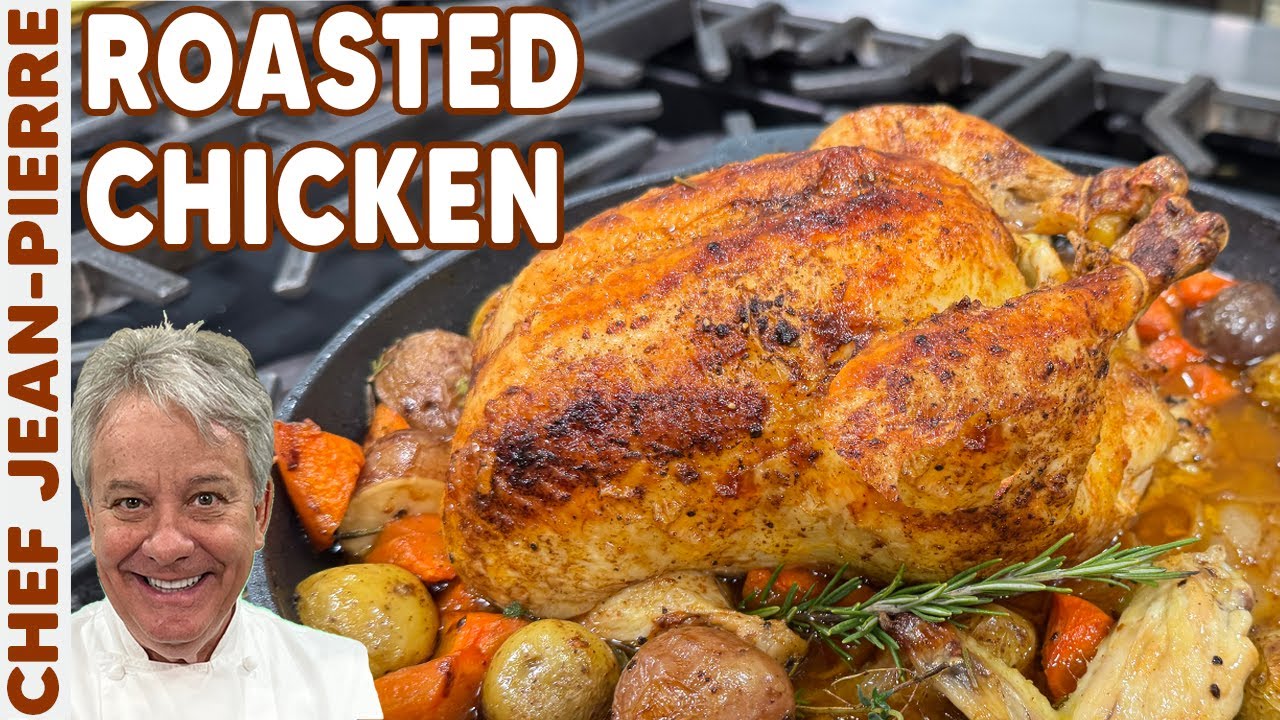
A simple yet impressive one-pan roasted chicken cooked on a bed of vegetables in a frypan. Salting the bird overnight dries the skin for extra crispness, and searing the leg side first gives the dark meat a head start so the breast stays juicy. The pull-and-rest technique (turning the oven off at 135°F and letting carryover heat finish it to 165°F) yields an amazingly moist, flavorful chicken with vegetables all in one pan for easy cleanup.
smart_display Published 2025-02-10
download Extracted 2026-06-01
Ingredients
- 5 lb whole chicken (dry-brined overnight with salt, patted dry, wings removed)
- to taste salt (for dry-brining and seasoning, inside and out)
- to taste black pepper (cracked)
- 1 whole lemon (cut into wedges, for stuffing the cavity)
- 4 cloves garlic cloves (for stuffing the cavity)
- 2 sprigs fresh rosemary (for stuffing the cavity)
- 1 sprig fresh thyme (for stuffing the cavity)
- 1 large onion (sliced, for the vegetable bed)
- 2 whole carrots (cut, for the vegetable bed)
- 2 stalks celery (cut, for the vegetable bed)
- 1.5 lb baby potatoes (purple, red and white; halved if too big)
- as needed garlic olive oil (for the pan and the paprika rub; any good olive oil works)
- 1 tsp Hungarian paprika (spicy variety, for the rub)
- a little hot sauce (for the rub) opcional
- to serve Dijon mustard (for serving alongside) opcional
Steps
-
1Up to 24 hours ahead, remove the giblets from the cavity (save them for stock). Salt the chicken inside and out, set it on a rack, and refrigerate uncovered overnight to dry-brine. This draws out moisture and gives you much crispier skin.Tip: Do not wash the chicken — the FDA recommends against it as it only spreads bacteria.
-
2Pat the chicken thoroughly dry with paper towels to remove any moisture that came out overnight. Season the cavity lightly with salt and cracked black pepper.
-
3Stuff the cavity with the lemon wedges, garlic cloves, rosemary and thyme — pack in as much as will fit.
-
4Truss the chicken: take a long piece of twine, tie a double knot around the ends of the legs to hold them tight against the body, and finish with a simple knot. This keeps the legs from splaying so the breast does not overcook.Tip: Keep the legs tight against the body so the breast and legs finish cooking at the same time.
-
5Cut off the wings and reserve them to cook alongside in the pan. Lay a bed of sliced onion, carrot and celery in the bottom of the frypan.
-
6Make a paprika rub: combine a little salt, about 1 teaspoon spicy Hungarian paprika, a little hot sauce and some olive oil, and mix into a paste. Brush the rub all over the chicken skin for color and flavor.Tip: Hungarian paprika is far more flavorful than ordinary supermarket paprika.
-
7Heat a little garlic olive oil in the frypan and sear the chicken on its leg/thigh side first to give the dark meat a head start, since legs take longer to cook than the breast. Turn to develop color on both sides.Tip: Searing the leg side first is the key to a breast that isn't overcooked when the legs are done.~10 min
-
8Flip the chicken breast-side up onto the vegetable bed. Tuck the carrots, celery and baby potatoes around it, brush a little more oil over everything, and season the vegetables with a little salt and paprika.
-
9Insert a probe thermometer into the thigh near (but not touching) the bone. Roast in an oven preheated to 450°F until the thigh reaches 135°F internal temperature.Tip: Place the probe at the joint, feel the bottom of the pan, then lift slightly so the tip sits close to the bone without touching it.~45 min
-
10When the thigh hits 135°F, turn the oven OFF and leave the chicken inside (do not open the door). Let carryover heat bring it up to a final internal temperature of 165°F.Tip: This off-oven finish is what creates an exceptionally juicy, moist chicken.~20 min
-
11Remove the heavy pan from the oven (leave a towel on the handle as a reminder it's hot). Let the chicken rest 20-25 minutes so the juices redistribute and it stays moist.Tip: You can loosely tent with foil to keep it warm, though it slightly softens the crisp skin.~25 min
-
12Carve: release and remove the legs at the joint, then cut down alongside the backbone and scrape each breast off the bone in one piece. Spoon the roasted vegetables and pan juices onto a platter and arrange the carved chicken on top. Serve with Dijon mustard.Tip: For the crispiest skin, do not brush juices over it; brushing on juice makes the skin less crisp.
Nutrition (por porción)
520
Calorías
42g
Proteína
22g
Carbohidratos
30g
Grasa
3g
Fibra
Cultural Context
Roasting a whole chicken is a cornerstone technique of French home cooking, and Chef Jean-Pierre — a classically trained French chef — frames it as a skill everyone should master. His twist is using a frypan instead of a roasting pan or sheet tray, building a bed of mirepoix-style aromatics (onion, carrot, celery) beneath the bird so the vegetables roast in the rendered juices. The overnight dry-brine and the searing of the leg side before roasting are professional restaurant techniques adapted for the home kitchen, reflecting the French emphasis on technique over complicated equipment.