› Browse Recipes › Classic Pulpo al Olivo (Octopus with Olive Cream)
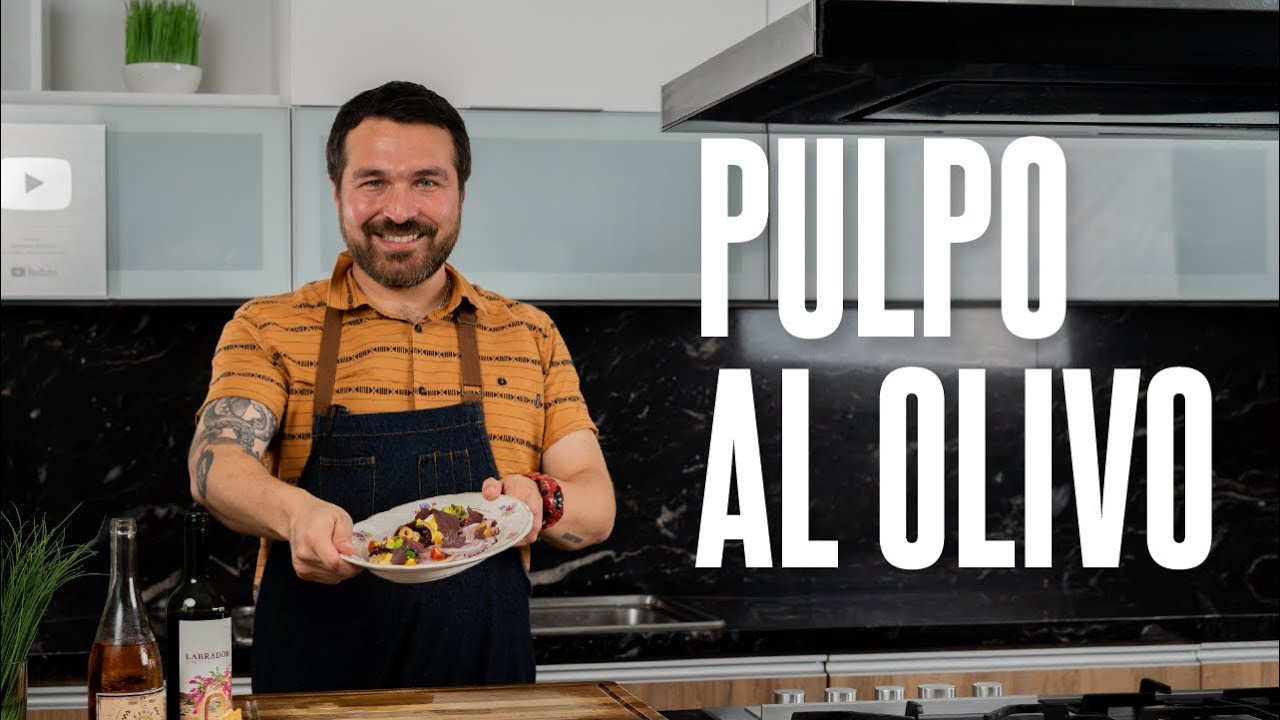
Classic Pulpo al Olivo (Octopus with Olive Cream)
A beloved Peruvian cold appetizer of thinly sliced poached octopus draped in a rich, silky olive cream sauce made with Tacna black olives, mayonnaise, and cream cheese. Giacomo shares his personal connection to octopus — he caught his first one at age 7 — and teaches how to standardize recipes with precise weights. Served over a majadito of steamed yellow potato with chives, magullo vinegar, and olive oil, garnished with white onion plumes, cherry tomatoes, watercress, spicy olives, and dehydrated olive chips for height and texture.
download Extracted 2026-03-30
Ingredients
Garnish
- 0.5 unit White onion (cut in pluma (feather-thin slices), soaked in ice water)
- 1 unit Cherry tomatoes (red) (quartered)
- 1 unit Cherry tomatoes (yellow) (quartered) optional
- 1 handful Watercress (small sprigs) optional
- 4 unit Spicy olives (halved or quartered) optional
- 1 pinch Black pepper (freshly ground)
Majadito
- 300 g Yellow potato (steamed and lightly mashed)
- 1 tbsp Chives (finely chopped)
- 1 tsp Magullo vinegar
- 2 tbsp Extra virgin olive oil
Octopus
- 1.5 kg Octopus (whole, cleaned)
- 1 bundle Aromatic garnish for cooking liquid (herbs and aromatics for the cooking broth)
Olive Chips (optional garnish)
- 2 slices Bread slices (white sandwich bread) (cut into cubes) optional
- 50 g Black olives (for chips) (pitted) optional
- 2 tbsp Olive brine (for chips) optional
Olive Cream Sauce
- 200 g Tacna black olives (pitted) (pitted, drained)
- 14 g Whole Tacna black olives (extra) (about 2 olives, added after first blend)
- 80 g Mayonnaise
- 40 g Cream cheese
- 5 g Lime juice (freshly squeezed)
- 20 g Olive brine (from the olive jar)
- 1 to taste Salt (be careful — olives, mayo, and cream cheese already contain salt)
Steps
-
1Prepare the olive cream sauce: Drain the pitted Tacna olives, reserving the brine. Weigh 200g of olive pulp (no liquid) and place in a blender with 80g mayonnaise, 40g cream cheese, 5g lime juice, and 20g olive brine.Tip: Weigh olive pulp separately from brine to get accurate measurements. All components already contain salt, so taste before adding any.~5 min
-
2Blend until smooth and creamy. Taste and add 2 extra whole olives (about 14g) to intensify the flavor, then blend again briefly to leave small olive pieces for texture. The consistency should be like a leche de tigre — pourable, not a stiff paste.Tip: Tacna olives have very thin skin, so there is no need to strain. The thin skin blends smoothly.~3 min
-
3Refrigerate the olive cream while you prepare the remaining components. The cream cheese will set slightly in the cold, giving the sauce more body.
-
4Prepare the white onion: Peel half a white onion, remove the core, and slice into thin plumes (feather cuts). Immediately place in ice water to crisp and remove sulfur compounds.Tip: White onion is milder than Peruvian red onion but still benefits from the ice water soak for crunch and mildness.~5 min
-
5Cook the octopus: Bring a large pot of salted water to a boil with an aromatic garnish. 'Scare' the octopus by dipping it three times into the boiling water, then submerge fully. Reduce to a very gentle simmer (mijotée — barely moving bubbles) and cook for 45 minutes.Tip: A 1.5kg octopus needs 45 minutes at mijotée. Strong boiling will tear the delicate skin off the octopus — you want skin, gelatin, and tender meat together.~45 min
-
6Transfer the cooked octopus to an ice bath (inverted bain-marie) to stop cooking and fix the skin in place. Let it cool completely.Tip: The ice bath locks the skin onto the flesh, preserving the beautiful appearance.~15 min
-
7Optional — make olive chips: Blend cubed sandwich bread with olive brine and pitted olives until you have a smooth paste like a purée. Spread thinly on a silicone mat (silpat) and dehydrate in the oven at low temperature until crispy. Crush some into olive powder if desired.Tip: These chips add height and textural contrast. Crushed into powder, they can garnish tiraditos, salads, carpaccios, and pastas too.
-
8Prepare the majadito: Steam yellow potatoes until tender, then lightly crush with a fork. Season with chopped chives, a splash of magullo vinegar, a drizzle of olive oil, and a pinch of salt.Tip: The majadito serves as a 'road' (caminito) for the octopus. Its starchy base complements the rich olive cream beautifully. Can also serve with soda crackers or toast as is traditional.~10 min
-
9Slice the cooled octopus tentacles into very thin rounds (láminas). Arrange the slices on the plate, fanning them out.Tip: Keep the skin side visible — the purple color is part of the beauty of this dish.~5 min
-
10Spoon the olive cream generously over the octopus slices, leaving some 'air' — gaps where the octopus is visible. Don't cover it completely; the star ingredient should show through.Tip: Giacomo emphasizes leaving breathing room (aires) in the plating so diners can see what they are about to eat.~2 min
-
11Plate the majadito alongside the octopus as a small path. Scatter drained white onion plumes, quartered cherry tomatoes (red and yellow), small octopus tentacle tips, spicy olive pieces, and watercress sprigs. Finish with olive chips for height, a grind of black pepper, and a drizzle of olive oil.Tip: Less is more with garnishes. The tomatoes add freshness and moisture that the dish needs. Watercress stems are juicy and contribute water to balance the rich cream.~3 min
Nutrition (per serving)
350
Calories
20g
Protein
35g
Carbs
15g
Fat
3g
Fiber
Cultural Context
Pulpo al olivo is a quintessential Peruvian cold appetizer (entrada fría) found in upscale restaurants and ceviquerías, often served at celebrations and special occasions. It showcases Peru's deep connection to both seafood and the olive heritage of Tacna, the southernmost region bordering Chile and Bolivia. Tacna's olives — with their distinctively thin skin and rich flavor — are prized nationwide. Giacomo highlights the Tacna terroir by pairing the dish with negra criolla wines from the same region, creating a fully Tacneño experience. The dish bridges Italian and Peruvian culinary traditions, reflecting Peru's significant Italian immigrant influence on its gastronomy.
Giacomo Bocchio
LES ENSEÑO A PREPARAR UN CLASICO PULPO AL OLIVO | GIACOMO BOCCHIO
Watch on YouTube →