› Browse Recipes › Classic Peruvian Christmas Turkey (Pavo Navideño Criollo)
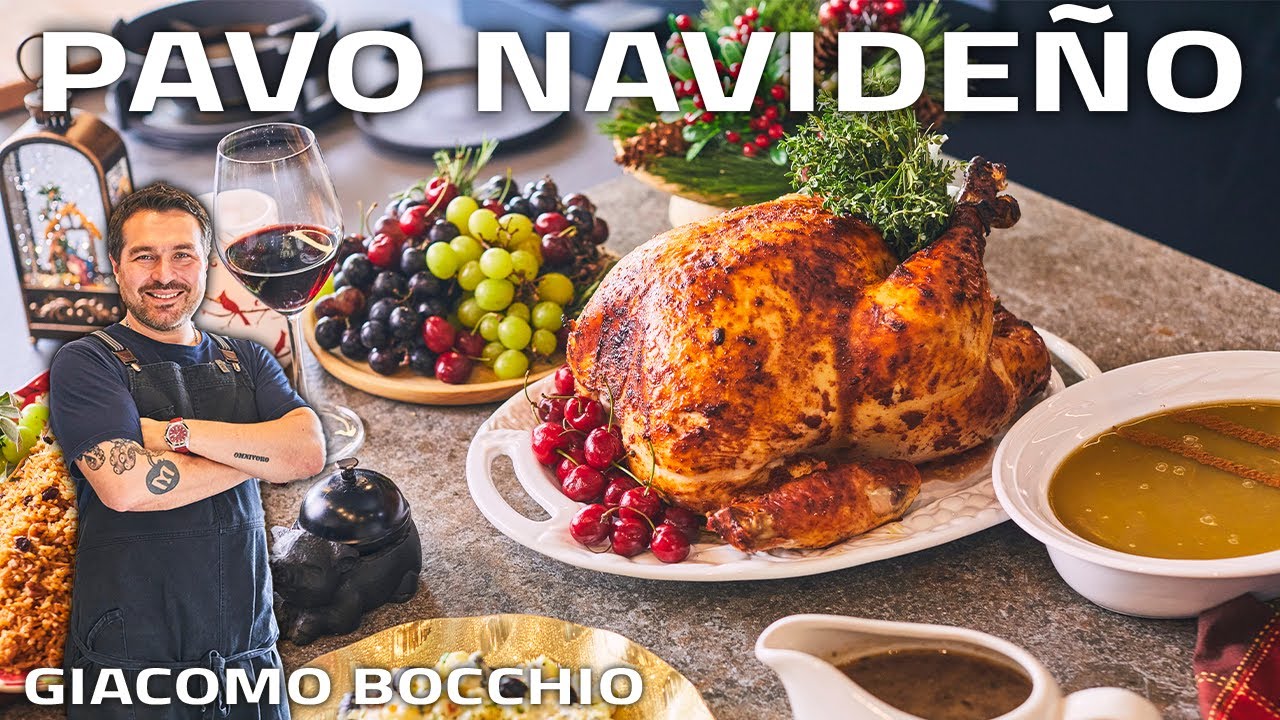
Classic Peruvian Christmas Turkey (Pavo Navideño Criollo)
A traditional Peruvian-style Christmas turkey using a deeply flavorful criolla marinade taught by two Ancashino masters from the legendary sandwich shop La Lucha. The turkey is brined overnight, coated in a blend of aji panca, garlic, beer, pisco, and orange juice, then roasted using a poêlé technique — covered first to cook in its own juices, then uncovered for a beautiful caramelized finish. Giacomo walks through every detail: brining ratios, aromatic stuffing to equalize cooking between breast and legs, trussing with cotton twine, and how to present and carve the bird for a family celebration.
download Extracted 2026-03-30
Ingredients
Aromatic Stuffing & Bed
- 3 unit Yellow onions (sliced into thick rounds (1 for bed, 2 halved for stuffing))
- 2 unit Oranges (quartered, for stuffing)
- 2 unit Apples (quartered, for stuffing)
- 8 unit Whole cloves (studded into onion halves)
- 4 sprig Fresh thyme
- 4 sprig Fresh sage
- 4 sprig Fresh rosemary
Brine
- 8 L Water (for brine)
- 800 g Salt (for brine, 10%)
Equipment
- 1 roll Cotton kitchen twine
- 1 roll Aluminum foil
Garnish
- 12 unit Cherries (for garnish) (for plating decoration) opcional
Marinade
- 140 g Garlic cloves, peeled (peeled)
- 150 g Aji panca paste
- 10 g Ground black pepper
- 3 g Paprika
- 10 g Ground cumin
- 30 g Red wine
- 30 g Dark beer (stout)
- 30 g Lager beer
- 20 g Pisco
- 10 g American mustard
- 100 g Orange juice (freshly squeezed)
Turkey
- 8 kg Whole turkey (thawed, cleaned)
Steps
-
1Prepare a 10% brine: dissolve 100g salt per 1L of water. Submerge the turkey completely in a large container and brine for approximately 1 hour per kilogram (about 8 hours for an 8kg turkey). Refrigerate during brining.Tip: The brine provides even seasoning all the way to the center of the meat, so no additional salt is needed in the marinade. If you can't find a turkey, use a pollipavo (large chicken) or regular chicken with the same technique.~480 min
-
2Prepare the marinade: combine garlic, aji panca paste, ground pepper, paprika, cumin, red wine, dark beer, lager beer, pisco, American mustard, and orange juice. Blend everything with an immersion blender until smooth. Taste and adjust the marinade before applying to the turkey — never taste raw turkey juices.Tip: Always prepare your marinade separately and taste it on its own. Many people make the mistake of seasoning directly on the raw turkey and tasting the raw juices.~10 min
-
3Prepare the aromatic bed: slice one onion into thick rounds and spread on the bottom of a large disposable aluminum roasting tray. Scatter some thyme, sage, and rosemary sprigs over the onions. This creates a poêlé cooking base.Tip: The onion bed keeps the turkey elevated and creates a flavorful cooking liquid through the poêlé technique — cooking in the bird's own juices.~5 min
-
4Prepare the aromatic stuffing: halve 2 onions and stud each half with 2 whole cloves. Quarter the oranges and apples. Toss the clove-studded onion halves, oranges, apples, and remaining fresh herbs (thyme, sage, rosemary) together. Add a splash of the marinade to the stuffing mixture.Tip: This aromatic stuffing is not meant to be eaten — its purpose is to equalize cooking between the breast and legs. The legs have thick bones that act like ice packs, slowing their cooking. The stuffing ensures the breast doesn't overcook while the legs finish.~10 min
-
5Clean the brined turkey: remove excess fat from the tail area, cut off the tail (rabadilla), and trim excess neck skin. Reserve a piece of neck skin to use as a flap to seal the stuffing cavity. Remove the turkey from the brine and pat dry.Tip: Use a sharp utility knife (cuchillo de oficio) to carefully trim. Don't discard the neck skin — you'll need it as a flap.~10 min
-
6Stuff the turkey cavity tightly with the aromatic mixture, packing it firmly. Cover the opening with the reserved neck skin flap. Tuck the wings behind the turkey's back to create a stable rack. Truss the turkey with double cotton twine — wrap it around the body for compactness, then tie the legs together pointing upward.Tip: Always use natural cotton twine, never synthetic — it will melt. The trussing ensures even, consistent cooking throughout the bird.~15 min
-
7Place the stuffed and trussed turkey on the aromatic onion bed in the roasting tray. Coat the entire turkey generously with the marinade, covering all sides. Seal the tray tightly with aluminum foil, crimping the edges to trap steam.Tip: The shiny vs matte side of aluminum foil makes no difference — it's purely a manufacturing cost distinction. Seal as tightly as possible to trap the cooking vapors.~5 min
-
8Roast the covered turkey at 175°C (350°F) for approximately 1.5 hours. Check the internal temperature — you're aiming for 65-70°C (150-158°F) at the thickest part. Then remove the aluminum foil and continue roasting uncovered for about 30 minutes more until beautifully browned and caramelized. The sugars from the beer and orange juice in the marinade will caramelize quickly. Total cooking time is approximately 2.5 hours for an 8kg turkey.Tip: Check at the 2-hour mark. The poêlé technique (cooking in its own juices while covered) keeps the turkey incredibly moist. The uncovering at the end is just for color.~150 min
-
9Remove the turkey from the oven and let it rest. Remove the trussing twine. Present the whole turkey at the table first — this is an important family tradition. Then bring it back to the kitchen for carving: remove the legs and thighs, then slice the breast on the bias. Pull some dark meat from the thigh bone. Arrange on a serving platter with herb bouquets and cherries for garnish.Tip: Turkey doesn't need to be served piping hot — it's fine slightly warm or even cool. Take your time with the presentation. Save the carcass with some meat attached for making aguadito (Peruvian rice soup) the next day.~20 min
-
10Prepare the jus: strain the cooking liquid from the roasting tray and refrigerate it. Once cooled, the fat will solidify on top. Skim off the fat layer with a spoon (save it for sautéing potatoes or sweet potatoes if desired). Reheat the defatted jus — it will be gelatinous from collagen but turns fully liquid when warmed. Serve alongside the carved turkey as a dipping jus rather than a thick sauce, to let the turkey's own flavor shine.Tip: Giacomo prefers serving a light jus rather than a thickened sauce because the turkey is already so well-seasoned from the brine and marinade. A thick sauce would mask the good work already done. The leftover fat is excellent for sautéing potatoes.~10 min
Nutrition (por porción)
350
Calorías
20g
Proteína
35g
Carbohidratos
15g
Grasa
3g
Fibra
Cultural Context
Christmas turkey is a cornerstone of Peruvian holiday celebrations, blending traditions that trace back to the Aztecs who ate guajolote (turkey) during the winter solstice. In Peru, the pavo navideño is prepared with distinctly criollo flavors — aji panca, pisco, and dark beer — reflecting the country's mestizo culinary identity. Giacomo learned this particular marinade from two Ancashino masters, Guille and Santos, during his time as gastronomic director of La Lucha, one of Lima's most iconic sandwich restaurants. The ritual of presenting the whole turkey at the table before carving is a treasured family tradition that Giacomo encourages families to preserve.
Giacomo Bocchio
LES VOY A ENSEÑAR A PREPARAR EL MEJOR PAVO NAVIDEÑO | GIACOMO BOCCHIO
Watch on YouTube →