› Browse Recipes › Stir-Fried Noodles with Chicken, Shiitake Mushrooms, and Champignons (Tallarín Saltado)
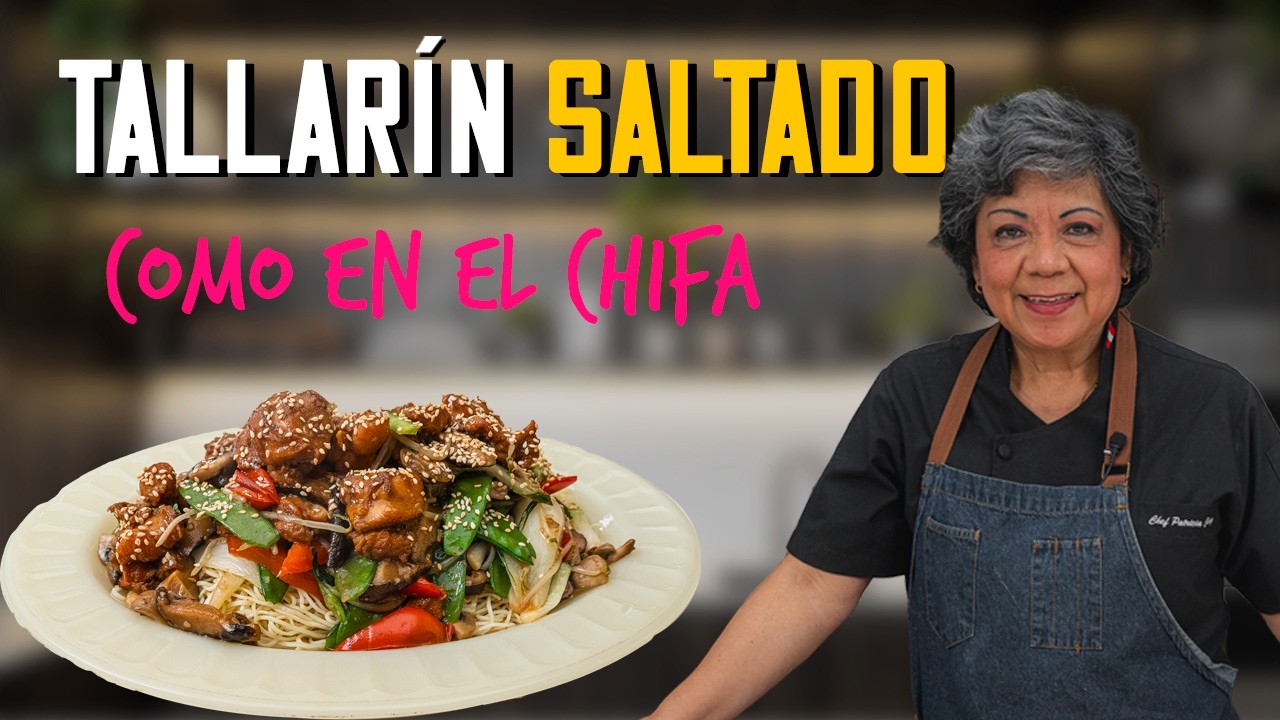
Stir-Fried Noodles with Chicken, Shiitake Mushrooms, and Champignons (Tallarín Saltado)
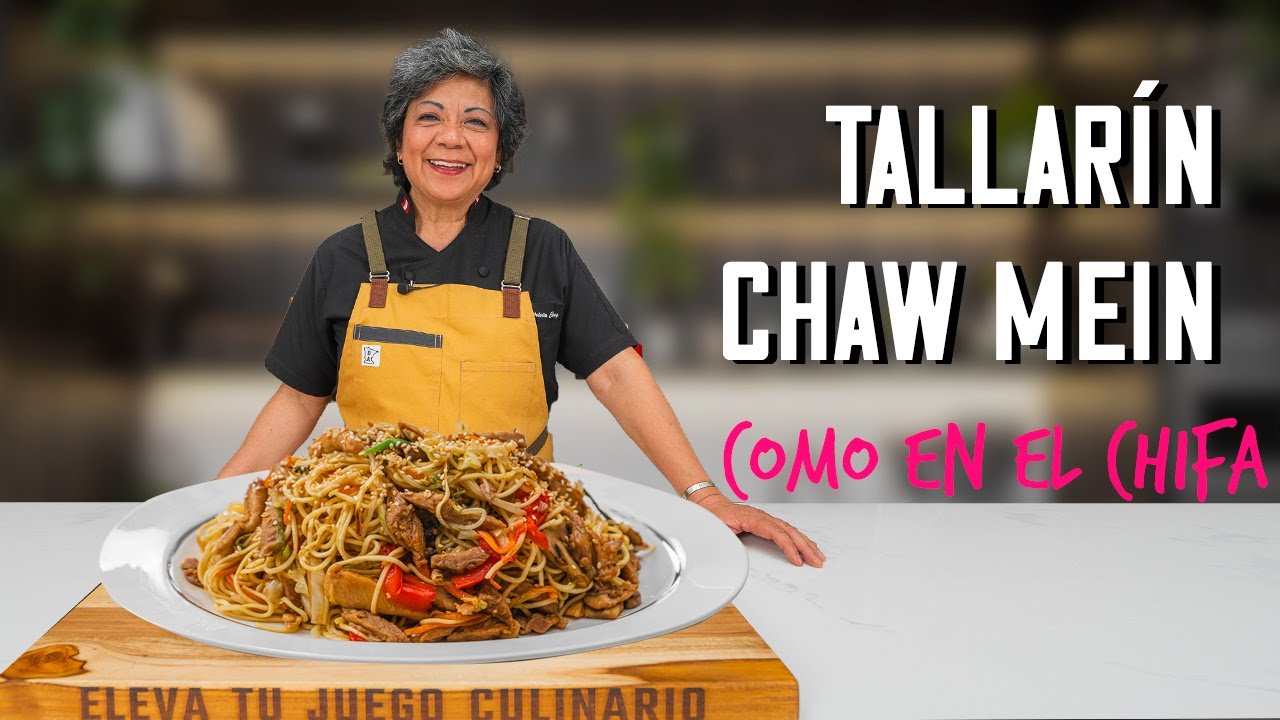
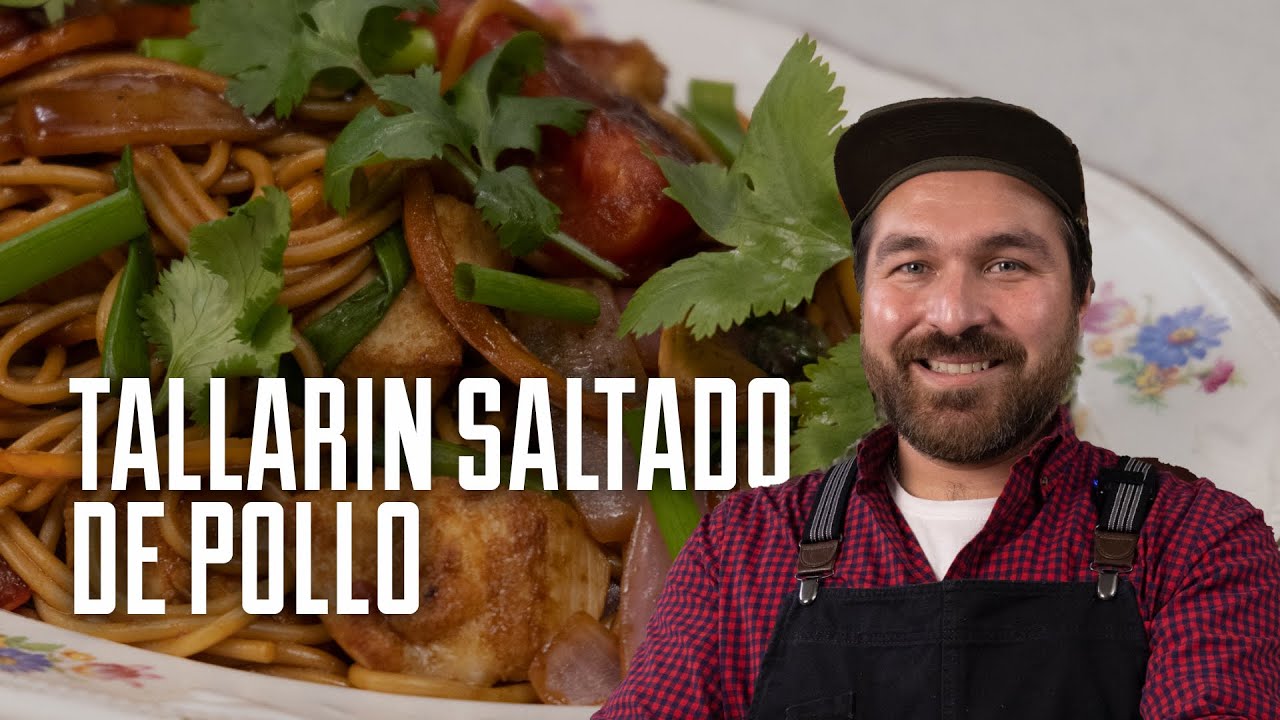
A classic Peruvian-Chinese chifa dish taught by Chef Pati Chong — thin Chinese noodles stir-fried and topped with a savory sauce of deep-fried chicken pieces (kai kau cut), shiitake mushrooms (toncú), button mushrooms, pac choy, bell pepper, green onion, bean sprouts, and snow peas. Seasoned with soy sauce, oyster sauce, and sesame oil, thickened with a cornstarch slurry. Packed with techniques: the kai kau chicken cut, double hydration of dried mushrooms, proper noodle airing, and Chinese aromatic layering.
download Extracted 2026-03-31
Ingredients
Chicken & Marinade
- 600 g Chicken thigh and drumstick (bone-in) (deboned, skin removed, cut in irregular triangular pieces of 25-30g (kai kau cut))
- to taste Salt (for marinade)
- to taste Soy sauce / sillao (for marinade)
- to taste Black pepper (for marinade)
- splash Rice wine (or pisco / jerez)
- small amount Cornstarch / potato starch (chuño) for marinade (mixed with a little water before adding to chicken)
- small amount Water (for marinade) (mixed with cornstarch)
- 3 slices Fresh ginger slices (for marinade) (thin slices) opcional
- as needed Oil (for deep frying chicken) (enough to submerge the chicken pieces)
Noodles
- 400 g Thin Chinese noodles (chow mein / tallarín chino) (boiled al dente, drained, spread on oiled tray to air-dry)
- as needed Water (for boiling noodles) (brought to a boil)
- to taste Salt (for boiling water)
- splash Oil (for boiling water)
- 1 small piece Fresh ginger (for boiling water, aromatic) (lightly crushed) opcional
Stir-Fry Sauce & Vegetables
- 4 cloves Garlic (for stir-fry sauce) (finely minced)
- 1 piece Fresh ginger (for stir-fry sauce) (crushed then finely chopped (with skin))
- 1 medium Bell pepper (red or green) (cut into 2cm x 4-5cm rhombus/diamond shapes with knife inclined)
- 2 heads Pac choy (bok choy) — white stems only (green leaves removed, white stems halved lengthwise and cut diagonally)
- 30 g Dried shiitake mushrooms (toncú / tonku) (double-hydrated: soaked 10-15 min, rinsed, soaked again until pliable; then cut into julienne strips)
- 100 g Button mushrooms (champignons) (sliced)
- 4 stalks Green onion / Chinese chives — white part (cut into 4-5cm batons (white and light-green parts only))
- 80 g Snow peas (jolantao) (whole or trimmed)
- 80 g Bean sprouts (frejolito chino / brotes de soya) (rinsed)
- 100 ml Unsalted chicken stock
- 1 tsp Sugar (balances the six flavors)
- to taste Soy sauce / sillao (dark or light, for sauce) (dark soy sauce: use less; light soy sauce: use more)
- to taste Oyster sauce (salsa de ostiones / hoisin)
- to taste Salt (for stir-fry sauce) (adjust carefully since oyster sauce and soy sauce already contain salt)
- to taste Black pepper (added at end of cooking) (always added at the end)
- drizzle Sesame oil (added at end of cooking) (added at the very end for aroma)
- to consistency Cornstarch / potato starch slurry (for thickening sauce) (dissolved in a little cold water before adding)
- as needed Oil (for stir-frying noodles and sauce)
- small amount Seasoning / sazonador (umami powder) opcional
Steps
-
1Boil a pot of water. Add salt, a splash of oil, and optionally a lightly crushed piece of fresh ginger to aromatize. Once boiling, add the thin Chinese noodles and cook for 2–3 minutes, using a fork or chopsticks to gently comb them upward (not circular motions) to prevent clumping.Tip: The short cooking time is because Chinese noodles are pre-cooked (pre-cooked / parboiled). Circular stirring causes clumping; always comb upward.~5 min
-
2Drain the noodles and spread them on a lightly oiled tray. Let them air-dry (orear) completely so excess moisture evaporates. Periodically loosen the noodles by combing them upward.Tip: This step is critical — if the noodles retain moisture they will stick and have poor texture when stir-fried.~15 min
-
3Debone the chicken thighs and drumsticks. Cut along the bone lines (forming an 'L' shape), scrape the meat away from the bone cleanly, then snap the joint to remove the bone entirely. Remove the skin and trim excess fat and any fat glands at the joint. Keep the yellow cartilage joint for flavor.Tip: The yellow joint cartilage is highly prized in Chinese cooking for its flavor — do not discard it.~10 min
-
4Cut the deboned chicken into irregular triangular pieces of approximately 25–30g each using the kai kau cut: hold the knife at a slight angle and cut in irregular triangular shapes. This is the traditional chifa cut for stir-fried poultry dishes.Tip: Kai = pollo, kau = trozo en chino. The pieces don't need to be perfect cubes — irregular is correct.~5 min
-
5Marinate the chicken pieces: season with salt, a drizzle of soy sauce, black pepper, rice wine (or pisco/jerez as substitute). Mix cornstarch with a little water and add to the chicken — this helps the meat retain moisture and creates a tender texture when fried. Add 3–4 thin ginger slices. Mix well and let marinate for 20–30 minutes.Tip: The cornstarch + water mixture coats the protein and seals in moisture during the high-heat frying, resulting in juicier, more tender chicken.~30 min
-
6Prepare the vegetables. For dried shiitake (toncú): soak in water for 10–15 min, rinse, then soak again until pliable (double hydration). Drain and cut in julienne. For pac choy: separate stems, remove leaves (reserve for another use), halve thick stems lengthwise, then cut diagonally. For bell pepper: halve vertically, remove seeds with minimal waste, cut into rhombus shapes ~2cm x 4-5cm with knife inclined. For green onion: trim roots, remove wilted outer leaves, rinse, then cut into 4–5cm batons (use white and light-green parts). Rinse bean sprouts.Tip: Double-hydrating dried shiitake removes bitter or overpowering aromatic compounds. The first soak water can be reserved and added to stock for extra umami.~15 min
-
7Before deep-frying, mix a small drizzle of oil into the marinated chicken pieces to prevent them from sticking together in the oil. Heat enough oil in a wok or pot for deep frying (the chicken should float). Fry the chicken pieces until golden and cooked through. Remove and set aside.Tip: Adding a little oil to the marinated chicken before deep frying is a key chifa trick to keep pieces separate.~8 min
-
8Loosen the aired noodles by combing them upward to separate any clumps. Remove the ginger slices. Heat a non-stick pan over medium heat with a drizzle of oil. Add the noodles and stir-fry, turning with chopsticks. Season lightly with a little umami seasoning and salt. Stir-fry until the noodles are lightly golden and dry. Remove and plate as the base.Tip: Use a Teflon pan with chopsticks (not metal utensils) to avoid scratching. The noodles need to be pre-sautéed separately for proper texture — never just boil and pour sauce on top.~5 min
-
9Heat a wok or large pan over medium-high heat with oil. Add the minced garlic and chopped ginger. Stir-fry, stirring constantly, until they turn light golden brown and fragrant. Add a splash more oil if needed.Tip: This develops the aromatic (ma) flavor — the sixth flavor in Chinese cuisine. Don't burn the garlic and ginger.~2 min
-
10Add the bell pepper, pac choy stems, julienned shiitake mushrooms, and button mushrooms in order of cooking time. Add a small amount of unsalted chicken stock. Add 1 tsp sugar to balance the flavors. Season with soy sauce and oyster sauce. Stir-fry for about 1 minute.Tip: Vegetables are added by descending cooking time — hardest first. The sugar is not to make it sweet but to achieve balance among the six flavors.~3 min
-
11Add the pre-fried chicken pieces and stir to integrate. Add the snow peas (jolantao), green onion batons, and bean sprouts. These require only a few seconds of cooking. Add black pepper and a drizzle of sesame oil — both added at the very end to preserve their aroma.Tip: Bean sprouts and snow peas are delicate — overcooking ruins their texture. Pepper and sesame oil should always be added at the end of any Chinese stir-fry.~2 min
-
12Mix a small amount of cornstarch (or potato starch) with cold water to make a slurry. Add to the stir-fry while stirring to thicken the sauce to a glossy, coating consistency.Tip: Always dissolve the starch in cold water before adding to the hot pan to avoid lumps.~1 min
-
13Plate the stir-fried noodles as the base. Spoon the chicken and vegetable stir-fry with its sauce over the noodles. Serve immediately.Tip: Mantener la longitud del tallarín es importante para la presentación y textura del plato.~2 min
Nutrition (por porción)
480
Calorías
28g
Proteína
52g
Carbohidratos
16g
Grasa
3g
Fibra
Cultural Context
Tallarín saltado is a cornerstone of chifa — the Peruvian-Chinese culinary tradition born from the fusion of Cantonese immigrant cooking with local Peruvian ingredients. Chef Pati Chong represents a lineage of chifa mastery: her father was one of the first and most prominent chifa masters in Peru. This dish showcases the Chinese philosophy of six flavors (salty, sweet, sour, bitter, spicy, and aromatic/ma) and classic chifa techniques such as the kai kau chicken cut, deep frying before stir-frying, and the use of toncú (winter mushrooms / shiitake) alongside local ingredients like pisco as a substitute for rice wine.
Giacomo Bocchio
TE ENSEÑO A PREPARAR UN RICO TALLARÍN SALTADO ¦ ELEVA TU JUEGO CULINARIO CON PATI CHONG
Watch on YouTube →