› Browse Recipes › Kamado Mastery: Tomahawk, Skirt Steak, Sweetbreads and Wings
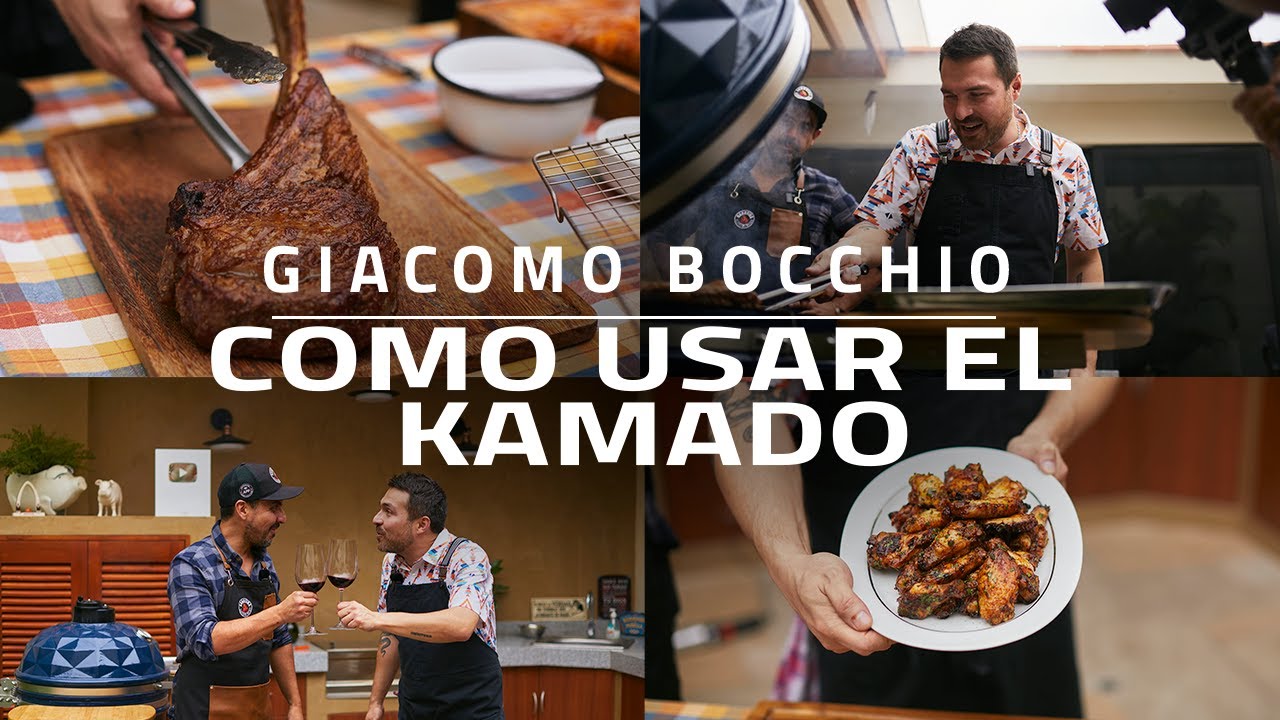
Kamado Mastery: Tomahawk, Skirt Steak, Sweetbreads and Wings
A complete masterclass in Kamado ceramic grill technique covering four different cooking methods: indirect-smoked Tomahawk steak cooked to 56°C internal, direct-fire skirt steak (entraña) grilled 5 minutes per side, smoked veal sweetbreads (mollejas) served with lemon, and Pisco-panca marinated chicken wings cooked over indirect heat. Expert Nils Wetzell teaches proper Kamado seasoning, ventilation control, charcoal management, and multi-level heat cooking from scratch.
download Extracted 2026-03-31
Ingredients
Alitas
- Chicken wings (wing tip removed; cut into two pieces (drumette and flat); marinated in Ziploc bag, submerging in water to remove air)
- Fresh cilantro (finely chopped, scattered over wings before plating)
Entraña
- 1 unit Skirt steak / entraña (American Angus) (salted with medium-grind salt using a mill)
- Medium-grind salt (ground to medium texture, between fine table salt and coarse salt)
Finishing
- Black pepper (freshly cracked, always added off the heat)
Marinade — Alitas
- 120 ml Pisco (added to blender with all marinade ingredients)
- 100 g Ají panca paste (blended into marinade)
- 50 ml Soy sauce (sillao) (blended into marinade)
- 50 ml Olive oil (blended into marinade)
- 35 ml Red wine vinegar (blended into marinade)
- 2 units Garlic cloves (blended into marinade)
- 2 units Bay leaves (added to marinade)
- 70 g Honey (blended into marinade; causes caramelization during grilling)
- to taste Salt, pepper, and cumin (added to marinade to taste)
Mollejas
- Veal sweetbreads (pre-cooked (blanched), pressed, salted)
- 3 units Lemon (halved for garnish and a squeeze of juice over sweetbreads before serving; also fresh cracked pepper added off heat)
Technique
- Wood smoking chips (inserted through the dedicated side vent port of the Kamado while it is hot)
- 1.5 kg Hardwood charcoal (capirona, algarroba or similar) (use certified Peruvian hardwood charcoal; do not pre-light outside the Kamado — light inside so ceramic heats progressively)
Tomahawk
- 1 unit Tomahawk steak (American Angus) (brought to room temperature for 30 minutes, generously salted with coarse salt on all sides and pressed in)
- Coarse salt (applied generously from height to distribute evenly)
Steps
-
1Before first use, season (cure) the Kamado: verify that all vents align correctly with the ceramic openings so airflow is unobstructed. Check that the bottom vent grid matches the ash drawer opening.Tip: The Kamado is shipped with foam padding to protect the ceramic. Make sure all pieces are correctly seated before lighting.~5 min
-
2Load 1.5–2 kg of quality hardwood charcoal directly inside the Kamado in an irregular pile. Use a corn-husk fire starter or matches to light the charcoal from inside — never pre-light charcoal in a separate chimney and then pour it in, as the sudden thermal shock can crack the ceramic.Tip: Good quality charcoal (capirona, algarroba, olive wood) gives more BTUs with less sparking. Poor charcoal sparks excessively and burns out quickly.~5 min
-
3Control temperature using the two-vent system: the lower vent controls primary airflow volume (open wider = more oxygen = higher temperature). The upper 'control tower' vent fine-tunes temperature. For curing the new Kamado, allow temperature to rise progressively to about 150°C with vents open.Tip: Use heat-resistant gloves when adjusting vents — all metal parts get very hot. Keep children away from the Kamado at all times.~20 min
-
4Prepare the Tomahawk: pat dry, then season generously with coarse salt from height to distribute evenly. Press the salt firmly into all sides. Rest at room temperature for 30 minutes before grilling.Tip: The Tomahawk comes from the bife ancho (rib-eye). It contains two juicy sections: the ojo de bife (eye) and the ceja de bife (cap), plus the long rib bone that makes it visually spectacular.~30 min
-
5Insert the deflector plate (cast iron or ceramic plate setter) into the Kamado above the coals to create indirect heat for the Tomahawk. This distances the meat from direct flame and extends cooking time for a gentler cook.Tip: Preheat the grill grates over the deflector plate before placing the meat — you should hear a sizzle when the steak goes on.~5 min
-
6Insert wood smoking chips through the dedicated side vent port of the Kamado while the coals are hot. Place the Tomahawk on the grill over indirect heat and insert a probe thermometer into the thickest part of the meat, centering it. Target an internal temperature of 56°C.Tip: The probe thermometer averages the reading along the rod, not just at the tip — this gives a more accurate reading for thick cuts like a Tomahawk.
-
7Cook the Tomahawk over indirect smoked heat until the probe reads 56°C internal (approximately 45–60 minutes depending on thickness). Remove from heat, tent loosely with aluminium foil, and rest for at least 10 minutes. The carry-over heat will bring it to 60–62°C internal — this is the ideal medium-rare finish.Tip: The food danger zone is 6–63°C. At 56°C you are still within the zone but the carry-over resting brings it to 60–62°C which is at the boundary — perfectly safe and ideally juicy.~60 min
-
8While the Tomahawk rests, prepare the veal sweetbreads: they should arrive pre-blanched and pressed. Salt them and place on the grill over the smoked indirect heat. Cook, turning occasionally, until golden and slightly charred on the outside with a creamy interior.Tip: Smoked mollejas take on a spectacular perfume from the wood chips. Finish them with a squeeze of fresh lemon juice off the heat — this brightens all the flavors.~20 min
-
9Prepare the wing marinade: blend all marinade ingredients together (pisco, ají panca paste, soy sauce, olive oil, red wine vinegar, garlic, bay leaves, honey, salt, pepper, cumin) until smooth. Cut wings: remove and discard or save the wing tip for stock. Separate the drumette from the flat. Place wings in a Ziploc bag, pour marinade over, then submerge bag in water to push out air before sealing — this creates near-vacuum contact marinating.Tip: Because of the honey content, these wings will caramelize intensely over direct fire. Always cook over indirect heat to prevent the marinade from burning before the chicken is cooked through.~15 min
-
10Cook the marinated wings over indirect heat on the Kamado — use the elevated grill position if available, away from the direct coals. Cook until the wings are cooked through, caramelized, and slightly charred on the edges, turning occasionally.Tip: The Kamado allows height-level adjustments — raising the grill further from the coals reduces intensity. Use this to manage the caramelization without burning.~25 min
-
11For the entraña (skirt steak): after the Tomahawk is off and resting, add fresh charcoal to the Kamado and lower the grill to the closest position to the coals for maximum direct heat. Season the entraña with medium-grind salt. Grill 5 minutes per side over direct high heat until the myoglobin (juices) visibly rises to the surface on the uncooked side — that is the signal to flip.Tip: The entraña is a thinner cut — it cooks fast and needs high direct heat. The Kamado's multi-level grill system makes this easy to switch from indirect to direct without changing the setup.~12 min
-
12Rest the entraña briefly after cooking. To serve: identify the direction of the muscle fibers (they run lengthwise). First cut the entraña in half crosswise, then slice each half against the grain (perpendicular to the fibers) into bite-sized pieces.Tip: Cutting against the grain shortens the muscle fibers and makes every bite tender. If you cut with the grain the texture will be chewy and stringy.~5 min
-
13Slice the rested Tomahawk: cut the meat away from the long rib bone, then slice crosswise into thick portions. Use the bone as a decorative platter element. Season the freshly cut surface with a little more salt as the interior oxidizes on exposure to air.Tip: Use the Tomahawk rib bone as a natural serving tray or decoration — it adds drama and reinforces the dish's identity.~5 min
-
14Plate the sweetbreads: slice into generous chunks, squeeze lemon juice over everything, add 3 lemon halves as garnish (odd numbers for visual balance), and finish with freshly cracked black pepper added off heat.Tip: Always add pepper off the heat — high heat destroys the volatile aromatics in black pepper. Add it just before serving for maximum fragrance.~3 min
-
15Plate the wings: transfer from the grill to a bowl or serving plate, scatter freshly chopped cilantro generously over the top, finish with a twist of cracked black pepper.Tip: The cilantro adds freshness and color contrast to the deeply caramelized, dark marinade on the wings.~3 min
Cultural Context
The Kamado is a Japanese-origin ceramic cooking vessel — the word literally means 'stove' or 'cooking place' in Japanese — that has been refined over centuries. Its oval ceramic shell retains heat exceptionally well, functioning simultaneously as a grill, smoker, and oven. In Peru and Latin America, the Kamado has gained a devoted following among grilling enthusiasts (parrilleros) who value its fuel efficiency and flavor versatility. Giacomo Bocchio uses Peruvian hardwood charcoal (capirona, algarroba) and combines classic grill technique with Peruvian flavors — pisco, ají panca — to create a fusion of fire culture and local culinary identity.
Giacomo Bocchio
TODO LO QUE DEBES SABER DEL KAMADO ¦ TOMAHAWK, ENTRAÑA, MOLLEJAS Y ALITAS ¦ #GiacomoBocchio
Watch on YouTube →