› Browse Recipes › Bonito Musciame and Bonito Ceviche

Bonito Musciame and Bonito Ceviche
Two complementary bonito preparations: a musciame (Italian-style salt-cured fish) with herb-infused olive oil, avocado, and heirloom tomatoes, plus a classic Peruvian ceviche with aromatic lime juice and fresh vegetables. Giacomo visits the Villa Maria del Triunfo fish market at dawn to source the freshest bonito.
download Extracted 2026-03-30
Ingredients
Ceviche
- large cubes Fresh bonito cubes
- to taste Salt
- to taste Peruvian lime juice
- to taste Celery
- to taste, soaked in cold water Red onion
- to taste Garlic
- to taste Aji limo chili
- to taste Ginger
- to taste Cilantro
- to taste Black pepper
Musciame
- 4 kg Bonito fillets
- 2 kg Salt
- 500 g Sugar
- 6 cloves Garlic cloves
- to taste Fresh oregano
- to taste Fresh rosemary
- to taste Fresh thyme
- enough to cover White vinegar
- generous amount Finely diced fresh garlic
- to taste Dried oregano (Tacna)
- to taste Fresh oregano leaves
- cup Extra virgin olive oil
- to taste Avocado
- to taste Heirloom tomatoes
- to taste Soda crackers or toast
Steps
Ceviche
-
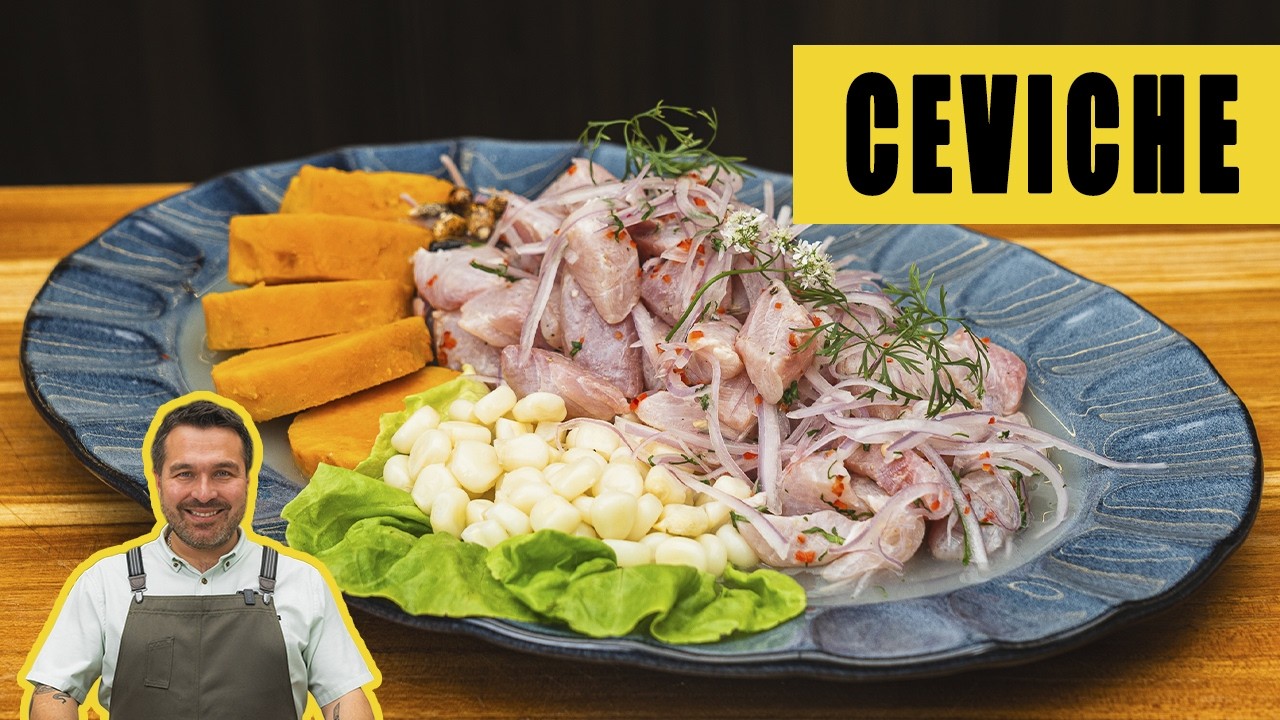
1Cut fresh bonito fillets into large cubes (bonito is very fragile and falls apart easily). Season immediately with a pinch of salt to start a light cure while you prepare the other components. Keep refrigerated.~5 min
-
2Finely chop celery, aji limo, garlic, ginger, and cilantro. Place in a bowl, add salt and pepper, and mix. Let the vegetables sweat to release their flavors. Squeeze Peruvian limes gently — never fully squeeze them or the juice turns bitter. Mix the lime juice with the sweated vegetables. Refrigerate 5-10 minutes to infuse.~10 min
-
3Pour the aromatic lime juice over the bonito cubes, gently folding to coat (the fish is fragile). If the acidity is too strong, add a splash of onion water (from soaking sliced red onion in cold filtered water overnight — the onion becomes crispy and the water gains subtle flavor). Top with drained crispy red onion slices, aji limo slices, and fresh cilantro leaves. Serve immediately.~5 min
Musciame
-
1Go to the fish market early for the freshest bonito (~4 kg). Remove the head by cutting behind the gills at an angle to reach the spine, then snap the head off. Remove viscera and clean out blood. Fillet along the spine on both sides, keeping the knife close to the bones. Remove the blood line and pin bones from each fillet. Remove the skin by sliding the knife flat between skin and flesh.~20 min
-
2Mix 2 kg salt with 500 g sugar (4:1 ratio). Crush 6-7 garlic cloves with the flat of the knife, then mince. Roughly chop fresh oregano, rosemary, and thyme (stems and all). Combine the herbs and garlic with the salt-sugar mixture and mix thoroughly until fragrant.~10 min
-
3Make a bed of the aromatic salt mixture in a container. Place the bonito fillets on top, leaving space between pieces for full salt contact. Cover completely with remaining salt mixture. Seal and refrigerate for 24 hours minimum (up to 15 days for a harder, more intense musciame).~5 min
-
4After curing, remove the bonito from the salt. Brush off excess salt and herbs. Prepare a bowl of ice-cold white vinegar. Rinse the cured fillets in the vinegar bath to remove excess salt and add a subtle acidity. Pat dry.~5 min
-
5Finely dice fresh garlic into brunoise. Heat olive oil to no more than 90°C (not boiling). Pour warm oil over the garlic and let it infuse, covered, for at least a few hours. Add dried Tacna oregano and fresh oregano leaves. The oil should be deeply fragrant with garlic and herbs.~10 min
-
6Slice the cured bonito into thin pieces (not paper-thin since it was only cured 24 hours). Arrange in the center of a plate. Cut heirloom tomatoes into half-moons and place around the edges. Slice avocado and arrange in a crown around the fish. Drizzle generously with the garlic-herb olive oil. Garnish with fresh oregano leaves. Serve with soda crackers or toast.~10 min
Nutrition (per serving)
320
Calories
28g
Protein
8g
Carbs
20g
Fat
3g
Fiber
Cultural Context
Musciame is an ancient Ligurian (Genoese) preservation technique that arrived in Peru with the great wave of Italian immigration. Genovese sailors salted fish to preserve it during long ocean voyages from Italy to South America. In Peru, this technique merged with local ingredients like bonito (a tuna-family fish abundant in Peruvian waters) and aji limo. Giacomo demonstrates both the Italian heritage of the cure and the Peruvian soul of the ceviche, bridging two culinary traditions in a single meal.
Giacomo Bocchio
COMO PREPARAR MUSCIAME DE BONITO Y CEVICHE DE BONITO | GIACOMO BOCCHIO
Watch on YouTube →