› Browse Recipes › Perfect Fluffy White Rice with Low Starch (Arroz Blanco Graneado)
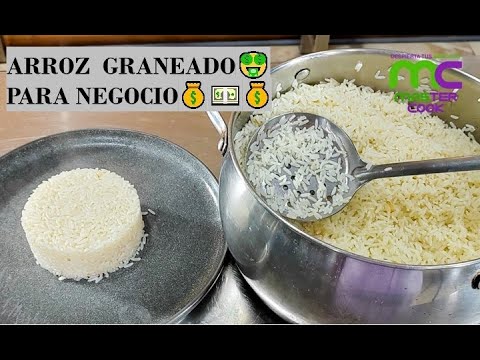
Perfect Fluffy White Rice with Low Starch (Arroz Blanco Graneado)
A master technique for cooking perfectly separated, grain-by-grain white rice at any altitude — removing over 80% of arsenic and reducing starch by boiling in abundant salted water, straining, then finishing in a garlic-and-oil aderezo. Works on the coast, in the mountains, and everywhere in between.
download Extracted 2026-04-01
Ingredients
Aderezo
- 90 mL olive oil (or vegetable oil) (place in cold pan; add garlic cold; heat together)
- 6 g garlic (finely diced) (dice very finely; place in cold oil from the start)
Rice
- 350 g aged long-grain white rice (transparent, low-starch) (wash by rubbing gently in water 3 times; drain well)
- 3 L water (for boiling) (use 4× the volume of rice; salt before adding rice)
- 45 g salt (for boiling water) (15 g per liter of water; dissolve in water before adding rice)
Steps
-
1Choose the right rice: use aged (añejo), transparent long-grain rice. The more transparent the grain, the less starch it contains. Whiter rice has more starch, will clump, and starch converts to sugar. Aged or parboiled rice is recommended.Tip: Rice contains 10% more arsenic than other cereals. Choosing an aged variety and washing well already removes a significant portion.~1 min
-
2Wash the rice: add water to the rice and rub gently — do not scrub aggressively. Drain. Repeat 2–3 times until water runs clearer. Drain thoroughly.Tip: Washing removes starch from the surface and already eliminates some arsenic. Handle gently to avoid breaking the grains.~3 min
-
3Bring 3 L of water to a boil. Add 45 g of salt (15 g per liter) before adding the rice. Once boiling, add the washed rice. Stir once. Move the rice only twice during cooking to avoid damaging grains.Tip: Salt the water first so the rice absorbs a calibrated amount. The ratio of 15 g salt per liter accounts for the fact that when you drain and then cook further, the rice already has perfect seasoning.~2 min
-
4At sea level, check the rice at 10 minutes. At 2500–3000 m altitude, check at 15–18 minutes. At very high altitude (e.g., Cerro de Pasco), allow 20+ minutes. Test: remove a grain and press it completely flat — it should dissolve like clay. If it still has a hard center, continue cooking.Tip: Water boils at lower temperatures at altitude (90°C at 3200 m vs 100°C at sea level), so rice takes longer and absorbs more water. Always cook in 4× the volume of water to compensate.~15 min
-
5While the rice cooks, prepare the aderezo: place 90 mL oil and 6 g finely diced garlic in a cold pan. Heat together over low heat until the garlic dances and turns lightly golden. Keep on very low heat.Tip: Starting garlic in cold oil extracts maximum flavor as the oil slowly heats. This is the Master Cook technique (técnica Master).~5 min
-
6Once the rice grain crushes completely when pressed, drain it immediately through a strainer. Discard the cooking water — the arsenic, excess starch, and heavy metals leave with it.Tip: This is the key health step. Draining the cooking water removes over 80% of arsenic and a large portion of starch.~1 min
-
7Add the drained rice to the pan with the aderezo. Stir gently to coat every grain with the garlic oil. The rice already has its salt — no need to add more. Cook on minimum heat, cover, and let steam dry for 3–4 minutes until all remaining moisture evaporates.Tip: Using good olive oil elevates the flavor. You can substitute with 70 g butter + 20 g oil — but if using only butter it may burn.~4 min
-
8Turn off heat. Uncover. The rice should be perfectly dry, individual, and separated — you can literally count each grain. To plate, press firmly into a mold (the low starch means it needs pressure to hold shape). Serve immediately.Tip: Despite having very little starch, if you press firmly enough the rice will hold its shape for plating. It will crumble easily when the customer touches it.~1 min
Cultural Context
White rice is the cornerstone of Peruvian daily cooking — served alongside nearly every main dish. The Peruvian technique of cooking with an aderezo (garlic-and-oil base) and producing graneado (grain-separated) rice is a national standard. Victor Heredia adds a health dimension: rice contains arsenic and heavy metals, and his strained-rice method removes over 80% of arsenic while simultaneously guaranteeing perfect texture at any altitude.
Victor Heredia
ARROZ BLANCO GRANEADO PERFECTO CON POCO ALMIDON #saludable #peruano #criollo #sano #facil #rapido
Watch on YouTube →