› Browse Recipes › Peruvian Beef Rice (Arroz con Carne de Res)
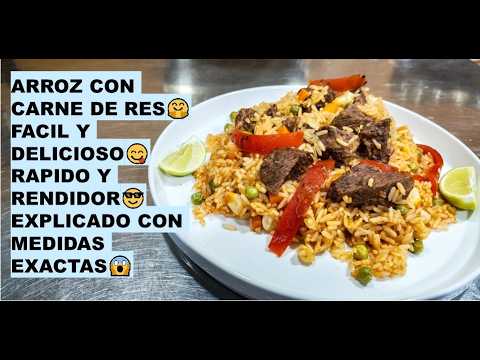
Peruvian Beef Rice (Arroz con Carne de Res)
A hearty Peruvian rice dish cooked with browned beef, aji panca paste, tomato sofrito, and vegetables (carrots, peas, corn). Built on a homemade beef stock for deep flavor, finished with roasted bell pepper and a squeeze of lime. Made with weights and measures, standardized for restaurant or home kitchens.
smart_display Published 2026-05-08
download Extracted 2026-05-12
Ingredients
Ingredients
- 528 g beef chuck (espaldilla), cubed bite-size (trimmed of excess fat and sinew, cut into bite-size pieces)
- 2.5 L water (for beef stock) (for simmering beef to make stock)
- 2 oz vegetable oil (for searing the beef)
- 100 g yellow onion (brunoise (very finely diced))
- 9 cloves garlic cloves (minced (up to 10 cloves))
- 45 g aji panca paste (approximately 3 large tablespoons)
- 2 leaves bay leaves (whole, removed before adding rice)
- 0.5 tsp black pepper (ground)
- a pinch ground cumin (very small amount)
- 342 g fresh tomato (or 100g tomato sauce as substitute) (chopped and blended smooth without water (up to 350g))
- 100 g carrot (diced into small cubes)
- 120 g green peas (alberjitas/guisantes) (fresh or frozen)
- 100 g choclo (Andean corn kernels) (shucked from the cob)
- 700 g aged long-grain rice (arroz anejo) (lightly rinsed)
- 25 g salt (15g initial + ~10g to adjust)
Garnish
- 1 whole red bell pepper (fire-roasted (soasado) over open flame, peeled, sliced into strips for garnish) optional
- to taste lime (wedges for serving) optional
Steps
-
1Trim excess fat and sinew from the beef. Cut into bite-size pieces, keeping in mind the meat will shrink as it cooks. For a more economical menu portion, dice the beef more finely so it distributes better.Tip: Espaldilla (chuck) is an economical and flavorful cut ideal for this dish.~5 min
-
2Place the beef in a pot, cover with water, and simmer covered for 20 minutes to make a base stock. Keep the lid on to preserve the liquid.~20 min
-
3Heat a separate pot until very hot, add 2 oz vegetable oil, then add the drained beef. Let the Maillard reaction develop — do NOT turn the meat too quickly. When pieces release easily from the pot bottom, that means they are sealed; flip and sear the other side.Tip: More sealed surface area = more aroma and flavor in the final dish.~8 min
-
4Lower the heat. Remove the seared beef and set aside (no contamination concern — it's still raw inside, going back into the same pot). In the same oil, add 100g brunoise onion and 9 minced garlic cloves. Cook over low heat to build the aderezo, letting the garlic caramelize slightly before the onion finishes.~6 min
-
5Add 45g aji panca paste (about 3 large tablespoons) and fry for 5-6 minutes, stirring, until the paste caramelizes lightly. This is critical — under-cooked aji panca paste tastes bitter and can be hard to digest.Tip: Always fry pastes well in the aderezo to develop their flavor.~6 min
-
6Add 2 bay leaves, 1/2 tsp black pepper, and a tiny pinch of cumin. Stir briefly to release the aromatics.~1 min
-
7Blend 342g fresh tomato smooth without any water and add to the pot. Fry over medium heat until the tomato loses its raw water and concentrates — this builds umami. If using tomato sauce instead, use about 100g.Tip: A well-cooked tomato adds significant depth to the dish.~8 min
-
8Return the seared beef (with all its juices and myoglobin) to the pot. Stir to coat with the aderezo.~1 min
-
9Add 2.5 L of the beef stock (cooking liquid from step 2). Simmer covered for at least 30 minutes until the beef is tender. Cooking time depends on the cut.~30 min
-
10When the beef is tender (and the liquid has reduced to about 1.5 L), add 100g diced carrot, 120g peas, 100g choclo (corn kernels), and 15g salt. Stir.~2 min
-
11Add 700g of lightly rinsed aged long-grain rice. The ratio used here is ~1:2 rice-to-liquid because of high altitude (3,200m in Huancayo). At sea level, use rice + a tiny bit more water. Stir once, then let boil UNCOVERED over medium heat until the liquid drops below the rice surface and you see thick bubbles (about 10 minutes). Remove the bay leaves at this point.Tip: At altitude water boils at ~90C so rice takes ~20 minutes; at sea level it cooks in ~12 minutes.~10 min
-
12Taste and adjust salt (about 10g more if needed). Stir once, then lower the heat to minimum and cover the pot. Cook covered until rice is fully done.~10 min
-
13Once the rice is cooked, give it one final stir, turn off the heat, and let it rest covered for 5 minutes before serving — this resting time is essential for texture.~5 min
-
14Serve generously (5 portions). Top with the roasted red pepper strips for color, and serve with a wedge of lime — a small squeeze of lime over the rice is magical.~2 min
Garnish
-
1While the rice finishes, fire-roast the red bell pepper directly over an open flame until charred. Peel off the skin and slice into strips for garnish.Tip: Roasting adds a subtle smoky note that complements the dish.~5 min
Nutrition (per serving)
540
Calories
28g
Protein
70g
Carbs
16g
Fat
4g
Fiber
Cultural Context
Arroz con carne is a beloved everyday Peruvian dish, especially common as a menu del dia (lunch special) across Peru. It belongs to the family of arroces tapados/guisados where rice is cooked directly in a seasoned aderezo (sofrito) of onion, garlic, aji panca paste, and tomato — the foundation of much of Peruvian cuisine. Chef Heredia notes that altitude matters: he cooks at 3,200m in Huancayo where water boils at ~90C, so rice needs more water and longer cooking than at sea level. The dish reflects the Andean adaptation of Spanish rice traditions, integrating native ingredients like aji panca and choclo (Andean corn).