› Browse Recipes › Black Shell Ceviche (Ceviche de Conchas Negras)
Black Shell Ceviche (Ceviche de Conchas Negras)
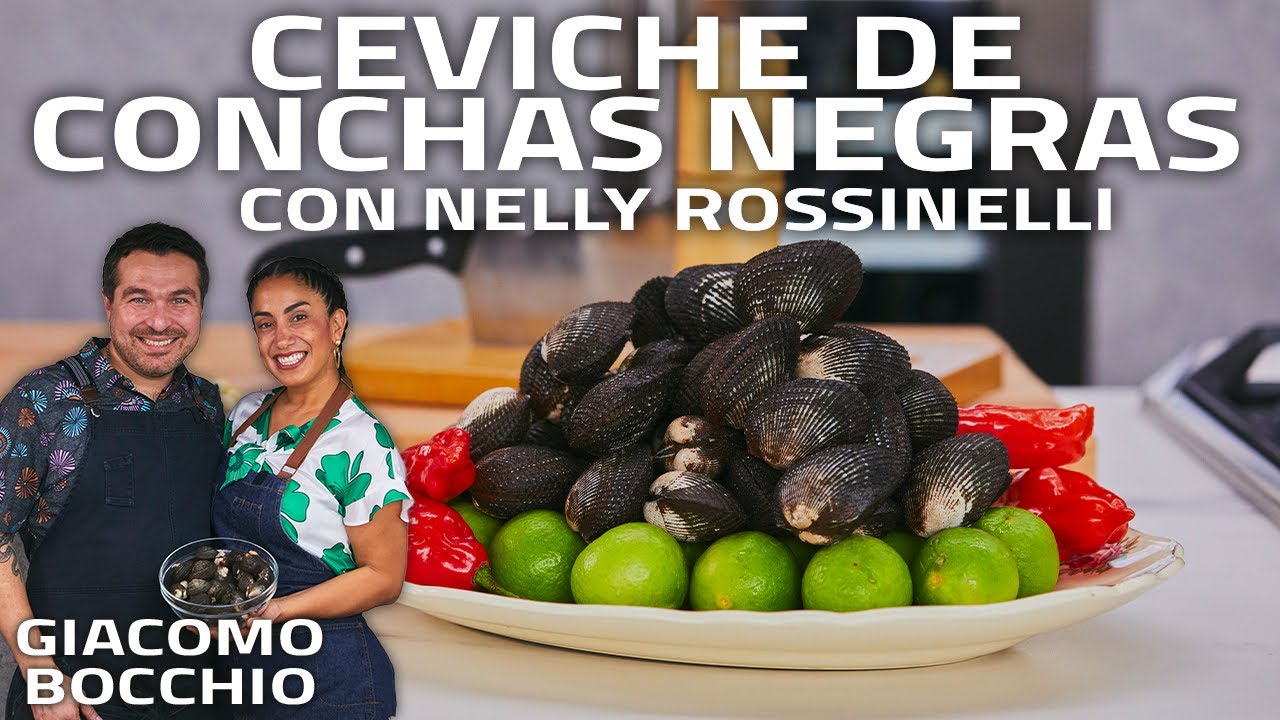
Guest chef Nelly Rossinelli joins Giacomo Bocchio to prepare her signature ceviche de conchas negras, a beloved northern Peruvian dish. Nelly demonstrates the proper technique for opening black shells using a traditional hachita (small axe), emphasizing the importance of preserving every drop of the precious dark juice that gives this ceviche its distinctive flavor and color. The recipe features a Lima-style twist on the traditionally purist northern preparation, adding garlic and kion (ginger) juice alongside the classic lime, rocoto, cilantro, and red onion.
download Extracted 2026-03-30
Ingredients
Ceviche
- 24 units Black shells (conchas negras) (opened with hachita, meat removed, juice reserved)
- 8 units Key limes (cut at the tips to avoid seeds, squeezed gently)
- 1 medium Red onion (cut in macedoine (small cubes), soaked in ice water)
- 0.5 cup Fresh cilantro (chopped)
- 1 tablespoon Rocoto pepper (blended with water only)
- 1 teaspoon Garlic (blended without water)
- 1 teaspoon Ginger (kion) (grated and juice squeezed out)
- 1 to taste Salt
- 1 to taste Black pepper
Garnish
- 1 medium Sweet potato (camote) (boiled and sliced, Jonathan or purple variety preferred)
- 1 piece Cassava (yuca) (boiled and sliced)
- 0.5 cup Zarandaja beans (soaked 12 hours, then boiled in salted water)
- 1 ear Peruvian corn (choclo) (boiled and kernels removed)
- 0.5 cup Cancha (toasted corn) (toasted) optional
Steps
-
1Ensure the black shells are fresh — they must be tightly closed, indicating they are alive. Never refrigerate them; store at room temperature with occasional water splashes. Discard any that have opened on their own.Tip: Keep them in a box with holes for ventilation, in sunlight with water splashes — they can last up to 7 days this way.
-
2Place each shell on a hachita (small axe), aligning the shell's natural seam with the blade. Keep fingers clear, stabilize the shell, and strike with one decisive blow to open it cleanly without damaging the edges.Tip: A clean cut with no damaged edges prevents shell fragments in your ceviche. The hachita can be found in Peruvian markets (Surquillo, Central) for about 38-40 soles.~10 min
-
3Using a spoon, carefully remove the meat from each opened shell into an ice-bathed bowl. Collect every drop of the dark juice (sangre) from the shells — this is the essence that gives the ceviche its distinctive flavor.Tip: Pour the remaining juice from the shells where they were opened into the bowl with the meat — do not waste any of it.~10 min
-
4Season the shells and their juice with salt and black pepper to taste. Be careful with salt as the shell juice already contains natural salt.~1 min
-
5Add the chopped cilantro and blended garlic (blended without water) to the shells. Add a small amount of rocoto blended with water for heat. Add ginger juice (grate the kion and squeeze out the juice). Mix everything before adding the lime.Tip: Adding all aromatics before the lime allows them to perfume the dish. The ginger juice technique was learned from Chef Pati Chong.~2 min
-
6Cut the limes at the tips only (not in half) to avoid seeds. Squeeze gently — do not crush like a molillo or the bitter pith oils will release. Add lime juice to the ceviche and mix.Tip: The tip-cutting technique yields clean juice without seeds and prevents bitterness from over-squeezing.~2 min
-
7Add the red onion cut in macedoine (small cubes, not the traditional pluma cut) that has been soaked in ice water to crystallize it and reduce the sharp sulfurous bite. Mix gently.Tip: The ice water soak makes the onion extra crunchy and sweet, complementing the intense flavors of the shell juice and lime.~1 min
-
8Plate the ceviche in the center of the dish. Arrange boiled sweet potato (camote) slices on one side and boiled cassava (yuca) on the other. Add zarandaja beans, choclo kernels, and canchita around the plate as garnishes.Tip: Let each person add their own garnishes to taste. Some people like to mix the choclo into the ceviche, while others prefer it separate.~4 min
Nutrition (per serving)
350
Calories
20g
Protein
35g
Carbs
15g
Fat
3g
Fiber
Cultural Context
Conchas negras (Anadara tuberculosa) are bivalve mollusks that grow in the mangroves where rivers meet the sea, found from the Gulf of Carolina to Piura in Peru and also in Ecuador. They must never be refrigerated as they are accustomed to warm climates — cold kills them. They are kept alive at room temperature with occasional splashes of water for up to 7 days. The traditional northern Peruvian preparation is strictly purist: just salt, aji, onion, cilantro, and lime. The dark juice (sangre) of the shells is the soul of the dish. Zarandaja, a dried legume typical of northern Peru, is considered an essential accompaniment — conchas negras without zarandaja is not truly conchas negras. The hachita (small axe) used to open them can be found in Peruvian markets like Surquillo for about 38-40 soles and lasts a lifetime.
Giacomo Bocchio
NELLY ROSSINELLI NOS ENSEÑA A PREPARAR CEVICHE DE CONCHAS NEGRAS | GIACOMO BOCCHIO
Watch on YouTube →