› Browse Recipes › Everything About Knives and How to Sharpen Them
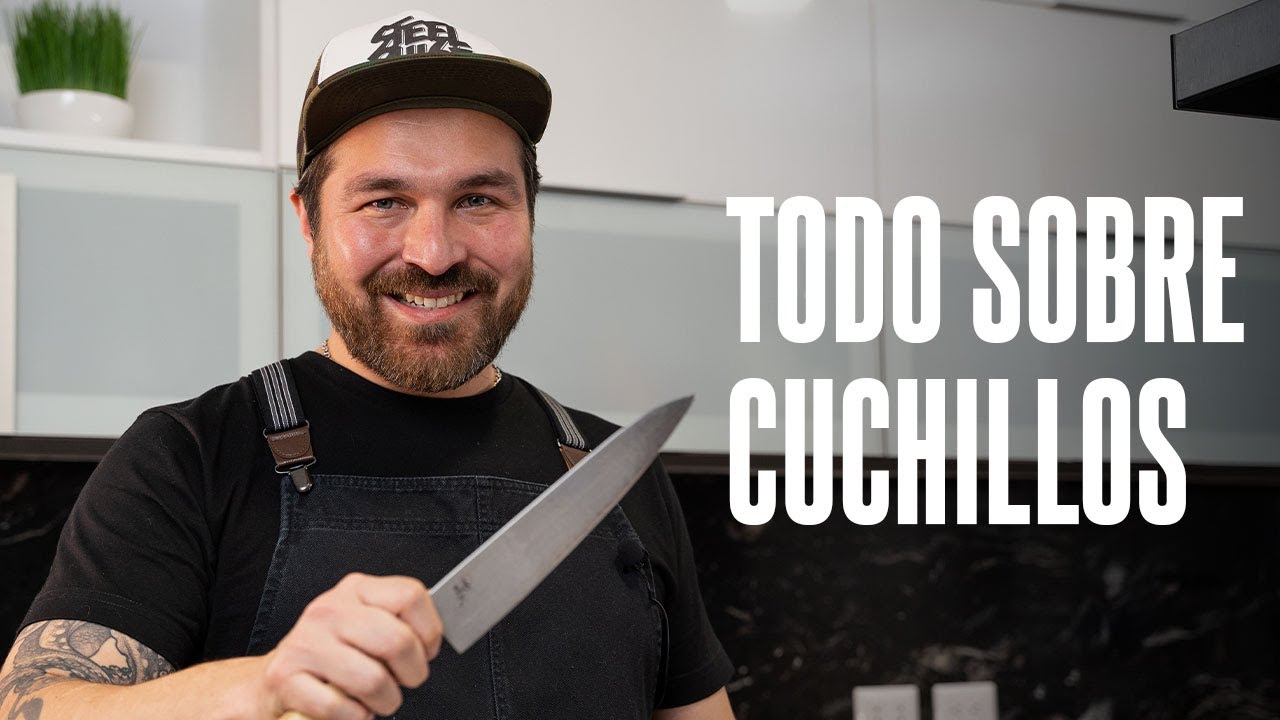
Everything About Knives and How to Sharpen Them
A comprehensive masterclass on kitchen knives from chef Giacomo Bocchio. Covers knife selection (Japanese high-carbon stainless steel, Victorinox, Tramontina, Global, Wüsthof, Bob Kramer), knife types and their uses (chef's knife, office/utility, boning, bread, slicer, cleaver, tourner), proper grip technique, safe handling and transport, storage methods (knife roll, magnetic strip, blade guards), and a full step-by-step whetstone sharpening tutorial — including how to hydrate the stone, use a honing steel (chaira), identify grit numbers, develop and remove the burr (barba), and care for the stone after use.
download Extracted 2026-03-31
Ingredients
No ingredients listed
Steps
-
1Choose the right knife for your level and use. For beginners, a Tramontina or Victorinox forged steel chef's knife is ideal — affordable, easy to sharpen, and durable. For precision slicing or professional use, consider a high-carbon stainless steel Japanese knife (e.g., Miyabi). Avoid carbon-only steel if you cut acidic ingredients frequently, as it oxidizes.Tip: High-carbon stainless steel gives you the best of both worlds: easy to sharpen and rust-resistant. Avoid knives with a large bolster (talón) when starting — they make full-edge sharpening much harder.
-
2Learn the correct knife grip: hold the knife like a pencil, pinching the blade between your thumb and index finger just above the bolster, with the remaining fingers wrapped around the handle. This 'pinch grip' gives maximum control and precision.Tip: Never wrap all fingers around the handle only — you lose control. If you are cutting something with hidden bone fragments (e.g., crab pulp), the pinch grip prevents the blade from twisting and cutting you.
-
3Practice kitchen knife safety: never point the knife at anyone, keep the blade pressed against your leg when walking through the kitchen, and if the knife falls, step back and let it drop — never try to catch it mid-air.Tip: Keep fingers under the bolster guard when using a honing steel (chaira) — never above it where the blade could slide and cut your hand.
-
4Store knives correctly: use a magnetic wall strip (best option), a knife roll with plastic filament slots, or individual blade guards. Never store knives loose in a drawer — they will lose their edge within a day.Tip: If you must use a drawer, wrap each blade in a plastic folder sleeve (the stiff plastic from a binder) as a budget blade guard.
-
5Maintain the edge with a honing steel (chaira) before and after each use. Pass the knife along the steel at approximately 18–20 degrees, either pulling toward you or pushing away. Do 3–4 strokes per side. A steel hones (realigns) the edge but does not sharpen — use a diamond-coated chaira if you want mild sharpening.Tip: The steel chaira (Victorinox) measures 65–67 on the Rockwell hardness scale vs. 55–57 for the knife — it realigns without removing much metal. The diamond-coated one actually cuts metal, giving a mild sharpen.
-
6Submerge the whetstone in water and wait until all air bubbles stop releasing — the stone must be fully saturated before use. Place the stone on a folded damp cloth to keep it from sliding. Start with the coarser side (lower grit number, e.g., 300) first.Tip: Lower grit number = coarser stone = more aggressive metal removal. Higher grit number = finer stone = polishes the edge. A 300/1000 combination stone is standard for home and professional use.~5 min
-
7Hold the knife at approximately 20 degrees to the stone surface. Starting at the tip, push the blade forward and across the stone with moderate pressure (pressure only on the forward stroke, not the return). Work from the tip all the way to the heel in one fluid motion per pass. Curl your guide-hand fingers under so the tips are protected.Tip: Imagine 90° is straight up, 45° is halfway down, and 20° is roughly halfway between 45° and flat. Keeping a consistent angle is more important than the exact number.
-
8Do 40–50 strokes on one side of the blade on the coarse stone. You are looking for a 'burr' (barba) — a tiny metal flap that forms along the opposite edge of the blade. You can feel it by lightly dragging your thumb across (not along) the edge. Once the burr forms along the entire length, flip the knife and do 40–50 strokes on the other side to develop the burr in the opposite direction.Tip: The grey slurry forming on the stone is the steel being abraded — this is exactly what you want to see. Re-wet the stone with a few drops of water whenever it starts to dry out.~10 min
-
9Switch to the finer side of the stone (higher grit, e.g., 1000). With very light pressure, alternate 2 strokes per side repeatedly until you have done about 10–12 alternating passes total. This removes the burr and refines the edge to a razor finish.Tip: For the finest results (e.g., on a high-end Japanese knife), use an 8000-grit finishing stone for 20 minutes with very light, slow strokes — the edge will be extraordinary.~5 min
-
10Test the sharpness by slicing through a sheet of paper — a properly sharpened knife cuts cleanly and smoothly without tearing. Alternatively, slide the edge gently across a fingernail: it should catch rather than slide off.Tip: Giacomo performs a paper-slice test on camera — a clean, smooth cut confirms the edge is ready.
-
11Clean the whetstone after each use: scrub with a dedicated green scouring sponge (no detergent) to remove all metal particles from the pores. Rinse thoroughly, then let the stone air-dry completely before storing — elevate it so air circulates underneath. Wrap in foil once fully dry for storage.Tip: Skipping this step lets metal particles clog the stone's pores, making it too smooth to abrade effectively and shortening its lifespan significantly.~2 min
Cultural Context
Giacomo Bocchio is a Peruvian chef and culinary educator, certified chef instructor by the Académie Culinaire de France and member of the Chaîne des Rôtisseurs. His approach to knife knowledge blends professional French culinary training with hands-on experience in restaurants in Naples (Italy) and Peru. The video reflects a Latin American professional kitchen culture where cooks are expected to own, maintain, and sharpen their own knives — a tradition passed down through mentorship across kitchens.
You might also like
10 Culinary Techniques Every Cook Must Know — Part 2
7 Essential Culinary Techniques Every Cook Must Know
Culinary Techniques Every Cook Must Know – Part III (Precision Cuts, Vinaigrette & Knife Skills)
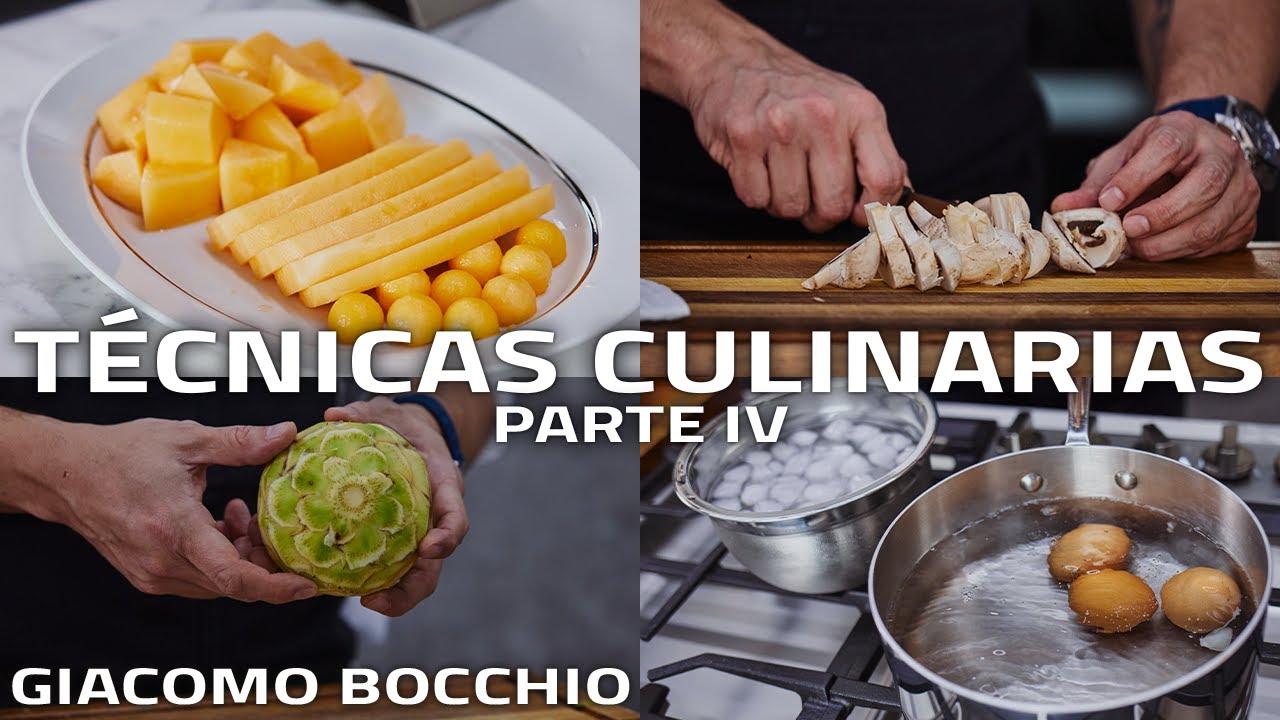
Essential Culinary Techniques: Fruit Peeling, Bread Cutting, Mushroom Sautéing, Egg Cooking & Artichoke Trimming