› Browse Recipes › Culinary Techniques Every Cook Must Know – Part III (Precision Cuts, Vinaigrette & Knife Skills)
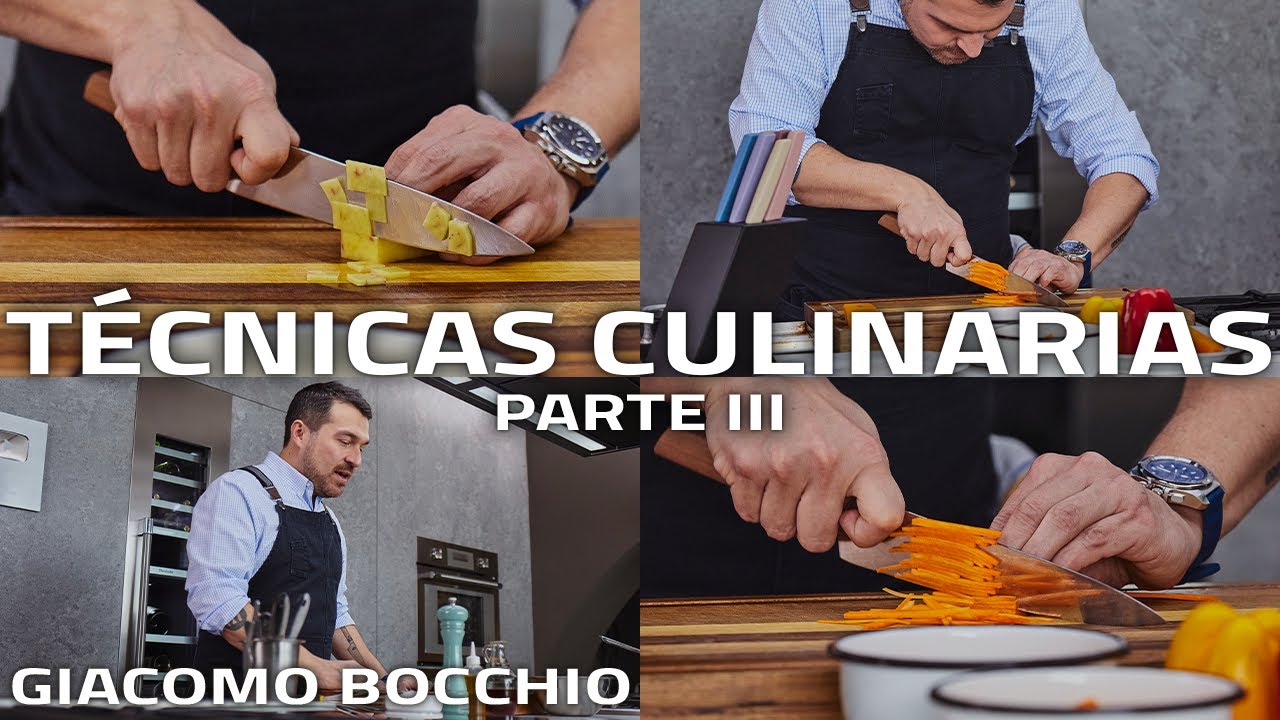
Culinary Techniques Every Cook Must Know – Part III (Precision Cuts, Vinaigrette & Knife Skills)
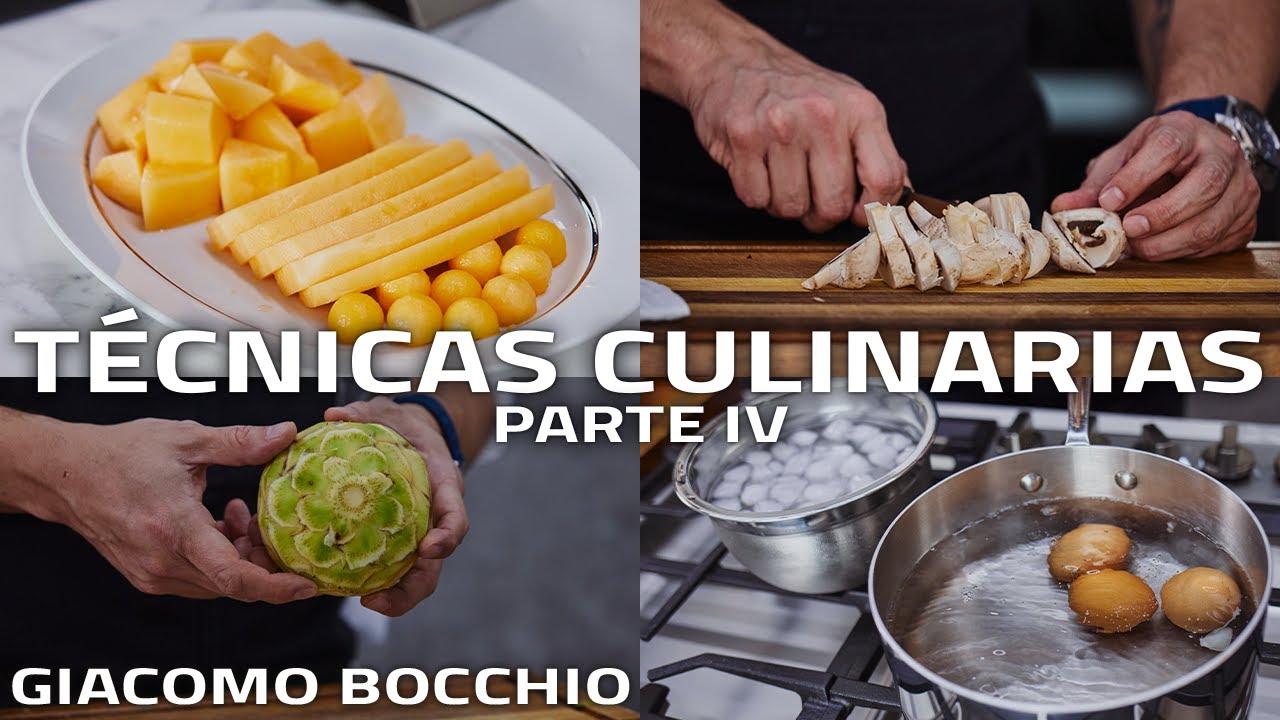
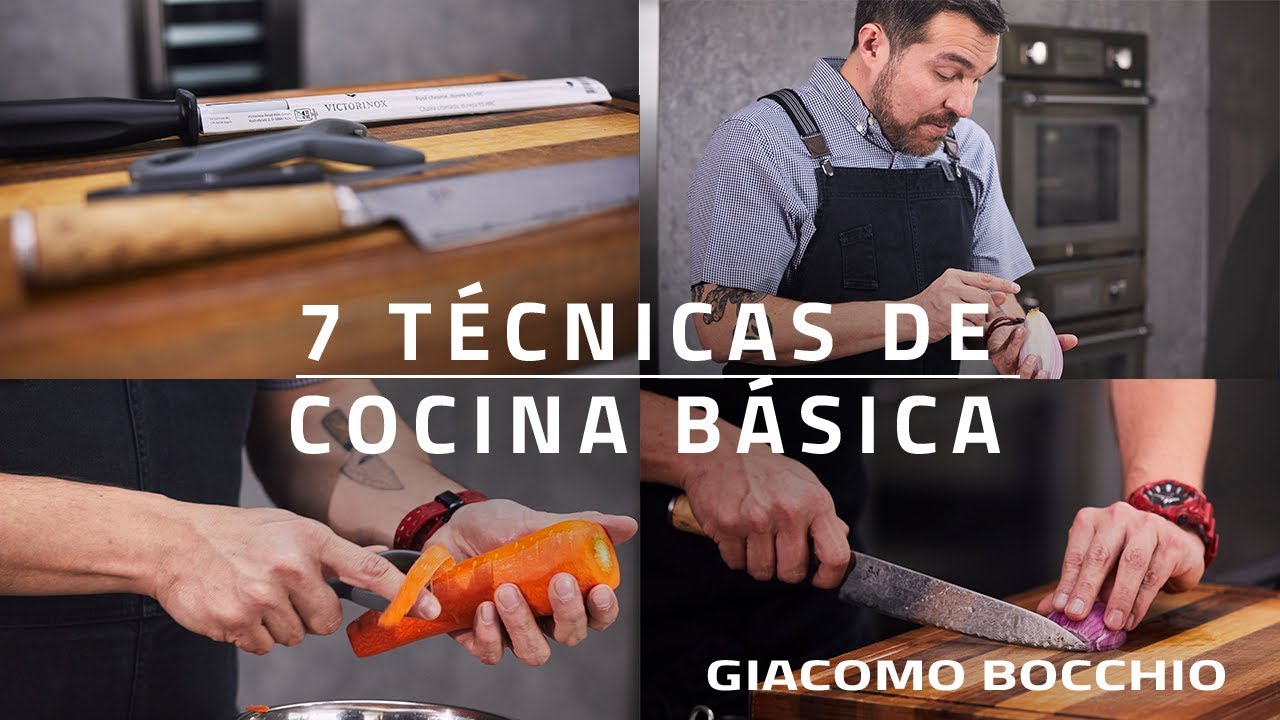
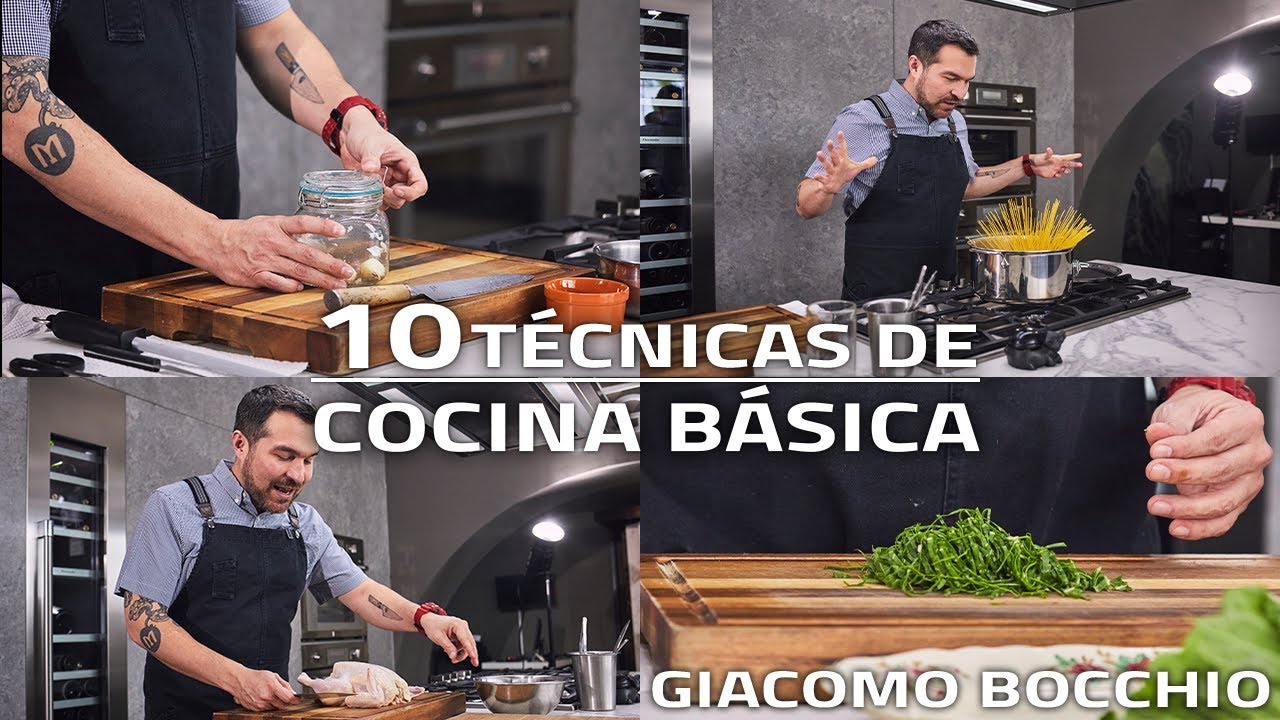
The third installment of Giacomo Bocchio's essential culinary techniques series. Covers classic French precision cuts (julienne, jardinera, macedonia, brunoises, paisana, matignon, tournée), potato sculpting with a turning knife and a Parisian scoop, carving a mushroom shape from potato, peeling an apple with a knife for hand control, and preparing and storing a simple unstable vinaigrette. Features tips on knife selection, blade technique, waste reduction, and efficient knife hand positioning using Victorinox Swiss Modern knives.
download Extracted 2026-03-31
Ingredients
No ingredients listed
Steps
-
1Knife selection: Choose a chef's knife with sufficient heel clearance (talón) so your knuckles clear the cutting board during the rocking chop motion. A utility knife with a low heel prevents full blade contact and is less suitable for precision cuts. Victorinox Swiss Modern chef knives are recommended for both precision work and high-volume production.Tip: A chef's knife with a narrower blade sticks less to ingredients during slicing — ideal for thin laminate cuts like julienne.
-
2Peeling technique: Cut off both tips of the carrot first to make peeling easier. Always peel directly over the waste container — do not peel onto the cutting board and then transfer scraps, as this creates unnecessary extra steps. Carrot skin is technically a thickening of the flesh from soil contact, not a true cellular membrane.Tip: A sharp Y-peeler can also be used to create thin laminate strips for julienne — not just for peeling.
-
3Julienne cut (carrot): Julienne measures 5–6 cm long by 1–2 mm thick. Cut the carrot into 5 cm sections. Square off one side to create a flat base so the carrot doesn't roll. Using the claw grip (dedos en garrita) with the knife riding against the knuckle falange, slice the section into 1–2 mm laminate sheets. Stack the sheets like a small book and cut through them into 1–2 mm strips. Result: thin, uniform matchstick-shaped strips.Tip: Knives are designed to advance forward — let the blade do the work by moving it forward rather than pressing straight down.
-
4Jardinera cut (carrot): Similar to julienne but slightly larger — 3–4 cm long by 3–4 mm thick. Follow the same laminate-then-strip method as for julienne but at the larger dimensions. If jardinera strips are then cut into small cubes, they become macedonia.Tip: Brunoises = julienne cut into cubes; Macedonia = jardinera cut into cubes. The cut name changes when you add the cube dimension.
-
5Macedonia cut (bell pepper): Cut off the top cap and bottom base of the pepper. Open along the side and remove all white veins and seeds — the white pith is bitter. Clean off any remaining white surface. Cut the pepper flesh into jardinera-sized strips (3–4 cm × 3–4 mm), then cut crosswise into uniform cubes. Spread strips along the board in manageable portions before dicing to maintain control. Cut with the skin side facing outward if your knife is sharp enough.Tip: Uniform cut size is essential so all pieces cook in the same amount of time — small pieces burn while large pieces remain raw if sizes are inconsistent.
-
6Paisana cut (potato): Paisana is approximately 1 cm square by 1–2 mm thick — a wide, thin chip-like cut. Square the potato on all four sides. Cut into 1 cm thick slabs, turn 90°, and cut into 1 cm wide batons. Then slice the batons crosswise at 1–2 mm intervals. Place cut potato immediately in cold water to prevent oxidation.Tip: Paisana is used for short-cooking applications like fumet or court-bouillon (30 minutes) because its wide but thin shape allows rapid flavor transfer. Mirepoix (3–4 cm chunks) is used for long-cooking stocks.
-
7Matignon cut (carrot and onion): A paisana cut without precision — rustic, irregular pieces roughly 1–2 cm with no concern for uniformity. No squaring needed. Cut the carrot into rough pieces with a few quick strokes. For onion, simply make a few wide cuts since onions are already naturally layered. Use all trimmings — zero waste. Matignon is always strained and discarded after cooking, so appearance is irrelevant.Tip: Some classic books include York ham (jamón cocido) in matignon, but the defining feature is the paisana-without-precision cut used for short aromatic cooking.
-
8Tournée (torneado) cut — potato: Tournée is a classic 7-sided football-shaped cut, 5–6 cm long, made with a bird's beak (paring) turning knife. The cocotte size (5–6 cm) is intermediate between the smallest (ajo) and largest (châteaux) sizes. Square a potato piece roughly, removing excess corners. Hold the potato in one hand and use the turning knife in continuous single strokes from bottom to top, carving the curved surface. Rotate the potato regularly to equalize pressure. Optionally cut off both tips. Classically one flat side is permitted so the piece doesn't roll on the plate.Tip: Practice tournée on apples and peaches whenever you eat them — it builds essential hand dexterity and control over the knife blade.
-
9Parisian scoop (cuchara parisina) — potato balls and mushroom shape: Using a 25 mm Parisian scoop (boleador), press into the potato and rotate to extract a perfect sphere — this is itself a garnish. For the mushroom shape: use the flat side left from scooping and press a pastry tip (boquilla de manga) firmly into the center to mark the mushroom stem. Remove the tip, then use the turning knife to carve away excess potato down to the metal impression, forming the stem. Clean up the shape to reveal a mushroom-cap form.Tip: Mushroom-shaped potato can be served fried alongside real sautéed mushrooms (e.g., mushrooms al ajillo) for a visually playful presentation.
-
10Peeling an apple with a knife (hand control exercise): Hold the apple in the non-dominant hand. The knife moves in a downward arc — raise the blade, press lightly, and pull down in a single stroke, rotating the apple after each stroke. Do not press into the apple; let the blade travel. This is a dexterity exercise, not a daily technique — a peeler is recommended for practical use at home.Tip: Practice hand-in-air knife work regularly: it builds the control needed for tournée, supreming citrus, and other in-hand cuts.
-
11Simple vinaigrette (unstable cold emulsion): Ratio is 1 part acid to 3 parts fat. Dissolve salt and pepper in the vinegar or citrus juice first (salt is hydro-soluble — it dissolves better in water/acid than in oil). Add olive oil and whisk or shake vigorously to emulsify. The emulsion is unstable and will separate over time — shake before each use. Store in a squeeze bottle or sealed container in the refrigerator. Vinegar-based vinaigrette keeps indefinitely; lemon juice-based lasts ~12 hours refrigerated.Tip: Adding an egg yolk to the vinaigrette converts it into a stable emulsion because egg lecithin keeps the water and oil phases bound together for much longer. Additions like herbs, garlic, rose water, or orange blossom water can customize the flavor profile.
Cultural Context
This video is part of Giacomo Bocchio's 'Eleva Tu Juego Culinario' (Elevate Your Culinary Game) series, filmed in Peru. The techniques presented are rooted in classical French culinary school tradition — standardized precision cuts taught in first-year culinary programs worldwide. The tournée (torneado) cut dates back over 300 years and is considered an emblem of knife mastery. Bocchio contextualizes these techniques for both home cooks and culinary professionals, referencing local Peruvian ingredients like papa negra (black potato) and vinagre de Mago from Tacna. The video was sponsored by Victorinox Peru using their Swiss Modern knife line.
Giacomo Bocchio
TÉCNICAS CULINARIAS QUE TODO COCINERO DEBE SABER #TERCERAPARTE ¦ GIACOMO BOCCHIO
Watch on YouTube →