› Browse Recipes › 7 Essential Culinary Techniques Every Cook Must Know
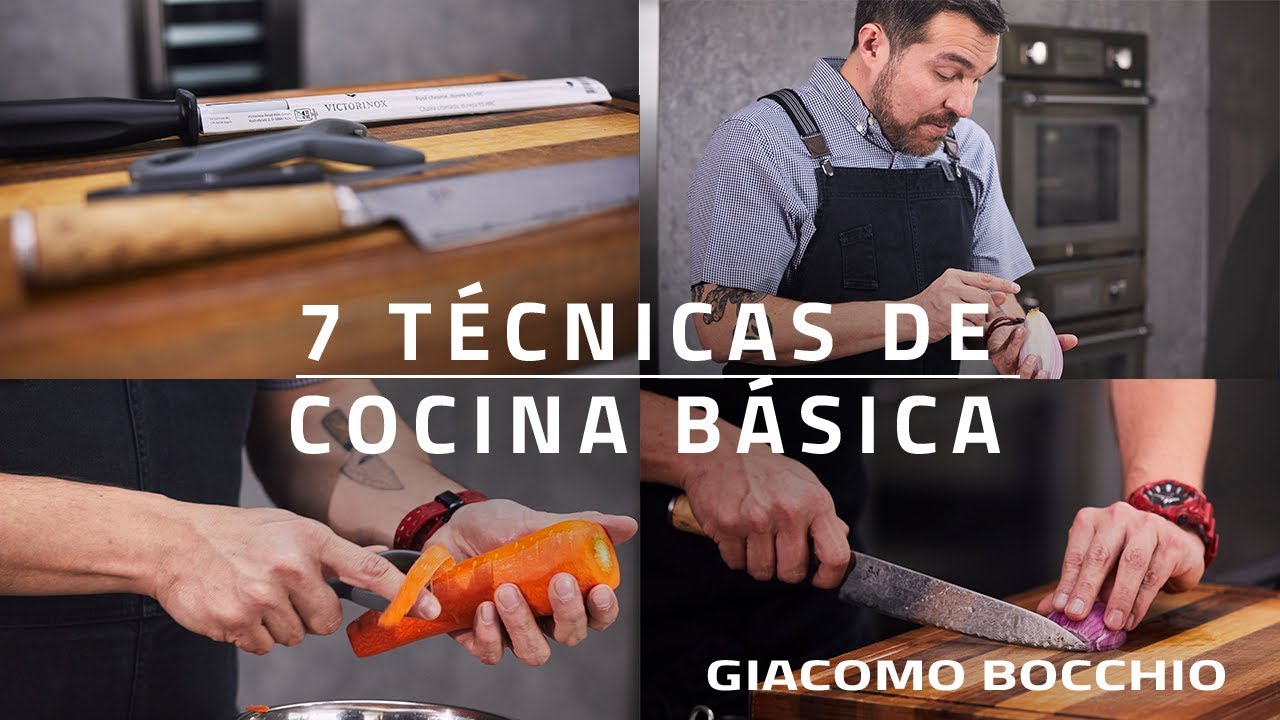
7 Essential Culinary Techniques Every Cook Must Know
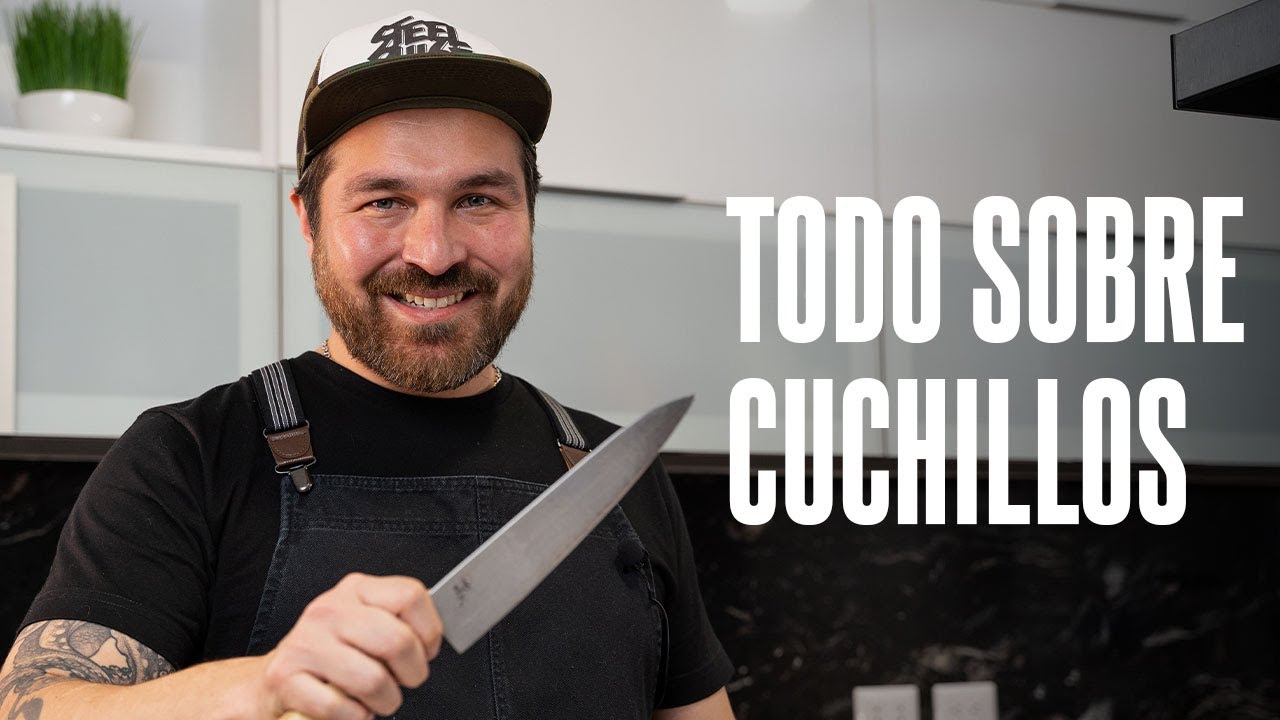
Giacomo Bocchio teaches 7 fundamental culinary techniques to make kitchen work more efficient and precise: stabilizing the cutting board, organizing your workstation (mise en place), honing knives with a honing steel, using a dry kitchen towel safely, setting up a vegetable prep station with waste management, executing a brunoise (fine dice) cut, and making a juliana/pluma (thin slice) cut.
download Extracted 2026-03-31
Ingredients
No ingredients listed
Steps
-
1Stabilize your cutting board before starting any prep work. Wet a paper towel or cloth, wring out excess water so it is damp but not soaking, stretch it flat into two strips, and place them under the board. A properly dampened cloth grips the surface and prevents the board from sliding.Tip: If the cloth is too wet it will slide just like a dry surface — it must only be lightly damp. For a heavy wooden board, two strips are enough; lighter plastic boards may need more points of contact.~1 min
-
2Organize your workstation (mise en place) before cooking. Place your cutting board at the center. Lay your knives and tools to the right side on a dry cloth — blade edges facing inward toward you — if you are right-handed (reverse for left-handed cooks). Keep the space directly in front of the board clear for placing prepped ingredients as you work.Tip: Essential tools for a basic workstation: chef's knife, paring knife, scissors, peeler, and honing steel. A dry cloth or dish towel under the tools keeps them from rolling.~2 min
-
3Hone your knife using a honing steel (chaira/asentador) before each use. Hold the steel vertically and place the knife blade against it at an angle of 18–20 degrees — approximately half of 45 degrees. Stroke the blade from heel to tip against the steel, alternating sides. Work slowly if needed. The honing steel does not sharpen — it realigns the existing edge to maintain its sharpness longer.Tip: To find the correct angle: hold the knife at 90 degrees to the steel, halve it to 45, then halve again to approximately 22 degrees. 18–20 degrees is your target. Always keep fingers safely behind the guard hand.~2 min
-
4Use a dry kitchen towel (secador) as a constant kitchen companion. Keep it folded in quarters — about hand-sized — tucked into your apron belt. In the kitchen, always assume everything is hot. Use the towel to handle hot pans, lids, and pot handles. To carry a large pot, wrap the towel around both handles by giving it a twist to create tension, then grip securely.Tip: A wet towel conducts heat and will burn you — always use a dry one. By habit, use the towel even on plastic-handled pans. It protects your most important tools: your hands.~1 min
-
5Set up a vegetable prep station with multiple containers. Container 1: raw, unpeeled product. Container 2: waste trim (peels, unusable scraps — goes to trash). Container 3: useful trim (carrot offcuts, onion ends — good for stocks and sauces). Container 4: finished product. For vegetables that oxidize (potatoes, artichokes), fill containers 3 and 4 with water. Work in stages: peel all first, then cut.Tip: Peru is king of potatoes — always keep cut potatoes submerged in water to prevent oxidation. Any tuber or vegetable that browns when exposed to air needs water in its final container.~3 min
-
6Execute a brunoise cut (1–2mm fine dice). Peel the onion and cut it from stem to root — cutting through the root end. Halve it and place flat-side down. Make vertical cuts from stem to root at 1–2mm intervals without cutting all the way through the root (the root holds the onion together). Make one horizontal cut through the thicker middle section. Then slice across the onion to produce a fine dice. Grip the knife by pinching the blade for control, and curl fingers under with knuckles guiding the blade.Tip: A sharp knife prevents tears when cutting onion — a dull blade ruptures cell walls and releases sulfuric gases into the air. A sharp blade lets the liquid drain to the board instead.~5 min
-
7Execute a pluma (juliana/thin slice) cut on onion. Take the remaining onion half and remove the root end entirely. Remove the inner core (the heart), which has irregular layers and will ruin a clean cut — reserve it for brunoise or stocks. Cut the remaining piece in half again for easier handling. Lay it flat-side down and make thin vertical slices from end to end. Optionally soak the finished slices in ice water to make them crisper, reduce sulfur, and improve texture.Tip: This cut is used for criolla salads, escabeche, caramelized onion garnishes, and charquicán (a typical Tacna dish). Always remove the core for a clean, uniform pluma — the irregular inner layers prevent consistent thin slicing.~5 min
Cultural Context
This class was created in response to an Instagram poll by Giacomo Bocchio, a Peruvian chef and host of 'El Gran Chef Famosos' on Latina. It reflects his observation that home cooks—even those who love food—often lack basic foundational techniques. Rooted in classical French culinary training and adapted for both home and professional kitchens, these fundamentals form the backbone of efficient mise en place work, a concept central to both French brigade kitchens and Latin American culinary education.
Giacomo Bocchio
TE VOY A ENSEÑAR 7 TÉCNICAS CULINARIAS QUE TODO COCINERO DEBE SABER ¦ GIACOMO BOCCHIO
Watch on YouTube →
You might also like
Essential Culinary Techniques: Fruit Peeling, Bread Cutting, Mushroom Sautéing, Egg Cooking & Artichoke Trimming
Culinary Techniques Every Cook Must Know – Part III (Precision Cuts, Vinaigrette & Knife Skills)
10 Culinary Techniques Every Cook Must Know — Part 2
Everything About Knives and How to Sharpen Them