› Browse Recipes › Essential Culinary Techniques: Fruit Peeling, Bread Cutting, Mushroom Sautéing, Egg Cooking & Artichoke Trimming
Essential Culinary Techniques: Fruit Peeling, Bread Cutting, Mushroom Sautéing, Egg Cooking & Artichoke Trimming
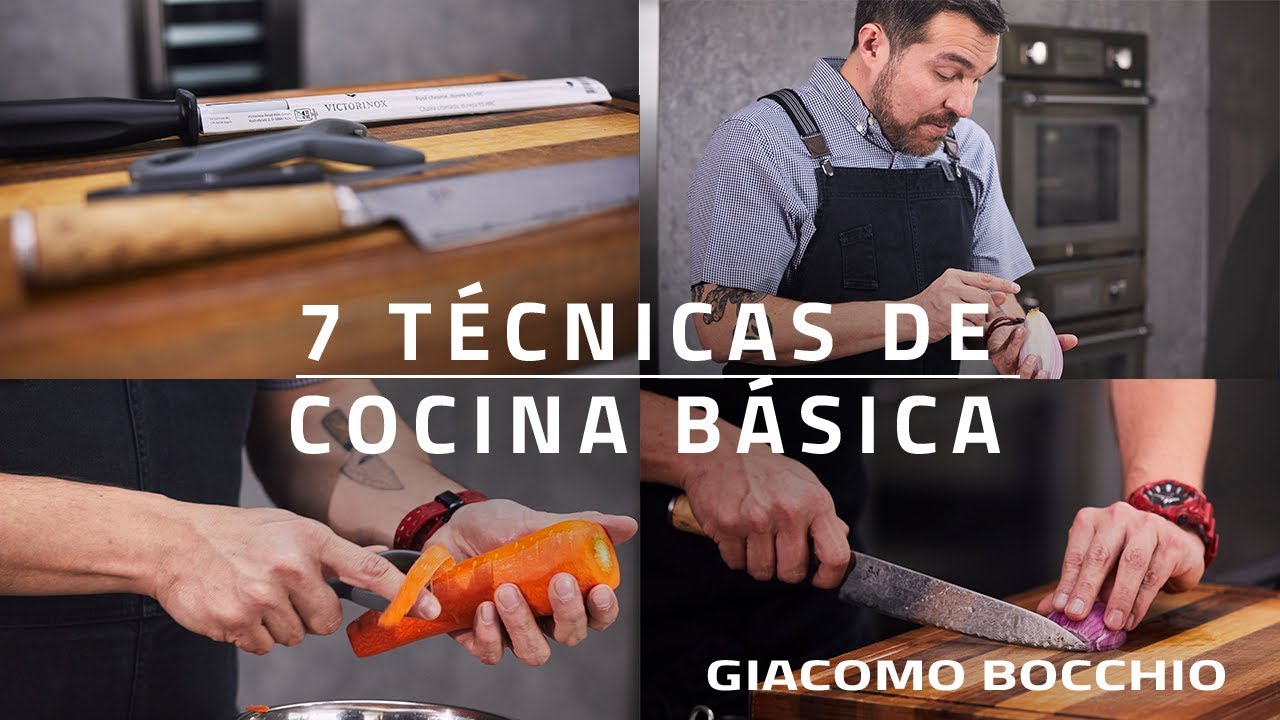
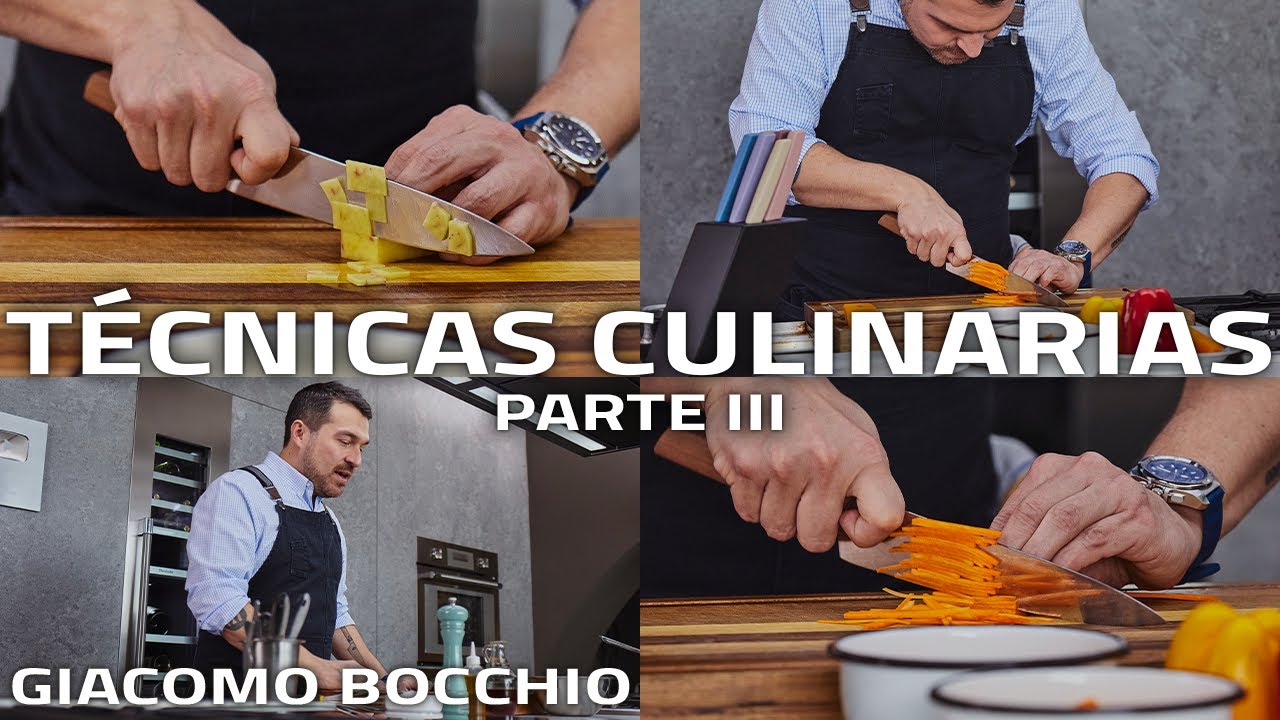
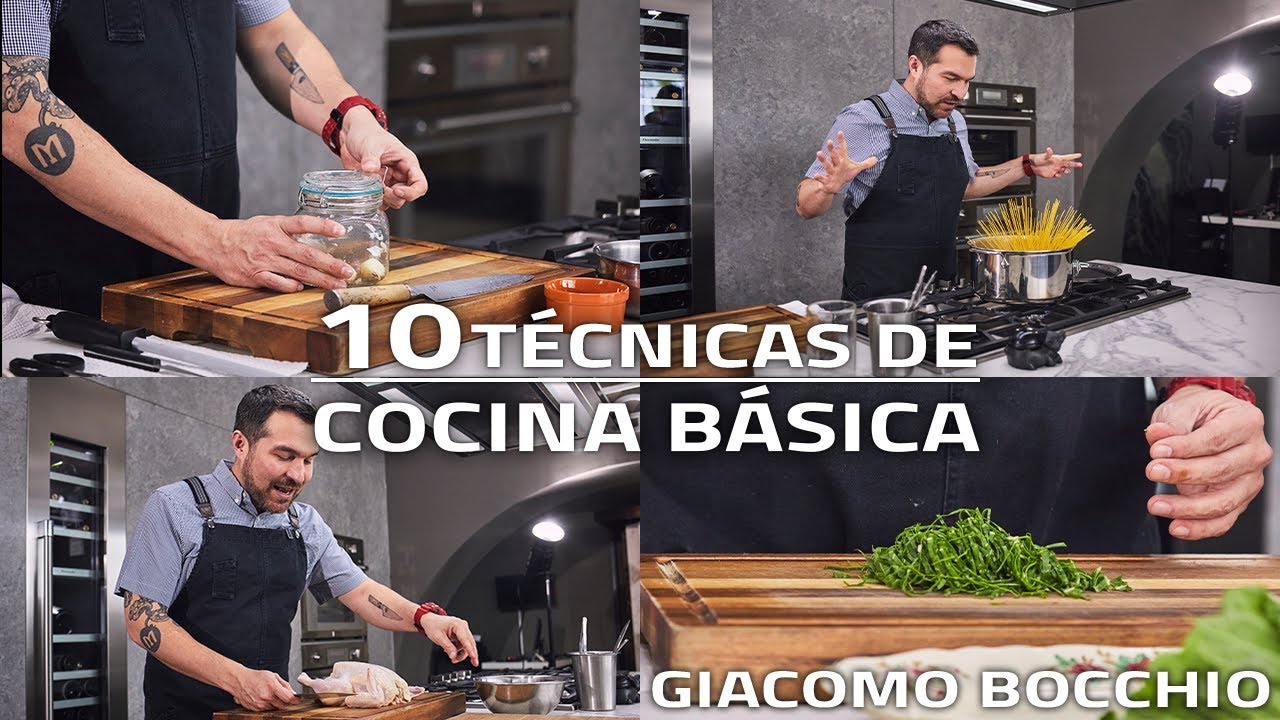
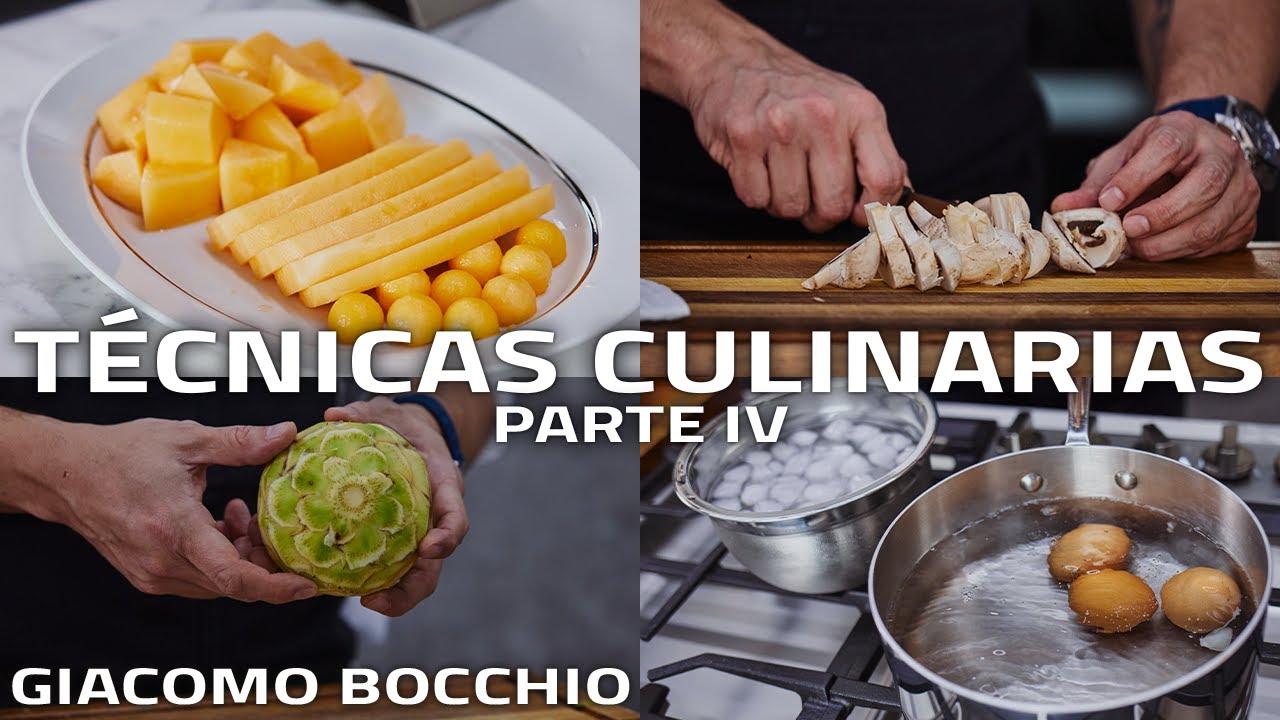
Part IV of Giacomo Bocchio's culinary techniques series covering five foundational skills: peeling round fruits (melon, papaya, watermelon, mango, orange) with minimal waste using a clockwise rotation method; cutting baguette on the bias for maximum surface area; cleaning and sautéing mushrooms correctly without sweating; boiling eggs to three precise doneness levels (soft 3 min, mollet 6 min, hard-boiled 10 min); and trimming artichoke hearts with a paring knife.
download Extracted 2026-03-31
Ingredients
No ingredients listed
Steps
-
1TECHNIQUE 1 — PEELING ROUND FRUITS (melon, papaya, watermelon, mango, orange): Stand the fruit upright by first slicing off both flat ends (top and bottom) to create a stable base. Discard the trim.Tip: This technique applies to any large round fruit. If you are keeping the rind (e.g., watermelon for decorative use), skip this technique entirely.
-
2Hold the fruit steady and, using a chef's knife, make a straight downward cut along the side to remove a strip of skin — only the green outer layer. Rotate the fruit clockwise and make the next cut slightly overlapping into the white pith beneath to ensure no skin is left behind. Continue rotating and cutting all the way around.Tip: The clockwise rotation is key to efficiency. The second pass that 'bites' slightly into the white pith guarantees a fully clean result with no green spots. At professional hotels, cooks may peel 60–80 melons per day using exactly this method.
-
3Once fully peeled, cut the fruit in half lengthwise with a single clean cut. Use a spoon to scoop out all seeds and discard them. From here you can: (a) use a Parisian scoop (melon baller) to make decorative spheres, (b) square off the halves and slice into uniform cubes for fruit salad or breakfast service, or (c) cut into elongated slices for plating.Tip: Melon balls marinated in port wine is a classic preparation. The pasta 'orzo' takes its name from melon seeds ('semilla de melón' in Spanish) because of their identical shape.
-
4TECHNIQUE 2 — CUTTING BAGUETTE FOR SERVICE: Always use a serrated (bread) knife — it cuts with its teeth rather than a sharp edge, requires no sharpening stone, and maintains its effectiveness for years. Avoid cutting the baguette in straight round coins ('moneditas') as this gives very little usable surface area.Tip: The serrated knife is also the right tool for tough, coarse ingredients like pineapple and artichokes — it saves the edge of your good chef's knife.
-
5Cut the baguette on the bias (at a diagonal angle) to produce long oval slices with significantly more surface area. A bias-cut slice gives two full bites versus one for a straight coin cut, and provides much more space for toppings in crostini, carpaccio service, or vitello tonnato.Tip: If you have a very sharp chef's knife, a bias cut is also possible with it. However, most home cooks' knives are not sharp enough — the serrated bread knife is the reliable default.
-
6TECHNIQUE 3 — CLEANING MUSHROOMS: Do NOT wash mushrooms with water before storage. Mushrooms are nearly entirely water; submerging them causes over-hydration, and they will begin to ferment and mold quickly even if dried afterward. Instead, clean them with a dry cloth, paper towel, or brush — wipe off any substrate or debris. If skin peels up, you may remove it; the peeled skin is useful for stocks and duxelles.Tip: The dark substrate on commercial mushrooms (like button mushrooms) is typically coconut husk substrate, not soil — it is harmless but aesthetically worth removing. In classical French cuisine, the stem (tronquito/pie) is removed and reserved for stocks and mushroom essence; only the cap is plated.
-
7If you must wash mushrooms (optional), do it immediately before cooking, not before storage. Dry briefly with a towel and cook at once.Tip: The only acceptable moment for washing mushrooms is right before they hit the pan.
-
8TECHNIQUE 3 (cont.) — SAUTÉING MUSHROOMS: Slice mushrooms into thick slices (not thin). Heat a pan until very hot, then add olive oil and heat that as well. Add mushroom slices in a single layer — distribute them as if placing individual pieces, and do NOT move them immediately. Let them sit undisturbed to develop color.Tip: Because mushrooms are mostly water, they will not burn if left stationary the way garlic would. Moving them too early causes sweating — they release liquid and steam rather than browning. The Maillard reaction requires contact time with the hot surface.
-
9Once you can see a light golden color has formed on the underside (you may hear the sizzle change character), move the mushrooms. Add a second drizzle of olive oil over the top. Add salt ONLY at this late stage — adding salt too early draws out liquid (salt is hygroscopic) and the mushrooms will sweat instead of sauté. Finish and plate. Properly sautéed mushrooms retain their internal juiciness and develop a golden crust.Tip: You will know the mushrooms are nearly done when the smell shifts from raw and watery to meaty and roasted — that is the Maillard reaction in progress.
-
10TECHNIQUE 4 — BOILING EGGS TO THREE DONENESS LEVELS: Use standard 60g eggs. Bring water to a full boil (100°C at sea level). Reduce heat to a minimum simmer — still 100°C, but with less turbulence so the eggs are not cracked by rolling boil. Add eggs directly to the simmering water. Time precisely from the moment of submersion: • Soft-boiled (pasado por agua): 3 minutes — runny white and yolk • Mollet: 6 minutes — set white, jammy soft yolk • Hard-boiled: 10 minutes — fully set white and yolk, no grey-green ringTip: For larger eggs (>60g), increase cooking time slightly. The cooking equation is fixed: temperature is constant at 100°C, so time is the only variable you control.~10 min
-
11Immediately transfer eggs to an ice bath (cold water + ice) to stop cooking. To open soft-boiled eggs elegantly, use an egg topper (campana de vibración) — a weighted bell tool that creates a vibration crack around the shell for a clean, level cut. Alternatively use a paring knife. For hard-boiled eggs to be stored: peel and place in a sealed container with a 2% brine (2% salt by weight). Store refrigerated for up to one week. Reheat by submerging in hot water or microwaving briefly.Tip: A 2% brine inhibits pathogenic microorganism growth, meaning peeled hard-boiled eggs stored this way last a full week. This is an efficient meal-prep strategy — open the fridge and grab a ready egg anytime. The human mouth tolerates up to 50°C, so reheating does not need to be aggressive.
-
12TECHNIQUE 5 — TRIMMING ARTICHOKE HEARTS: The artichoke is a flower; the leaves are petals. Use a serrated (bread) knife to avoid dulling a good chef's knife on the tough, fibrous exterior. First, cut off the stalk flush with the base. Then slice off the top third of the artichoke in a single straight cut to expose the inner layers.Tip: Whole artichokes steamed or boiled for ~35 minutes are a classic preparation; pull off the petals one by one, dip in vinaigrette, and scrape the tender flesh with your teeth. The scrapings from the petals can also be used as a filling for ravioli, cannelloni, or sauces.
-
13Pull off any very loose outer leaves. Then, using a paring knife (cuchillo de oficio), trim the artichoke as if peeling an apple — use an up-and-down rocking motion (not a pushing or forcing motion) to follow the curve of the artichoke base, peeling away all dark green outer layers in sections, rotating the artichoke as you go. Always be aware of where the blade would end up if it slipped — keep fingers clear of that path.Tip: Remember: the knife is never at fault when you cut yourself — always anticipate where the blade will travel. Keep your supporting fingers behind or away from the cutting path.
-
14Once the outer heart is fully cleaned and pale, cut through the center to expose the 'hairy' choke (pelitos) at the core. Use a spoon or paring knife to scoop out and discard all the choke fibers, leaving a clean, cup-shaped heart. Immediately submerge the trimmed heart in cold water with a squeeze of lemon juice to prevent oxidation. Repeat for all artichokes, keeping all trimmed hearts submerged until ready to cook.Tip: Artichoke is a white vegetable (verdura blanca) and oxidizes quickly like potatoes. The lemon juice provides acidity that inhibits enzymatic browning — the hearts stay white and visually clean when cooked.
Cultural Context
Giacomo Bocchio is one of Peru's most prominent chefs and culinary educators, known for his work on the Peruvian television show 'El Gran Chef Famosos'. This techniques series reflects a professional kitchen tradition of mise en place — the French concept of having everything prepared and in its place before cooking begins. The five techniques covered (fruit prep, bread service, mushroom cookery, egg cookery, artichoke trimming) are staples of classical French brigade training, adapted here for home cooks throughout Latin America. The mollet egg and artichoke heart, in particular, are fixtures of French haute cuisine technique taught in professional culinary schools worldwide.
Giacomo Bocchio
TÉCNICAS CULINARIAS QUE TODO COCINERO DEBE SABER ¦ GIACOMO BOCCHIO
Watch on YouTube →