› Browse Recipes › The Complete Lomo Saltado Masterclass — Everything You Need to Know
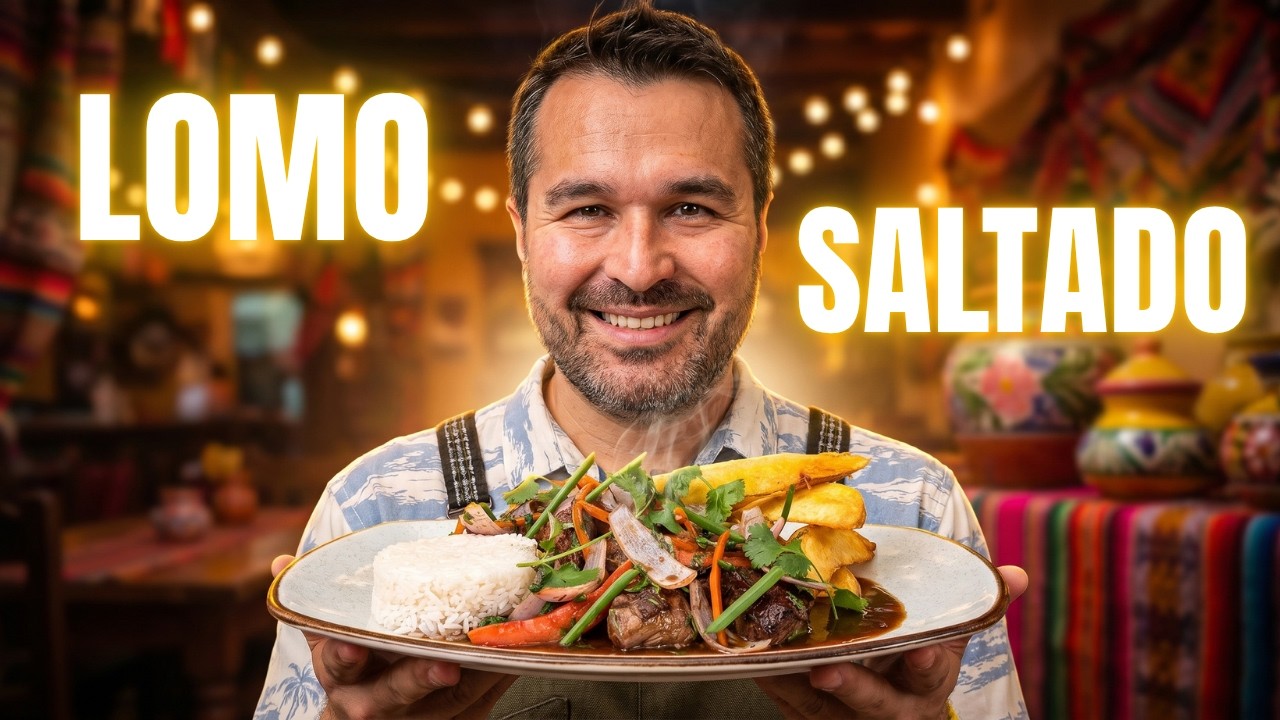
The Complete Lomo Saltado Masterclass — Everything You Need to Know
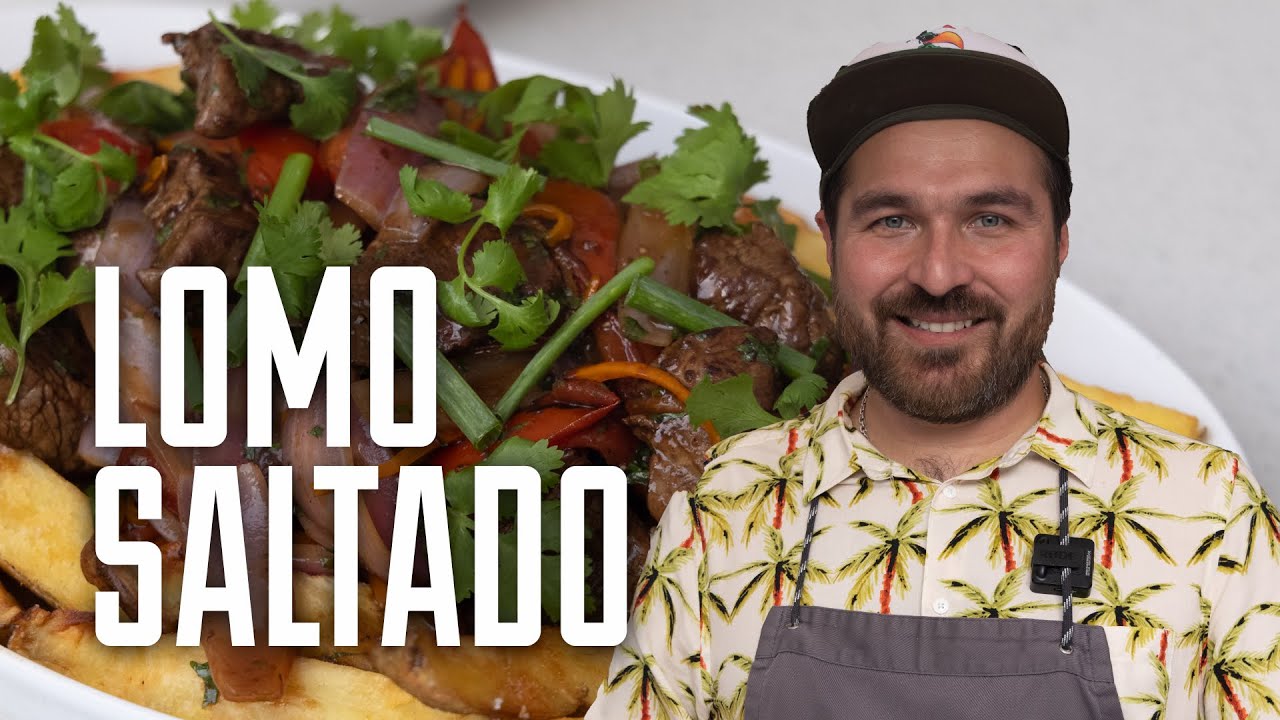
A complete masterclass on Peru's most-ordered restaurant dish, lomo saltado. Giacomo Bocchio walks through breaking down a whole beef tenderloin (identifying head, chateaubriand, and tail cuts), building a restaurant-style aromatic stock base (a 'nage') from the trimmings, mixing the classic soy-vinegar-oyster premix, steaming-then-frying potatoes for perfect fries, and the violent high-heat stir-fry that gives lomo saltado its signature smoky flavor.
smart_display Published 2026-06-11
download Extracted 2026-06-11
Ingredients
- 500 g beef tenderloin (lomo head and tail) (cleaned of silver skin, cut into thick chunks)
- to taste salt (applied to the meat in advance)
- as needed vegetable oil
- 2 units red onion (cut into wedges, core removed)
- 2 units tomato (blanched, peeled, seeded, cut into petals)
- as needed ají amarillo (yellow chili) (cut into julienne)
- as needed Chinese green onion (scallion) (cut on the bias (siflet) and into rings)
- a splash kion (fresh ginger) (grated, juice added at finish)
- to taste cilantro (culantro) (a bouquet for the stock, plus coarsely chopped to finish)
- to taste black pepper (freshly ground, added at the end)
- 300 g soy sauce (sillao) (3 parts of the premix)
- 100 g vinegar (1 part of the premix)
- 100 g oyster sauce (1 part of the premix)
- 1 L dark beef stock (fondo oscuro de res) (unsalted)
- 3 tbsp cornstarch slurry (cornstarch + water) (to lightly thicken the base)
- 4 units potatoes (papa wairo or similar) (steamed, cooled, cut into wedges, then fried)
- for serving white rice (cooked, served alongside) opcional
Steps
-
1Clean the beef tenderloin: separate the head from the body, cut off the tail, and remove all the silver skin (connective tissue/fascia). Lay the membrane flat against the board and remove it in one clean cut as you would skin a fish. Reserve the trimmings and any fat — they will flavor the stock.Tip: Keep your knife sharp — it removes the silver skin faster and damages the cut less.~10 min
-
2Cut the head of the tenderloin into thick chunks (not small ones) so they can be seared on the outside while staying medium-rare at the core. Season the meat with a little salt several minutes in advance so the salt dissolves into the meat. Do not add pepper yet — it would burn in the hot pan.Tip: Let the meat come to room temperature before cooking for better control of the internal doneness.~10 min
-
3Build the aromatic base (the 'nage'): heat a little oil in a pot and brown the reserved tenderloin trimmings and fat. Add onion and tomato (just to release flavor, not to caramelize), then Chinese green onion (white part), kion/ginger, and ají amarillo, all cut in a rough matignon. Add 1 L of unsalted dark beef stock.Tip: Stocks are never salted so you don't depend on the stock's salt level when finishing a sauce.~10 min
-
4Make the premix: combine 3 parts soy sauce (sillao), 1 part vinegar, and 1 part oyster sauce (roughly 100 g per part). Add some of this premix to the simmering stock, bring to a gentle boil, then drop in a bouquet of cilantro (culantro), turn the heat to the lowest setting, and let it infuse 35–45 minutes.Tip: Reserve some premix to add directly to the stir-fry later for an extra punch of flavor.~45 min
-
5Thicken and strain the base: raise the heat to a boil and add the cornstarch slurry (2–3 tbsp), letting it boil so it doesn't taste of raw starch. Keep it loose — it should have body but stay juice-like, not as thick as a bechamel. Strain the base, pressing the aromatics hard to extract all their flavor, and reserve this finishing sauce.Tip: It will reduce further in the hot pan during the stir-fry, so don't over-thicken it now.~5 min
-
6Prepare the fries: steam the potatoes about 30 minutes until a tester slides through cleanly, then chill them (ideally a day ahead). Cut the cold cooked potatoes into wedges and fry in 180°C oil until golden and crisp outside, creamy inside. Salt immediately out of the fryer while still hot so the salt sticks.Tip: Steaming then frying cooked potatoes gives a crisper, lighter-colored fry than the classic double-fry in oil.~35 min
-
7Sear the beef: toss the chunks with a little oil. Heat a pan empty until smoking hot, add oil until it shimmers and nearly smokes (over 200°C), then sear the meat undisturbed to form a savory crust (Maillard). Flatten larger pieces for full contact. Toss so a flame catches the oil — this gives the signature smoky lomo saltado flavor. Sear briefly on the other side and remove from the pan while still rare inside. (At home, work in two batches.)Tip: Oil above ~200°C ignites on contact with a flame — that controlled flare-up is what creates the smoky aroma.~5 min
-
8Stir-fry and finish: in the same pan add a little oil, sauté the onion wedges and ají amarillo, then the tomato petals. Add a turn-and-a-half of the reserved premix. Return the seared beef with its juices, add 2–3 spoonfuls of the strained base for juiciness, and a splash of grated kion/ginger juice. Add freshly ground black pepper, turn off the heat, and finish with coarsely chopped cilantro and Chinese green onion. Taste for salt.Tip: The whole cilantro leaves are not just garnish — they are part of the flavor. Serve with white rice and the fries to soak up the juices.~5 min
Nutrition (por porción)
620
Calorías
38g
Proteína
45g
Carbohidratos
30g
Grasa
4g
Fibra
Cultural Context
Lomo saltado is the dish that best showcases the influence of Chinese culture in Peru, born from the 'chifa' tradition of Chinese-Peruvian cooking. It is a stir-fry (salteado) built on soy sauce (which Peruvians call 'sillao'), Chinese green onion, and kion (ginger), married to native Peruvian ingredients like ají amarillo and culantro (cilantro) that give it its 'criollo' character. In restaurants it is often made with cheaper, slow-cooked cuts to lower costs, but Bocchio demonstrates the premium version using beef tenderloin cooked to medium. The dish is traditionally served with both white rice and french fries — the rice and potatoes meant to soak up the savory juices.
Giacomo Bocchio
LA CLASE COMPLETA DE LOMO SALTADO QUE NADIE HABÍA HECHO – TODO LO QUE NECESITAS SABER
Watch on YouTube →